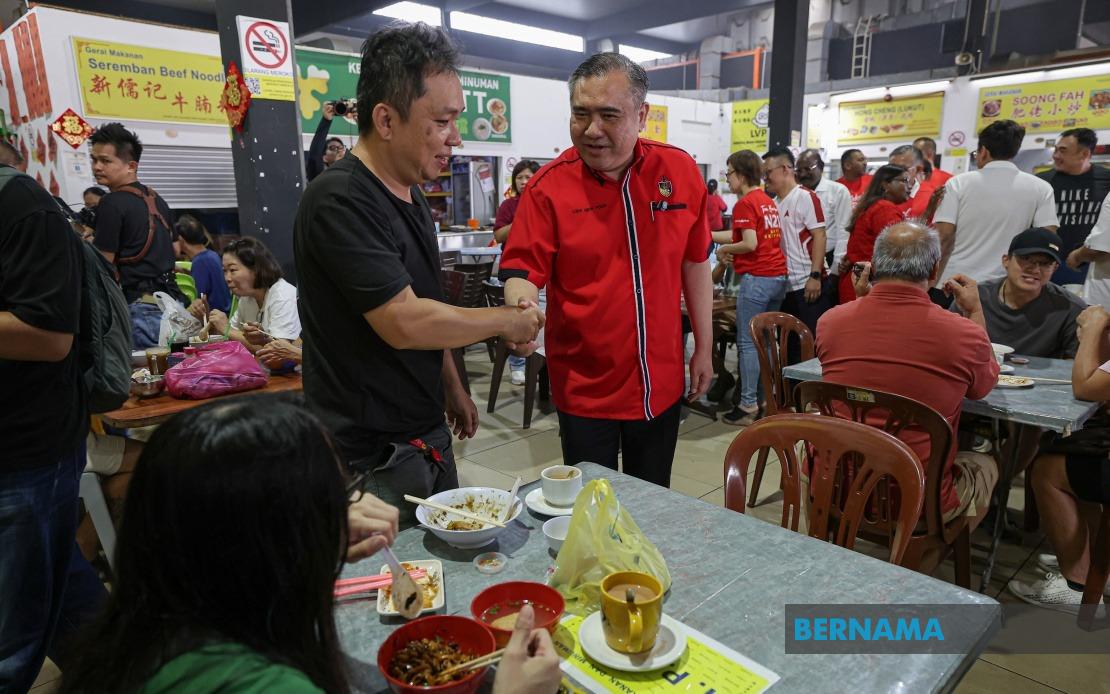
Transport Minister Anthony Loke has laid down an uncompromising position on road safety during Negeri Sembilan's ongoing state election campaign, insisting that all parties and candidates must adhere strictly to traffic regulations regardless of their desire to win votes. Speaking in Seremban on July 19 following a walkabout with Pakatan Harapan candidates, Loke framed traffic compliance not as a suggestion but as a fundamental requirement that outweighs electoral ambitions, drawing a clear line between legitimate campaigning and reckless behaviour that endangers public safety.
The Transport Minister's intervention signals growing concern about campaign-related accidents across Malaysia's electoral cycles. Election seasons have historically seen an uptick in traffic violations as candidates and supporters prioritize campaign visibility over public safety, often resulting in injuries and fatalities. By positioning himself as the enforcer of these standards, Loke is attempting to set a precedent that safety considerations must remain paramount even during the high-energy final weeks before polling day. This approach reflects a broader recognition that election authorities and government officials have a shared responsibility to prevent preventable tragedies during campaign periods.
As the DAP secretary-general, Loke has personally instructed his party's campaign teams to wear helmets without exception when riding motorcycles, establishing an internal party standard that extends beyond legal requirements. His reference to yesterday's nomination day convoy from Pekan Titi to Kuala Klawang—where he articulated a clear "no helmet, no convoy" policy—demonstrates his willingness to enforce these rules even at the risk of slowing campaign momentum. This hands-on approach suggests that the transport portfolio is being leveraged to address a systemic problem that traffic enforcement alone has failed to curb during previous campaigns.
Loke specifically warned against the practice of riding on vehicle tailgates, a dangerous behaviour that has become increasingly common during Malaysian election campaigns. This particular violation epitomizes the kind of reckless conduct that campaign adrenaline and competitive pressure can encourage, as supporters seek visible ways to demonstrate their commitment to candidates. By highlighting this specific risk, Loke is signalling that his enforcement focus extends to dangerous customs rather than merely technical infractions, addressing the cultural dimension of campaign-related unsafe behaviour.
The electoral context for these directives is significant. The Negeri Sembilan state assembly was dissolved on June 5, with the Election Commission scheduling polling day for August 1 and early voting for July 28. This compressed timeline means the campaign period encompasses just weeks, during which the state's 889,490 registered voters will see unprecedented traffic on roads as multiple parties mobilize supporters simultaneously. The voter base includes 867,151 ordinary voters alongside 16,884 military personnel and their spouses and 5,455 police officers eligible for early voting—a diverse electorate that requires a safe environment for genuine democratic participation.
The emphasis on leading by example reflects Loke's understanding that compliance cannot be imposed from above without corresponding behaviour from political leadership. By visibly enforcing these standards within his own party's operations and publicly acknowledging his own participation in convoy activities while maintaining safety protocols, he creates a model for other parties to follow. This is particularly important in Malaysian politics, where candidate and party leader conduct significantly influences supporter behaviour and social norms around campaigning.
Loke's call for all parties and leaders to observe traffic regulations throughout the campaign represents an appeal to collective responsibility that transcends partisan boundaries. While such appeals often go unheeded during competitive elections, the explicit framing of traffic safety as a shared obligation rather than a partisan issue creates a baseline expectation that responsible candidates across the political spectrum should meet. This messaging matters for setting public discourse around what constitutes acceptable campaign conduct.
The practical implications for Negeri Sembilan's campaign trail are considerable. The 16th state election involves six parliamentary constituencies with multiple state assembly seats, requiring extensive travel and public mobilization. Motorcade movements, community events, and door-to-door campaigning will all involve road usage, and each represents a potential point where enforcement of Loke's directives will be tested. The compliance level ultimately achieved will reflect both the credibility of enforcement mechanisms and the degree to which political leaders genuinely internalize safety messaging versus treating it as rhetorical cover.
From a Southeast Asian perspective, Malaysia's approach to campaign-related road safety provides a case study in governance during electoral periods. Neighbouring countries with comparable democratic traditions and motorization rates face similar challenges, yet responses vary significantly. Loke's administrative position gives him leveraging power that elected state officials might lack, as the transport portfolio controls licensing, enforcement resources, and regulatory mechanisms that can directly affect campaign conduct.
The implementation challenge lies in distinguishing between necessary enforcement and selective punishment that could be perceived as partisan. Any perception that traffic regulations are enforced more strictly against opposition candidates would undermine the safety objective and fuel claims of electoral manipulation. Loke's credibility as the enforcer therefore depends on demonstrable consistency across all parties and candidates, a standard that often proves difficult to maintain in practice.
Looking forward, the effectiveness of these directives will be measurable through accident rates during the campaign period compared to historical norms. Should Negeri Sembilan experience fewer campaign-related incidents than typical, this model could provide template for future elections. Conversely, if violations persist despite ministerial directives, it will illustrate the limits of top-down enforcement without complementary changes to campaign culture and party discipline.

