The Fisheries Development Authority of Malaysia (LKIM) is preparing an ambitious showcase for the Malaysia Agriculture, Horticulture and Agrotourism Show (MAHA) 2026, positioning cutting-edge maritime technology alongside traditional fishing heritage to bridge generational gaps in the sector. The authority announced plans to feature satellite buoys, interactive boat simulators, and the Meranti Fishermen's Village as centrepieces of its pavilion, signalling a strategic pivot toward making fisheries innovation accessible to the general public and particularly to younger demographics who may otherwise have little exposure to maritime industries.
LKIM chairman Muhammad Faiz Fadzil articulated the underlying philosophy behind this exhibition approach during remarks at a community engagement event in Pasir Puteh. The initiative reflects growing recognition that Malaysia's fishing sector must attract fresh talent and investment, and that understanding modern technologies represents a gateway to broader industry participation. By creating hands-on experiences rather than static displays, LKIM intends to demystify the operational challenges and opportunities that define contemporary fishing practices. This strategy acknowledges that passive observation rarely translates into sustained interest, particularly among digital-native audiences accustomed to interactive engagement.
The satellite buoy technology on display carries particular significance for Malaysian fisheries. These devices enable real-time tracking of fish populations across maritime zones, fundamentally transforming how fishing operations are planned and executed. Beyond the immediate benefit of improved catch efficiency, the technology addresses a chronic pain point for small-scale operators: the substantial operational costs associated with fuel consumption, time at sea, and equipment wear. When fishermen can identify productive fishing grounds with greater precision, they spend less time searching and consume fewer resources per unit of harvest. For B40 fishermen already operating on marginal economics, this efficiency gain can be transformative, potentially widening profit margins or enabling reinvestment in vessel improvements and safety equipment.
The decision to integrate boat simulators into the MAHA experience serves multiple objectives simultaneously. Visitors will gain visceral understanding of maritime conditions without the physical risks and costs associated with actual sea operations. For younger people considering fisheries careers, simulators demystify the technical and psychological demands of vessel operation. For consumers and policymakers, the technology creates empathy for the challenges fishermen navigate daily, potentially influencing policy discussions around subsidies, safety regulations, and market access. Simulators also serve an educational function, allowing demonstration of how technology-enhanced navigation and fish-finding equipment actually functions in realistic scenarios.
The Meranti Fishermen's Village component grounds the modern technology showcase in cultural and historical context. This living heritage element prevents the exhibition from reading as a sterile technology demonstration, instead positioning innovation within the continuum of Malaysian fishing traditions. Such juxtaposition carries deeper messaging: that technological advancement need not erase cultural identity or traditional knowledge systems, but rather can complement and enhance them. For visitors from non-fishing backgrounds, the village provides accessible entry points to understand how fishing communities function, what daily life entails, and the social structures that underpin this sector of the economy.
MAHA 2026 will unfold across ten days from August 28 through September 6 at the Malaysia Agro Exposition Park Serdang (MAEPS), positioning LKIM's exhibition within a broader agricultural showcase. This placement ensures cross-pollination with other food production sectors—horticulture, livestock, agribusiness—reinforcing the interconnectedness of Malaysia's food security infrastructure. The timing in late summer positions the event during school holidays, facilitating family visits and educational field trips that could amplify youth engagement objectives.
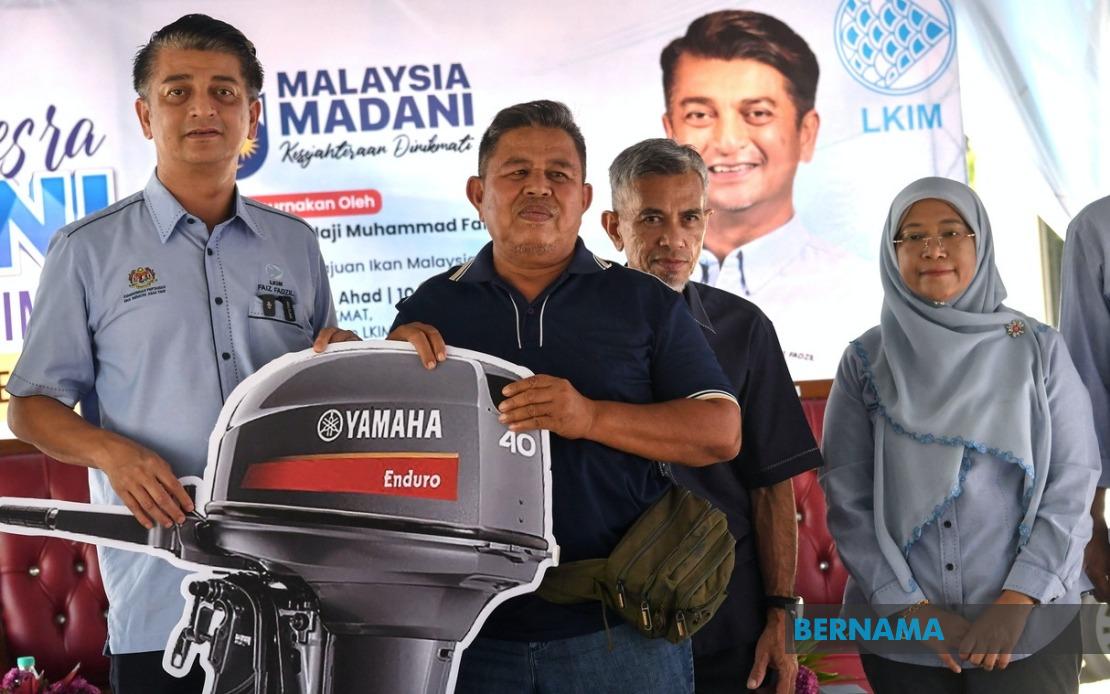
The announcement arrived amid concurrent efforts by LKIM to directly support fishing communities through material assistance programs. On the same day as the MAHA planning announcement, the authority distributed fishing equipment valued at RM50,000 to 26 B40 fishermen organised under the Semerak Area Fishermen's Association. This assistance package included 40-horsepower boat engines, fishing nets, fibre barrels, and 2 tonnes of marine diesel oil—practical inputs that immediately improve operational capacity and cost efficiency. The juxtaposition of this direct assistance with the longer-term educational initiative illustrates LKIM's dual-track approach: addressing immediate economic pressures while simultaneously investing in structural sector transformation through awareness and technology adoption.
The assistance distributed in Pasir Puteh reflected broader policy recognition that B40 fishing communities face specific vulnerabilities that distinguish them from other agricultural segments. Unlike horticulture or livestock operations, marine fishing involves significant capital requirements for vessels and engines, volatile catch volumes dependent on seasonal patterns and environmental conditions, and exposure to price fluctuations in global seafood markets. Equipment depreciation occurs rapidly in the corrosive marine environment, and replacement costs can exceed annual profits for marginal operators. By providing high-horsepower engines and supplementary equipment, LKIM addressed these structural constraints while simultaneously signalling that technological modernisation was within reach for low-income operators.
The strategic timing of both initiatives—combining immediate material support with forward-looking technology education—addresses a critical challenge in Malaysian fisheries policy. Sector analysts have documented that knowledge gaps often prevent adoption of productivity-enhancing technologies, even when economic justification clearly favours modernisation. Older fishermen may distrust unfamiliar systems, while younger people lack opportunities to develop expertise before committing to fishing careers. By designing the MAHA exhibition specifically to address these barriers, LKIM attempts to accelerate the technology adoption curve across the sector. The satellite buoy demonstrations, in particular, could prove transformative if they convince sceptical operators that investment in monitoring technology generates measurable returns.
The Semerak gathering at Tok Bali fishery port, where these announcements occurred, underscores LKIM's deliberate strategy of engaging communities at their operational centres rather than exclusively through formal institutional channels. Tok Bali remains one of Malaysia's most important fishing ports, and the decision to make policy announcements in this context reinforces the authority's positioning as responsive to on-the-ground sector realities. This community-embedded approach builds trust and generates immediate feedback about what fishing communities actually need, preventing the disconnect between institutional planning and sectoral requirements that sometimes plague top-down policy implementation.
The convergence of equipment assistance, technology education, and heritage preservation in LKIM's strategic framework suggests evolving thinking about how to sustain Malaysian fisheries amid global pressures. Climate change, rising fuel costs, marine resource depletion, and competition from industrial fishing operations create existential pressures on artisanal and small-scale fishing communities. Rather than simply providing cash transfers or subsidies, LKIM appears committed to enhancing operational resilience through capability building and technology adoption. Whether this approach proves sufficient to stabilise fishing communities long-term depends partly on complementary policies addressing global market access, environmental management, and social safety nets—factors extending beyond LKIM's purview but critical to sector viability.
For Malaysian policymakers monitoring fisheries sector development, the MAHA 2026 initiative offers indicators of institutional priority-setting and emerging strategic direction. The investment in youth engagement suggests recognition that without new entrants motivated by opportunity and capability, the sector faces demographic decline. The emphasis on demonstrating concrete economic benefits from technological adoption, rather than simply advocating modernisation in abstract terms, reflects more sophisticated understanding of the barriers impeding fisheries transformation. As MAHA 2026 approaches, the exhibition's reception and measurable outcomes—whether expressed in subsequent technology adoption rates, youth interest in fisheries careers, or policy shifts triggered by public engagement—will indicate whether this innovative educational approach effectively addresses persistent sectoral challenges.

