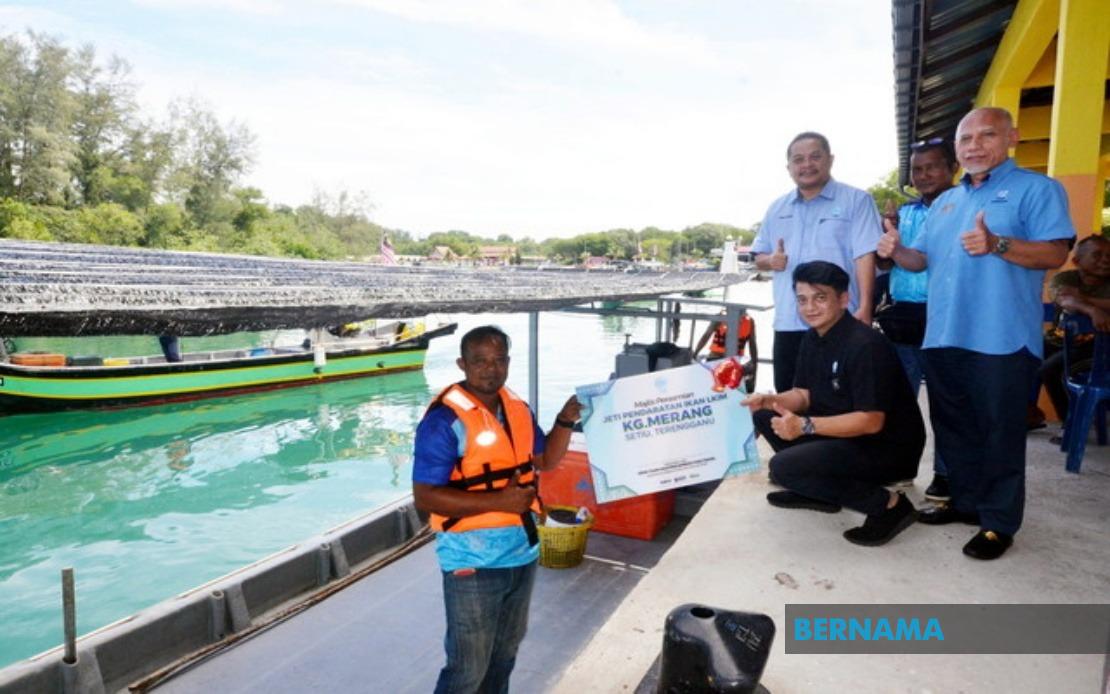
Malaysia's fisheries sector received a boost this week as the Malaysian Fisheries Development Authority (LKIM) formally handed over a newly constructed fish landing jetty in Kampung Merang, marking tangible progress in the agency's broader infrastructure enhancement programme. The RM2 million commitment allocated since the previous financial year reflects government recognition that modernised landing facilities form the backbone of a competitive and sustainable fishing industry, particularly for small-scale operators in coastal communities who have long depended on aging, often unsafe infrastructure to conduct their business.
The Kampung Merang Fish Landing Jetty, which cost RM500,000 to build and began operations following the handover ceremony, represents a significant upgrade for the locality. The new concrete structure replaces an older facility constructed by villagers that had deteriorated over time and no longer met contemporary safety or operational standards. This replacement addresses a persistent challenge across Malaysia's fishing communities, where infrastructure deficits have constrained productivity and market access. The jetty is projected to serve 124 fishermen operating 68 boats in the immediate vicinity, anchoring economic activity for families whose survival depends on reliable, efficient landing operations.
LKIM chairman Muhammad Faiz Fadzil outlined the authority's expansive oversight during the inauguration ceremony, noting that the agency currently manages 372 fish landing jetties nationwide alongside 48 fisheries complexes and ports. This extensive portfolio demonstrates the scale of infrastructure management required to support Malaysia's fishing communities. Yet despite this substantial existing asset base, significant capacity gaps persist. The chairman acknowledged that current budget allocations remain insufficient to address the nation's comprehensive infrastructure needs, signalling that decision-makers recognise the scope of required investment exceeds presently available resources.
Looking ahead, Muhammad Faiz pressed the case for enhanced budgetary support in government spending plans for the coming year, arguing that additional funding would enable LKIM to accelerate jetty development projects across the country. Two projects are currently advancing through documentation and tender procurement stages in Perak and Labuan, indicating a pipeline of planned improvements. However, without expanded allocations, progress will necessarily remain constrained. The appeal for increased resources comes at a time when Malaysia's fishing sector faces mounting pressure from regional competition, climate variability, and the need to transition toward more sustainable practices—all factors that underscore why infrastructure quality matters increasingly for sector viability.
The Setiu district, where Kampung Merang is located, provides a case study in how facility improvements may translate into tangible benefits. Current landing records show the district registers approximately 243 metric tonnes of fish annually. LKIM officials expressed confidence that completion of the new jetty and its full integration into local fishing operations will drive upward pressure on this volume. Better landing infrastructure directly reduces transaction costs and handling delays, making it more attractive for fishermen to bring catches to formal landing points rather than relying on informal arrangements. Improved visibility and accessibility also facilitate higher prices through more efficient connections to buyers and markets.
Muhammad Faiz emphasised the economic mechanics underlying the infrastructure investment case. Fishermen fundamentally depend on catch revenue for household income and livelihood security; any enhancement that streamlines the selling process and reduces losses from spoilage or handling damage translates directly into earnings improvement. Modern jetties featuring proper berthing, storage, and processing facilities allow fishermen to secure better prices by accessing larger or more distant markets, reducing dependence on middlemen who traditionally extract significant margins. This consideration carries particular weight in Malaysia, where fishing communities in many regions experience persistent income constraints relative to urban populations, and where rural economic development remains a policy priority.
The Kampung Merang project also reflects evolving standards around infrastructure design and safety in Malaysia's fisheries sector. The previous jetty, constructed informally by villagers without professional engineering input, exemplifies how coastal communities historically managed maritime facilities with limited resources. While such improvisation demonstrated resilience and community self-reliance, it also created occupational hazards for fishermen and constrained operational capacity. The replacement concrete structure incorporates modern design principles, improved safety features, and capacity sufficient for contemporary fishing operations, marking the transition toward professionally managed infrastructure systems consistent with Malaysia's status as a developed economy.
Investment in fish landing infrastructure carries broader significance for Malaysia's national food security and export competitiveness. The fishing industry contributes substantially to the nation's protein supply and generates foreign exchange through seafood exports. However, achieving higher productivity and quality standards requires systematic upgrades across the value chain, beginning with improved landing facilities. When fishermen operate from unsafe, inadequate infrastructure, quality deteriorates and production efficiency suffers—penalties that ultimately undermine export competitiveness and domestic food sufficiency. From this perspective, LKIM's infrastructure spending represents investment not merely in sectoral development but in fundamental economic infrastructure supporting population welfare.
The timing of the Merang jetty inauguration also holds symbolic value within Malaysia's broader rural development narrative. East Coast states including Terengganu, where Setiu is located, have traditionally anchored national fishing output and remain economically dependent on fisheries sectors. Yet these regions have sometimes experienced relative marginalisation in terms of infrastructure investment and policy attention compared to more urbanised or industrialised areas. Enhanced jetty facilities represent visible government commitment to supporting these communities and recognising their continued importance to the national economy. Such gestures carry political resonance alongside economic substance, reinforcing bonds between government institutions and fishing communities.
Moving forward, the challenge facing LKIM extends beyond individual jetty projects to systemic infrastructure planning across Malaysia's diverse coastal zones. The authority must coordinate comprehensive needs assessments, prioritise projects based on economic impact and community vulnerability, and develop financing mechanisms that enable sustained investment despite budgetary constraints. This might include exploring public-private partnerships, leveraging blue economy development funds, or structuring user fees that ensure maintenance funding without imposing undue burden on fishing communities. International experience suggests that sustainable infrastructure systems require integrated management frameworks combining government investment, community participation, and strategic commercial partnerships.
The broader policy context surrounding fisheries infrastructure investment in Malaysia increasingly reflects recognition that traditional subsidy and support models require rethinking. As the sector faces pressure from resource depletion, climate change, and international competition, productivity improvements through infrastructure modernisation offer promising pathways toward sustainable sector development. Rather than attempting to maintain fishing communities through income transfers alone, strategic infrastructure investment enables fishermen to operate more efficiently within emerging market realities. This reorientation toward productive rather than purely redistributive interventions aligns with contemporary development thinking and offers potential for building more resilient, prosperous fishing communities across Malaysia.

