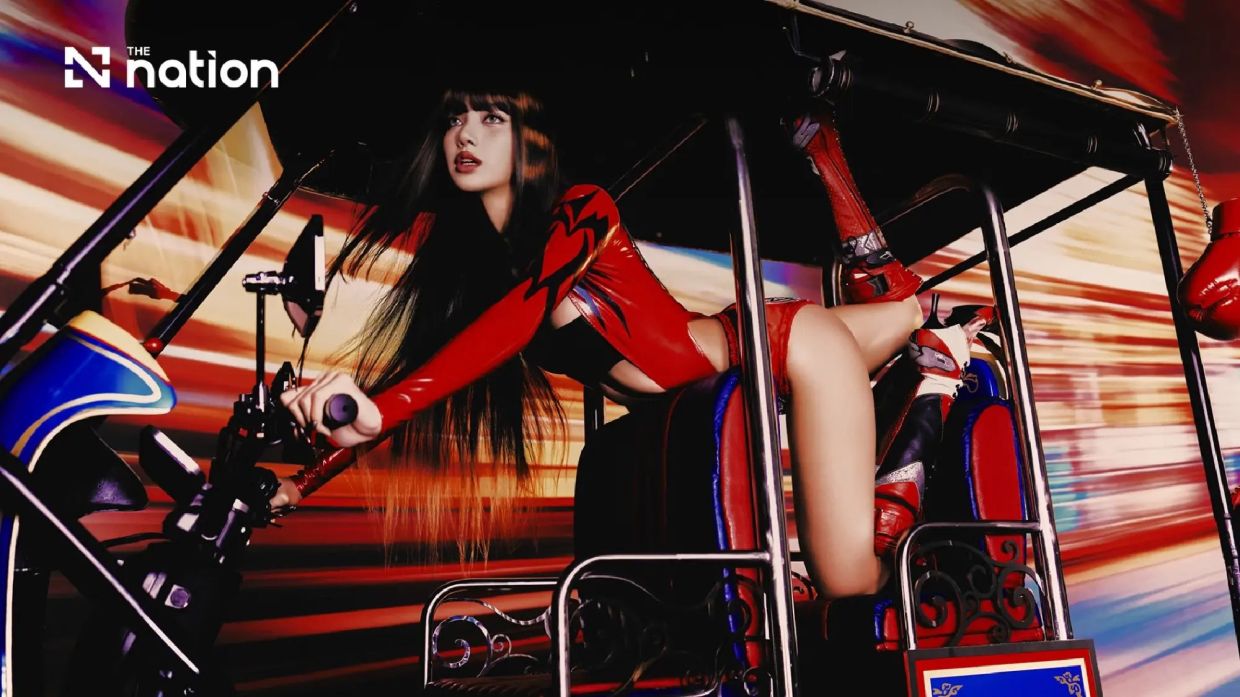
BANGKOK: BLACKPINK member Lalisa "Lisa" Manobal is set to release her latest single "SaWaDiKa" on September 3, 2026, marking another significant moment in her ongoing celebration of Thai cultural identity on the global stage. The campaign imagery, unveiled this week, transforms recognisable Thai symbols into a sophisticated pop-culture spectacle, positioning Muay Thai and the country's ubiquitous blue-and-red tuk-tuks as the visual anchors of her newest solo era.
The aesthetic direction of "SaWaDiKa" represents a calculated departure from literal tradition. Rather than simply reproducing conventional Muay Thai ring attire, Lisa's campaign fuses combat-sport references with futuristic sportswear design. Promotional photographs showcase the singer dressed in contemporary interpretations of Muay Thai boxing shorts emblazoned with her name, paired with leather bodysuits and high-heeled lace-up boots inspired by boxing footwear. A striking image places her on a tuk-tuk vehicle, with streaked lighting effects creating a sense of velocity and dynamism that contrasts sharply with the vehicle's pedestrian connotations in everyday Thai life. This juxtaposition—high fashion meeting street transport—illustrates how Lisa's creative approach transforms humble cultural touchstones into aspirational global symbols.
The title itself carries layered significance for both Thai audiences and international listeners. "SaWaDiKa" is a stylised rendering of "sawasdee ka", the polite Thai greeting phrase spoken countless times daily across the country. By elevating this simple, universally recognised expression to the status of a global pop single title, Lisa essentially internationalises one of Thailand's most fundamental cultural markers. The strategy proves deliberate and sophisticated: a two-word phrase becomes a cultural ambassador in miniature, reaching millions of listeners worldwide through a single musical release. This linguistic choice grounds her international ambitions in her Thai roots, making the connection between local and global explicitly visible.
The Tourism Authority of Thailand (TAT) has already seized upon the cultural significance of Lisa's initiative. Governor Thapanee Kiatphaibool publicly welcomed the singer's decision to centre the greeting in her campaign, acknowledging that the phrase reinforces global perceptions of Thai warmth and hospitality. This institutional endorsement reflects how effectively Lisa's marketing strategy aligns with Thailand's broader international image-building efforts. Since accepting the role of "Amazing Thailand Ambassador" in 2025, Lisa has positioned herself as a bridge between Thailand's cultural heritage and contemporary global entertainment markets. Her appointment by TAT formalised what her previous solo work had already established: that she represents one of Thailand's most valuable cultural exports.
The rollout strategy demonstrates careful orchestration of anticipation and revelation. Before the single's official announcement, cryptic outdoor displays reading "HELLO สวัสดีค่ะ [Sawasdee ka]" began appearing in major international cities including New York, Los Angeles, and Mexico City, alongside Bangkok. This teaser campaign created speculation among fans and music observers, generating organic discussion across social media platforms before the campaign's true purpose was revealed. Such coordinated global placement underscores Lisa's status as a major international artist with the resources and influence to commandeer urban advertising space across multiple continents simultaneously.
"SaWaDiKa" functions as the opening salvo for Lisa's forthcoming six-track EP "PRESS PLAY", scheduled for release on October 23, 2026. According to official descriptions, the project frames itself as both a return to Lisa's artistic origins and a celebration of her journey from Thailand to international superstardom. The EP concept thus operates on two levels: personal narrative and commercial branding, allowing Lisa to construct a coherent artistic statement while simultaneously promoting a distinct product cycle to global audiences. The remaining five track titles remain unrevealed, preserving momentum for future announcements and sustained media engagement.
This latest release extends a visual and thematic trajectory that Lisa has carefully developed throughout her solo career. Her 2021 debut single "LALISA" directly engaged with Thai cultural aesthetics, incorporating traditional Thai dress, dance-informed imagery, and musical elements drawn from Thai heritage. Lisa specifically requested the inclusion of Thai influences in that project, and the accompanying music video presented her in elaborate gold Thai-inspired costume and headdress set against architecture evocative of her native Buri Ram province. This early solo work established the foundational principle: that her international platform could and should amplify Thai culture.
That initial approach evolved significantly by 2024 with the release of "Rockstar", which relocated Lisa's visual identity to contemporary Bangkok. The music video prominently featured Yaowarat Road in the capital's historic Chinatown district alongside other recognisable Bangkok locations, effectively framing Thailand's urban landscape within a sleek, futuristic pop aesthetic. Where "LALISA" emphasised traditional cultural heritage, "Rockstar" demonstrated how Thai geography and contemporary city life could function as compelling backdrops for global pop music. This progression established a pattern: each new solo project deepens the integration of Thai cultural elements while simultaneously advancing their sophistication and global appeal.
"SaWaDiKa" now represents the next chapter in this evolution. By centring Muay Thai—arguably Thailand's most recognisable cultural export beyond tourism—alongside the tuk-tuk and the Thai language itself, Lisa synthesises the thematic and visual approaches from her previous work. Rather than presenting Thai culture as either purely traditional or merely geographical backdrop, this campaign positions multiple Thai symbols as contemporary, aspirational, and fundamentally integral to global pop culture. The single transforms the everyday into the iconic, suggesting that Thai cultural identity need not be exoticised or historicised to achieve international resonance.
For Malaysian and Southeast Asian audiences, Lisa's continued cultural positioning carries particular relevance. As a Thai artist commanding unprecedented global influence, her strategic deployment of Thai cultural markers inevitably shapes international perceptions of the entire region. Her elevation of Thai language, martial tradition, and street culture to the status of global pop imagery contributes to a broader conversation about how Southeast Asian artists and creators can negotiate between local authenticity and international appeal. The success of "SaWaDiKa" and the "PRESS PLAY" EP will likely influence how other regional artists approach similar questions of cultural representation and global marketing.
The release timeline reflects Lisa's position within multiple markets simultaneously. "SaWaDiKa" will debut at 5pm Pacific Time and 8pm Eastern Time on September 3, 2026—the standard window for global pop music releases designed to maximise simultaneous availability across major markets. For Thai audiences, this translates to 7am on September 4, morning breakfast time when many listeners typically consume media. The subsequent EP release on October 23 provides a three-week window for the single to build momentum, accumulate streaming numbers, and dominate playlists before the broader project arrives. This staggered release strategy has become standard within contemporary pop marketing, allowing individual songs to establish themselves before the full project context expands their potential impact.
Lisa's "SaWaDiKa" ultimately demonstrates how artists operating at the highest levels of global entertainment navigate the tension between universal commercial appeal and local cultural specificity. Rather than treating these as opposing forces, she synthesises them into a cohesive artistic vision where Thai identity becomes not a limitation but a source of distinctive market positioning. As Southeast Asian artists increasingly claim space within global entertainment hierarchies, Lisa's approach—celebrating rather than downplaying regional origins—offers a compelling model for how cultural authenticity and international success need not remain mutually exclusive.

