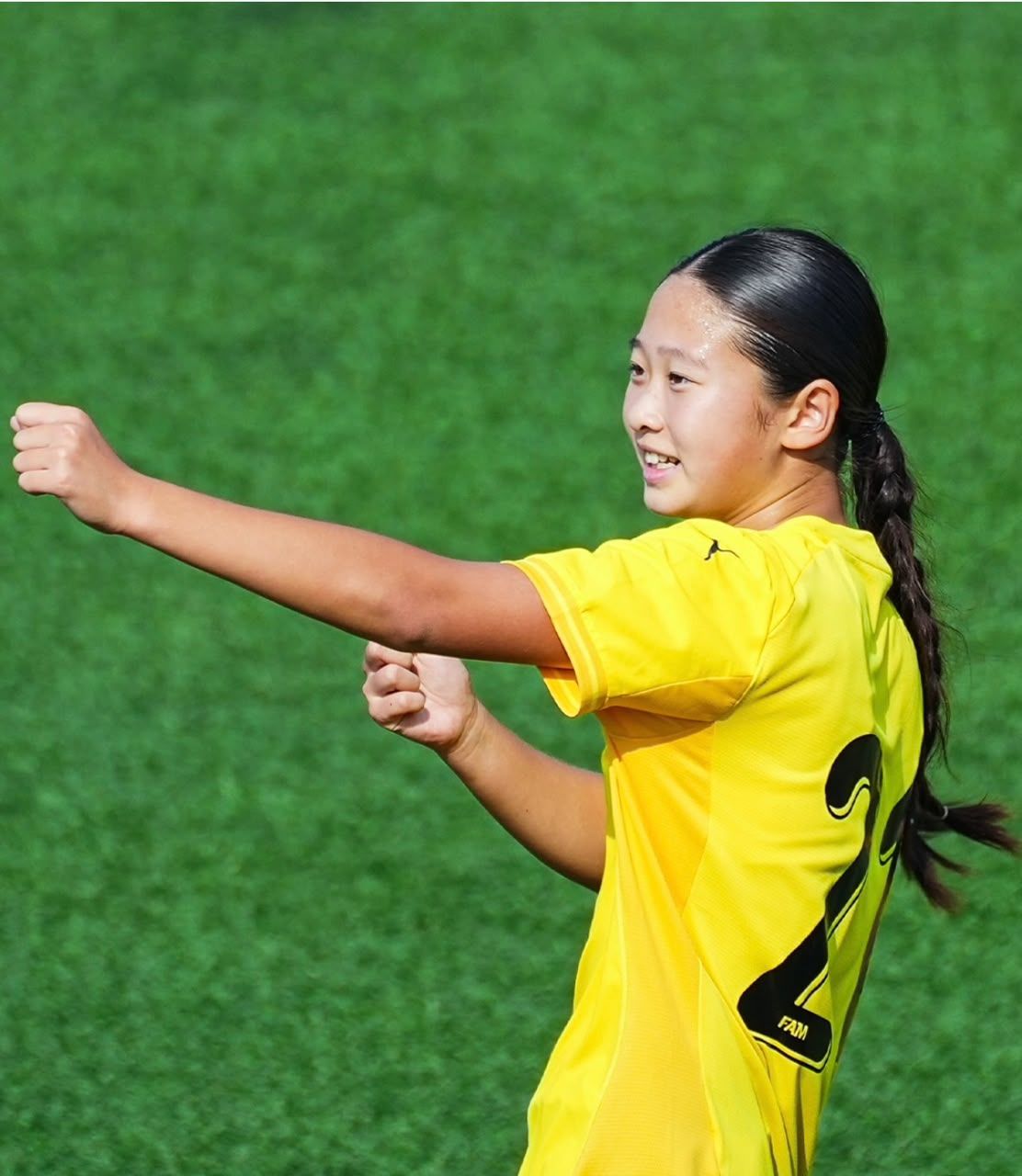
When Lim You stepped onto the pitch in Kudus, Indonesia, on Tuesday to make her debut with Malaysia's Under-17 national football squad, few could have anticipated the extraordinary performance that would unfold. The 14-year-old produced a devastating display of finishing prowess, converting seven goals—all with her dominant left foot—to spearhead the Malayan Tigress to a resounding 9-0 demolition of Saudi Arabia in their Group A encounter at the 2026 Srikandi Merdeka Cup. Her clinical execution on the field represented not merely individual brilliance, but rather the culmination of years of deliberate paternal coaching designed to cultivate an uncommon athletic edge.
The foundation for Lim You's striking proficiency traces back to childhood instruction from her father, who recognised early that left-footed players occupy a distinctive niche in competitive football. Rather than accepting her natural inclination as sufficient, her father embarked on an intensive programme to develop and refine her weaker foot into a weapon of considerable tactical advantage. This coaching philosophy—treating left-footedness not as happenstance but as a cultivatable speciality—has evidently yielded tangible results. During the Saudi Arabia encounter, Lim You's left foot became virtually unstoppable, finding the back of the net in the eighth, 22nd, 27th, 57th, and 75th minutes, followed by a composed penalty conversion and two further strikes in the 83rd and 85th minutes.
In discussing her remarkable achievement, Lim You demonstrated notable maturity and self-awareness during a virtual press conference coordinated by the Football Association of Malaysia. Rather than claiming sole credit for her seven-goal performance, she emphasised the collective nature of football, generously acknowledging her teammates' pivotal role in constructing the opportunities she expertly finished. This perspective—attributing success to team cohesion rather than individual achievement—speaks to a player who has absorbed not only technical skills but also the values of collaborative sport. Putri Mia Alysa Ahmad Zakiyamani and Ku Nur Qaleysha Qaisara Ku Zainon contributed the remaining goals in Malaysia's comprehensive victory, with the latter two scores arriving in stoppage time to seal the dominant scoreline.
Lim You's integration into the national squad has not proceeded without obstacles. The young player openly acknowledged initial difficulties navigating the linguistic demands of the environment, admitting that her fluency in Malay required improvement when she first joined the team. Yet what could have remained a persistent barrier to her integration instead prompted swift adaptation, with Lim You expressing genuine gratitude for the seamless acceptance and support she received from her teammates and coaching staff. This capacity to overcome cultural and linguistic hurdles within a remarkably compressed timeframe provides insight into both her adaptability and the inclusive environment fostered by the national programme.
Understanding Lim You's background illuminates the distinctive pathway that has led her to represent Malaysia on the international stage. Born in Taiwan and subsequently raised in the United States, she presently resides in Washington State, yet maintains profound connections to Malaysia through her parents' heritage. Both her mother and father were born and raised in Johor, creating a lineage of Malaysian identity that Lim You has chosen to honour through national team selection. Family ties remain active; she retains relatives in both Johor and Kuala Lumpur whom she visits during periodic returns to Malaysia, typically travelling home every two to four years. This transnational dimension of her identity positions her as representative of an emerging generation of Malaysian athletes whose global mobility does not diminish their commitment to national representation.
The physical dimensions of Lim You's game complement her technical proficiency. Standing 165 centimetres tall, she possesses a frame suited to the fluid movement patterns required of contemporary strikers. Her height, combined with the left-foot specialisation cultivated through years of parental instruction, creates a physiological and technical combination that opposing defenders encountered substantial difficulty countering during the Saudi Arabia match. The systematised development of her preferred foot—rather than relying upon natural ambidexterity—has apparently created an asymmetry in her skillset that generates tactical advantage.
The psychological dimension of sustaining performance under heightened scrutiny represents another challenge confronting Lim You as her seven-goal performance inevitably attracts media attention and elevated expectations. She candidly admitted to experiencing some pressure following her breakthrough display, yet characterised her emotional response as measured rather than overwhelming. Her approach to managing these emerging pressures reflects a pragmatic philosophy centred upon her enduring passion for the sport itself. Rather than allowing external accolades or expectations to dictate her emotional state, Lim You emphasised the intrinsic satisfaction derived from football competition, expressing excitement regarding the prospect of continuing to play regardless of opposition strength.
Malaysia's progression to the semi-final round represents a broader achievement extending beyond Lim You's individual performance. The national squad finished second in Group A with four points, level on points with Hong Kong but advancing through superior goal difference—a margin that Lim You's seven goals unquestionably determined. The road to this juncture proved challenging, as Malaysia initially drew goalless against Hong Kong before suffering a 0-3 defeat to hosts Garuda Pertiwi. The Saudi Arabia victory became redemptive, allowing the squad to salvage their group stage campaign and secure semi-final qualification.
Malaysia's semi-final opponent will emerge from Group B, where Thailand, Jordan, and Singapore remain in contention ahead of final group matches scheduled for today. The identity of this opponent will not be confirmed until those matches conclude, yet Malaysia enters the knockout phase with demonstrable momentum derived from their dominant performance against Saudi Arabia. Lim You's emergence as a clinical goal scorer has simultaneously provided the national coaching staff with a potent attacking asset and created elevated expectations for the squad's subsequent performances in the tournament.
The broader significance of Lim You's breakthrough extends beyond immediate tournament results. Her integration into the national programme represents a validation of talent identification systems that successfully recruited a player operating from overseas, while her rapid adaptation despite language barriers and cultural unfamiliarity testifies to the professionalism of Malaysia's youth football structures. Furthermore, her success through a deliberate specialisation strategy—focusing intensively upon left-foot development rather than pursuing conventional bilateral competence—may influence coaching methodologies across Malaysian youth programmes. As Lim You continues her international career, her trajectory will warrant close observation not merely for her goalscoring contributions but for what her journey reveals about Malaysian football's capacity to identify and develop emerging talent from the diaspora.

