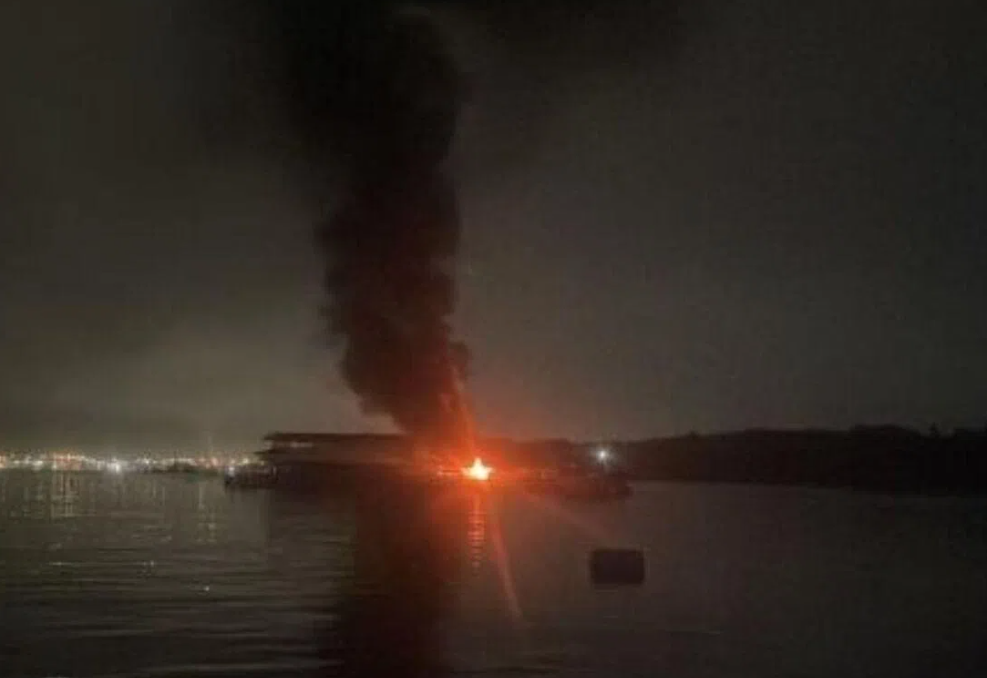
Singapore's aquaculture sector faced a significant setback when a fierce fire consumed at least two floating fish farms stationed near Pulau Ubin on June 24, with firefighting efforts stretching deep into the evening as emergency responders worked to contain the blaze. The Singapore Civil Defence Force received the distress call at approximately 8.10pm and deployed multiple marine vessels, including units from the Maritime and Port Authority of Singapore and Airport Emergency Service, to battle the flames at the farms positioned off the Lorong Halus jetty in Pasir Ris waters.
Investigations point to a lightning strike as the probable culprit, with evidence suggesting the electrical discharge struck the solar panel installation on one of the farms before the inferno spread to two neighbouring operations. The concentration of floating aquaculture facilities in this region—positioned between the small islands of Pulau Ubin and Pulau Ketam—created conditions where a single ignition source could rapidly engulf multiple units, a vulnerability that underscores the spatial constraints of Singapore's intensive farming model.
One farm operator placed his losses at approximately S$120,000, a figure that encompasses damage to critical infrastructure and livestock. Beyond the monetary valuation lies a more troubling concern: the owner revealed he cannot pursue an insurance claim for the incident, exposing a significant gap in the financial protection available to aquaculture businesses operating in coastal waters. This insurance void represents a broader vulnerability within Singapore's farming community, where weather-related disasters may leave operators bearing the full financial burden of recovery.
The destroyed inventory tells a sobering story of operational disruption. Fish feed stocks, generators, solar panels, fishing boats, and at least three fish traps were either destroyed or rendered unusable. Equally significant, fishing nets sustained damage that allowed approximately half of the farm's fish population to escape into surrounding waters, representing both an immediate loss of product and potential ecological complications from the uncontrolled release of farmed species into natural ecosystems. The compounding nature of these losses—simultaneous damage to equipment, infrastructure, and inventory—leaves operators facing extended periods of operational downtime.
What distinguished this incident from previous lightning strikes affecting the same operations was the absence of on-site personnel. The farm owner highlighted this critical factor, noting that workers had been present during earlier lightning-related incidents and had successfully contained those situations before they escalated into major fires. The June 24 event occurred when no staff were present, allowing the initial spark to develop unchecked into a full-scale emergency. This staffing pattern raises questions about operational protocols and whether continuous or extended-hours monitoring would be economically feasible for small to medium-sized operations.
The response to the emergency demonstrated the collaborative capacity of Singapore's marine emergency infrastructure. Beyond SCDF assets, personnel from neighbouring fish farms contributed to firefighting efforts, illustrating the informal mutual-aid networks that operate within the aquaculture community. However, such reliance on neighbouring operators cannot substitute for comprehensive emergency preparedness and formal safety protocols specific to floating farm operations in tropical regions prone to electrical storms.
The lightning strike incident reflects broader environmental challenges facing Southeast Asian aquaculture. The region's exposure to intense seasonal storms and concentrated electrical activity during monsoon periods creates recurring hazards for operations dependent on solar energy and located in exposed marine environments. Singapore's commitment to food security through domestic aquaculture expansion intensifies the stakes, as concentrated farming zones become more vulnerable to single catastrophic events.
For Malaysian and regional operators, this incident carries instructive implications. As neighbouring countries including Malaysia expand their own aquaculture sectors—particularly in zones near Johor and Terengganu—the Singapore experience illustrates the necessity of robust insurance frameworks, redundant safety systems, and emergency response protocols tailored to marine farming environments. The absence of insurance coverage for weather-related damage represents a policy oversight that could deter investment in sustainable food production systems.
The incident also highlights the tension between operational efficiency and safety preparedness. Automated monitoring systems and rapid-response protocols could potentially detect and suppress fires before they spread across multiple farms, yet implementing such technologies requires capital investment that smaller operators may struggle to justify given uncertain weather patterns and unpredictable disaster frequency. This creates a structural inequality where larger, better-capitalized farms enjoy superior resilience compared to smaller independent operators.
Government agencies including the Singapore Food Agency and Fish Farmers Association of Singapore are positioned to extract valuable lessons from this event. Enhanced building codes for floating infrastructure, mandatory insurance provisions, standardised lightning protection systems, and protocols for maintaining emergency personnel presence during high-risk weather periods warrant investigation. The aquaculture sector's contribution to food security demands that regulatory frameworks evolve to match the operational realities of coastal farming.
Beyond the immediate losses and property damage, this fire underscores Singapore's continuing vulnerability despite its advanced infrastructure and resources. As climate patterns shift and extreme weather events potentially intensify, aquaculture operations throughout Southeast Asia face escalating environmental pressures. The path forward requires coordinated regional approaches to resilience-building, knowledge-sharing regarding emergency response, and financial mechanisms—including insurance products—that reflect the genuine hazards facing marine farming communities throughout the region.

