Malaysia faces a persistent challenge in managing sudden cardiac arrest, with survival rates languishing between 0.5 per cent and 8.5 per cent—a stark reminder that access to emergency equipment and swift intervention remain critical gaps in the nation's healthcare readiness. Sunway Medical Centre Velocity (SMCV) has responded by launching an ambitious initiative to place Automated External Defibrillators (AEDs) at strategic locations throughout Kuala Lumpur, addressing a public health concern that claims countless lives annually without advance warning.
The stark reality of cardiac emergencies is measured in minutes. Once sudden cardiac arrest strikes, the window for effective intervention narrows rapidly, with survival chances plummeting dramatically after just eight to ten minutes without Cardiopulmonary Resuscitation (CPR). This time-critical nature of the condition means that proximity to life-saving equipment can literally determine whether a victim walks away or becomes another statistic. For much of Malaysia's population, that equipment remains inaccessible when seconds matter most, a gap that SMCV's initiative directly targets.
The hospital's rollout represents a significant expansion of its earlier "Save A Number, Save A Life" campaign, now embedding defibrillators in high-traffic urban spaces where cardiac events are statistically more likely to occur. Locations chosen for installation include Tun Razak Exchange, Bukit Bintang, Ampang Park, and Muzium Negara MRT stations, recognising that transportation hubs serve millions of commuters daily. Commercial landmarks such as Aquaria KLCC, Menara Public Bank, Menara Public Bank 2, and the National Heritage Building within the Merdeka 118 Precinct have also been identified as strategic placements where crowds gather and cardiac emergencies carry heightened risk.
Dr Wee Tong Ming, SMCV's Medical Director and Consultant Emergency Physician, emphasised that the critical factor separating survival from tragedy is often not the availability of help itself, but the speed of response and access to appropriate tools. "Oftentimes, when an emergency occurs, lives are not lost due to lack of help, but because of delays in response and the lack of access to life-saving tools, which can have severe consequences between life and death, making every second of response count," he explained. This perspective reframes cardiac emergency response as fundamentally a problem of infrastructure and preparedness rather than medical capacity.
The physical placement of each AED unit has been carefully designed for maximum usability. Clear standees accompany every defibrillator, ensuring they remain visible and accessible during high-stress emergency moments when a panicked bystander might struggle to locate equipment. QR code stickers linking to SMCV's emergency guidance webpage and medical information have been integrated into the standees themselves and distributed to general practitioner clinics, creating a digital pathway to life-saving information when it is most needed.
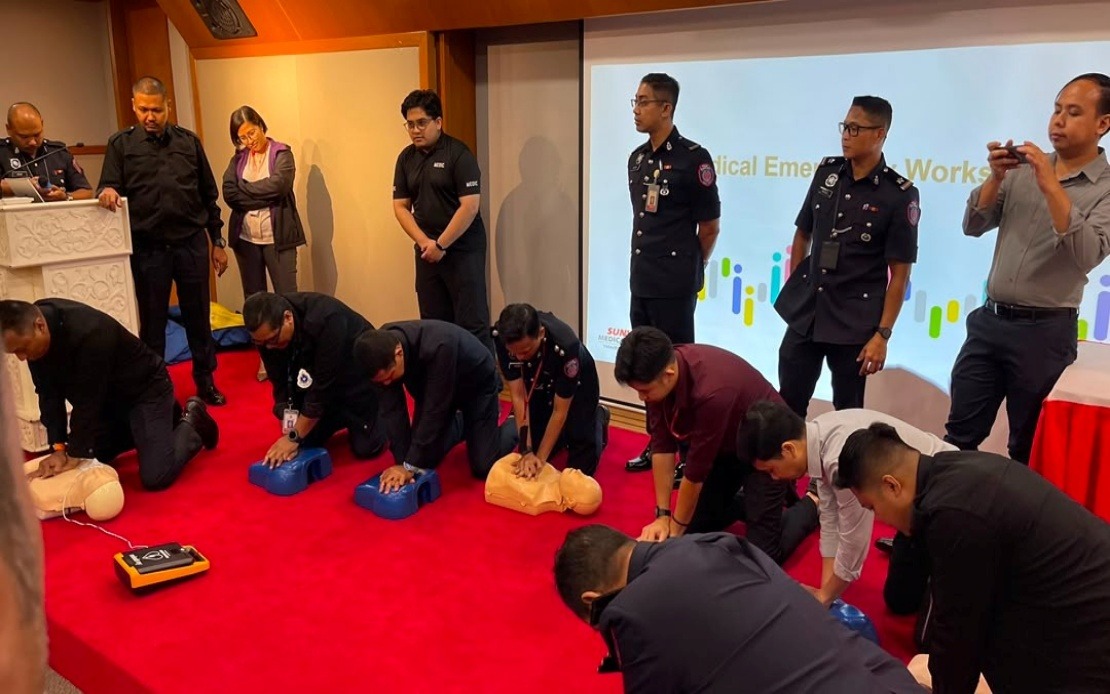
Beyond equipment installation, SMCV recognises that an AED gathering dust represents a missed opportunity. The hospital has implemented comprehensive training programmes and Accident and Emergency awareness sessions targeting both the general public and staff at installation locations. These sessions teach participants how to recognise cardiac arrest symptoms, perform CPR with correct technique, and operate AEDs effectively. Dr Wee stressed this balance: "Installing AEDs is only one part of improving emergency response. What is equally important is ensuring that people know how to use them correctly when every second matters."
Susan Cheow, SMCV's Chief Executive Officer, positioned the initiative within a broader philosophy of public empowerment. "We believe that in a medical emergency, no one should feel helpless, whether it's because they don't know what to do or don't have access to the right equipment," she stated. This reflects an understanding that cardiac emergency response cannot be delegated entirely to trained medical professionals—bystanders must feel capable and equipped to act during those critical first moments when professional help is still en route.
The expansion touches multiple layers of Kuala Lumpur's commercial and civic infrastructure. The Public Bank-ITTC at Bangunan Public Bank on Jalan Sultan Sulaiman and other corporate premises have been enlisted as installation sites, extending the network beyond public transportation and tourist attractions into the workplaces where thousands of Malaysians spend their day. This comprehensive approach acknowledges that cardiac arrest respects no boundaries of public or private space.
For Southeast Asian readers watching healthcare systems adapt to emergencies, SMCV's model offers a template for addressing the gap between medical capacity and public accessibility. Malaysia's relatively low survival rates stem partly from geographic and infrastructural limitations that plague the broader region—challenges that strategic equipment placement and public training can partially mitigate. The initiative demonstrates that solving public health crises sometimes requires not expensive new technology, but rather smarter distribution of existing tools and investment in community education.
Cheow further articulated a cultural shift underlying the initiative: "Medical emergencies not only test healthcare systems, but they also test how prepared our shared spaces are to support people in moments of crisis." This framing elevates emergency preparedness from a hospital responsibility to a shared civic obligation, suggesting that every shopping mall, every MRT station, and every office building should be considered part of Malaysia's emergency response infrastructure. By positioning AED installation and CPR training as routine aspects of urban planning rather than afterthoughts, SMCV is advocating for a preventive mindset that extends healthcare responsibility beyond the clinical setting.
The initiative's success will ultimately be measured not in AED units installed, but in lives saved—a metric that depends entirely on whether bystanders remember their training and feel confident using these devices when crisis strikes. For Malaysia to meaningfully improve its cardiac arrest survival rates, every installation must be paired with sustained public education, regular refresher training, and a cultural acceptance that emergency response is everyone's responsibility.

