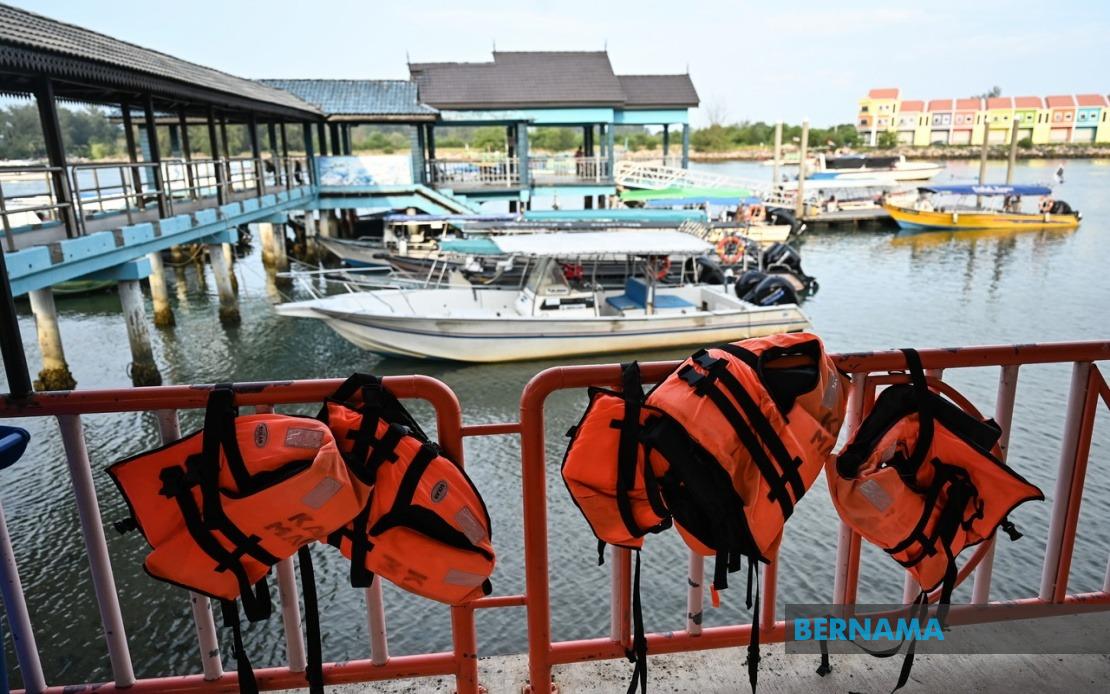
The Terengganu state government is reinforcing maritime safety protocols following a fatal boat incident, with officials emphasising that participants in squid jigging and other water-based activities must maintain constant vigilance by wearing life jackets throughout their time at sea, regardless of circumstance. This directive comes in the wake of a squid jigging vessel capsizing approximately nine nautical miles off Dataran Kuala Nerus last night, an accident that proved fatal for one crew member and resulted in injuries to three other occupants, while eight persons were successfully rescued from the water.
Datuk Razali Idris, chairman of the Terengganu State Committee on Tourism, Culture, Environment and Climate Change, has articulated a comprehensive vision for maritime safety that extends beyond the immediate incident. In his assessment, life jackets represent the non-negotiable foundation of water safety, and their protective value is compromised the moment wearers remove them for rest or sleep while aboard vessels. This perspective reflects a sophisticated understanding that accidents rarely announce themselves; maritime emergencies can occur without warning, transforming routine operations into critical situations within seconds. The official stressed that this principle applies universally across all water-based recreational and commercial activities, not merely squid jigging enterprises.
Razali's position encompasses broader vessel responsibilities, establishing that boat operators must maintain comprehensive safety infrastructure as a matter of regulatory and moral obligation. Every vessel carrying passengers requires not only life jackets in sufficient quantity for all persons aboard but also functional fire extinguishers, first aid provisions, and additional safety apparatus appropriate to the vessel's size and intended operations. From the government's perspective, this equipment represents the baseline threshold for responsible maritime enterprise; anything less constitutes an unacceptable risk to human life. The official has positioned safety compliance as a fundamental duty owed by boat operators to crew members, passengers, and activity participants alike.
Pre-departure safety briefings emerge as a critical secondary safeguard within this comprehensive framework. Boat skippers, as individuals possessing intimate knowledge of current sea conditions and vessel characteristics, occupy a unique position to communicate essential information that could prove lifesaving. These briefings should encompass detailed explanations of proper life jacket usage, clear descriptions of prevailing weather and sea conditions, transparency regarding anticipated trip duration, and explicit emergency procedures. Razali has drawn a parallel to international maritime practice, noting that passenger ferries routinely conduct such briefings before departure; the same rigorous standard should apply uniformly across all commercial water transport, including squid jigging operations. This approach democratises access to critical safety information, ensuring that even inexperienced participants understand their responsibilities.
The official has also advocated for a collaborative relationship between boat operators and participants, wherein passengers recognise that skippers possess authority to determine whether conditions warrant proceeding or mandate postponement. Rather than viewing weather-related trip cancellations as customer service failures, participants should understand such decisions as demonstrations of professional responsibility. Razali has noted that most Terengganu boat operators conduct their businesses with integrity and willingly offer refunds when safety considerations require cancellation. This framing positions passenger safety not as an inconvenience but as the legitimate priority that supersedes commercial considerations.
Regarding the specific incident that triggered this advisory, Razali confirmed that the capsized vessel had been maintained in good working order and operated by an experienced skipper, yet still encountered difficulties. Investigation findings indicate that substantial volumes of water infiltrated the engine compartment, ultimately leading to the vessel's submersion. Significantly, all passengers wore life jackets at the time of the accident, a circumstance that almost certainly prevented a substantially higher death toll. This tragedy underscores Razali's central argument: life jackets function as the ultimate safeguard against fatality in maritime emergencies, making their continuous use indispensable regardless of perceived risk levels during any particular voyage.
The state government has determined that existing standard operating procedures for squid jigging activities remain adequate and require no substantive revision. Rather than pursuing regulatory changes, officials have concentrated upon promoting enhanced compliance with current guidelines. This decision reflects confidence in the fundamental soundness of established protocols, coupled with recognition that implementation gaps rather than procedural deficiencies contributed to past incidents. Accordingly, the government's strategy emphasises education, awareness-raising, and operator accountability rather than regulatory expansion.
Responsibility for vessel licensing and operational approval remains vested in the Malaysia Marine Department, a jurisdictional boundary that Terengganu officials acknowledge within their advisory role. The state government functions as an advocate for safety culture and compliance, issuing recommendations and public guidance, while the Marine Department maintains statutory authority over licensing decisions and operational authorisation. Within this framework, Razali has reminded squid jigging participants and operators to respect all weather-related warnings issued by the Marine Department and to refrain from maritime activities when authorities prohibit vessel operations due to adverse conditions. This approach distributes responsibilities across appropriate institutional channels while maintaining cohesive messaging regarding safety priorities.
The confirmed casualty was Ahmad Nasaruddin Mohmad Jalil, 37, a crew member aboard the vessel. Three participants sustained injuries during the incident: Faris Ibrahim, 33, Ahmad Danial Iman, 24, and Fatin Fariesya Rohaizan, 26. Two injured persons received outpatient treatment at Hospital Sultanah Nur Zahirah in Kuala Terengganu, while the third remained under ongoing medical supervision. The incident occurred at approximately 9 pm, according to Kuala Terengganu police chief ACP Azli Mohd Noor, who coordinated the emergency response.
For Malaysian maritime enthusiasts and recreational participants, this incident illustrates the distinction between perceived risk and actual risk in water-based activities. Squid jigging represents an established tradition across Southeast Asian coastal communities, yet familiarity breeds complacency that can prove fatal. The Terengganu government's emphasis on consistent life jacket use, pre-departure briefings, and respect for skipper authority reflects international maritime best practices adapted to local recreational contexts. As regional tourism continues expanding and more residents from urban centres participate in coastal activities, the cultural integration of safety protocols becomes increasingly important. Razali's messaging targets both operators and participants, suggesting that safety consciousness must permeate maritime culture rather than remaining confined to regulatory compliance documents.
The incident also highlights operational dynamics within Malaysia's Maritime Department oversight structure, where licensing authorities maintain jurisdictional responsibility for vessel approval and operational permits. This distributed governance model requires coordination between state-level advisory bodies and federal-level regulatory agencies to ensure comprehensive safety frameworks. Terengganu's approach exemplifies how state governments can meaningfully contribute to maritime safety through education and advocacy even when licensing authority resides elsewhere. Moving forward, the success of safety initiatives depends upon sustained commitment from boat operators, consistent participant engagement with safety protocols, and unwavering respect for Marine Department directives regarding weather-related operational restrictions.

