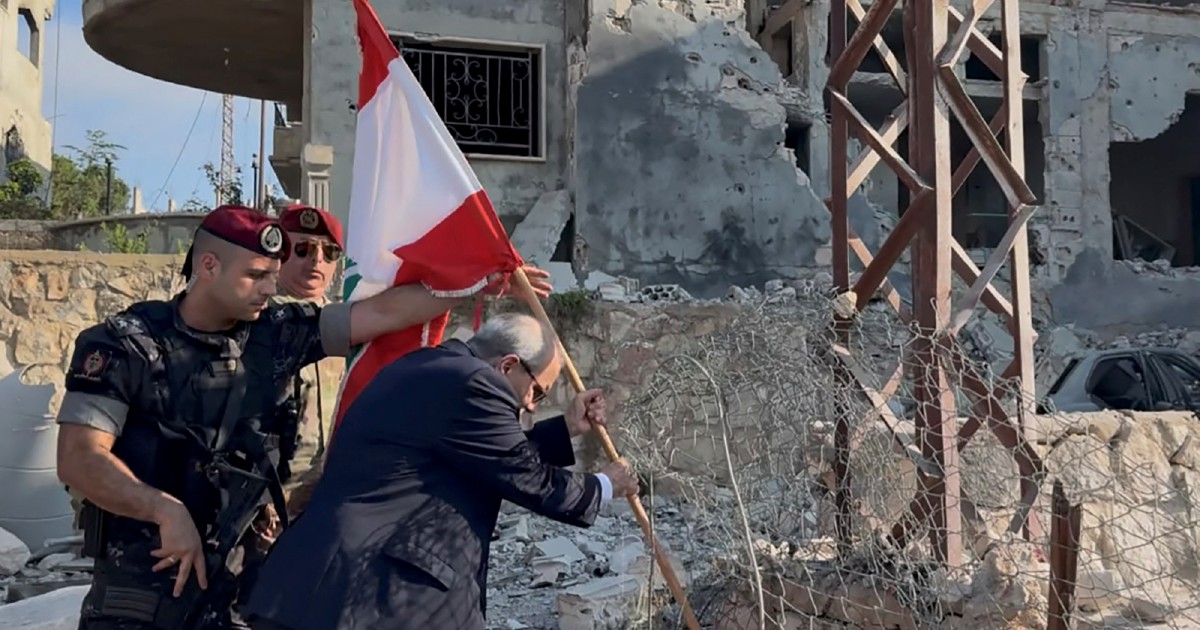
Lebanese Prime Minister Nawaf Salam has reaffirmed his government's commitment to securing a complete Israeli withdrawal from all territory it currently occupies, staking out a firm negotiating position during a high-profile visit to a strategically significant southern village this week. The statement, delivered in Zawtar al-Gharbiyah where Lebanese Armed Forces have recently established a military presence, underscores Beirut's determination to reclaim full sovereignty over disputed border regions and signals the government's resolve to pursue the matter through diplomatic channels.
The timing of Salam's remarks carries particular weight given the ongoing process of military redeployment in southern Lebanon. The Lebanese army's return to areas previously outside its control represents a tangible step toward reasserting state authority in regions where various armed groups have long held sway. By visiting the site personally and making unequivocal statements about withdrawal demands, Salam is demonstrating to both domestic audiences and international observers that Lebanon regards this military repositioning as inseparable from broader negotiations over territorial integrity.
The Israeli occupation of Lebanese territory remains one of the most contentious issues in Middle Eastern geopolitics and a persistent source of tension along the Israel-Lebanon border. Various Lebanese factions and the government itself have long viewed the occupied areas as illegally held land that must be returned. Salam's declaration reflects the consensus position held across Lebanon's fractious political spectrum, even as different parties disagree on tactics and the role of armed resistance.
For Malaysia and other Southeast Asian nations following Middle Eastern developments, Lebanon's push for territorial restoration carries implications for regional stability and international law. The principle that occupied territory must be returned underpins numerous regional disputes globally, making Lebanon's case a litmus test for how the international community responds to territorial claims backed by diplomatic pressure rather than military force alone.
Salam's government has pursued a pragmatic approach to the broader security situation in southern Lebanon, balancing the need to extend state control with the practical realities of the region's complex political landscape. The redeployment of Lebanese forces marks a significant shift from periods when the state exercised minimal authority in border areas, and represents an attempt to establish legitimate governmental presence before any final settlement negotiations commence. By establishing facts on the ground through military repositioning, Lebanon enhances its negotiating position and demonstrates capacity for self-governance.
International actors, including the United Nations and various nations invested in regional stability, have closely monitored developments in southern Lebanon. The country's efforts to extend state control and secure international recognition for its territorial claims depend partly on demonstrating that Lebanese forces can maintain security and prevent the area from becoming a staging ground for cross-border activities. Salam's visit and statements serve to publicise these efforts and signal Lebanon's serious intent regarding both military redeployment and diplomatic objectives.
The broader context of Israeli-Lebanese relations extends beyond simple territorial disputes. Historical conflicts, most notably the 1982 invasion and subsequent occupation, have left deep scars on the Lebanese psyche and fundamentally shaped how the country approaches its relationship with its southern neighbour. Salam's government inherited these historical grievances while attempting to chart a path toward resolution that prioritises state building and civilian security.
For regional observers, Lebanon's insistence on complete Israeli withdrawal reflects both nationalist sentiment and practical security concerns. A fully sovereign Lebanese state controlling its entire territory would theoretically be better positioned to prevent cross-border incidents and maintain stability. However, this goal remains complicated by the presence of armed groups that also claim to resist Israeli occupation, creating internal tensions about how withdrawal should be achieved and what mechanisms should govern the territory afterward.
The diplomatic dimensions of Salam's position deserve particular attention. By publicly and repeatedly emphasizing demands for complete withdrawal, the Lebanese government maintains pressure on the negotiating process while also demonstrating to domestic constituents that leadership is pursuing their territorial interests. This rhetorical firmness must be balanced against pragmatic recognition that comprehensive settlements often require compromise, and Salam's government appears willing to engage seriously despite its stated maximalist position.
Looking forward, the success of Lebanon's redeployment and territorial recovery efforts will likely depend on sustained international support and the willingness of all parties to negotiate in good faith. For countries like Malaysia with interests in regional stability and respect for international law, Lebanon's case exemplifies the ongoing challenges faced by smaller nations attempting to assert sovereignty against more powerful neighbours. The outcome may set important precedents for how similar disputes are resolved in other regions grappling with territorial questions and the legacies of past conflicts.

