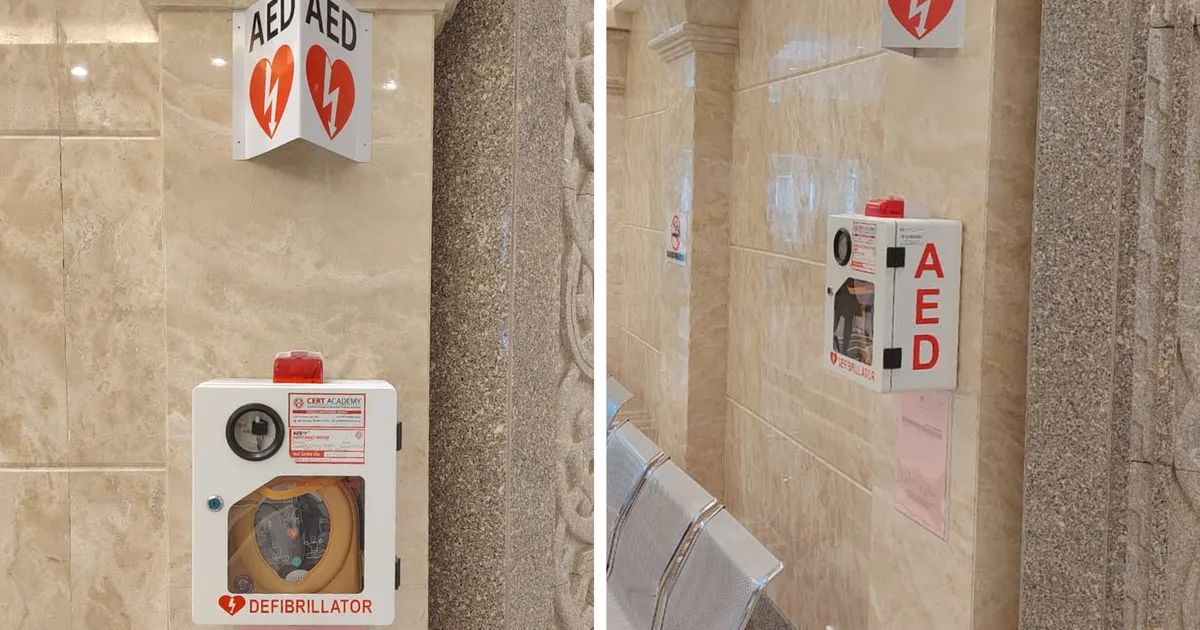
The Malaysian legal profession is mobilising behind a safety initiative that could save lives within courthouses nationwide. Prompted by a fatal cardiac incident that occurred during court proceedings at the KL High Court, lawyers are advocating for the installation of automated external defibrillators (AEDs) at all major court complexes across the country. The tragic death of a litigant who experienced sudden cardiac arrest while in a courtroom has crystallised concerns about preparedness for medical emergencies in judicial settings, where large numbers of people often spend extended periods in confined spaces.
Courts represent unique environments in which medical crises can unfold with particular urgency. Unlike hospitals or clinics equipped with comprehensive emergency medical infrastructure, courthouses typically operate without sophisticated life-saving apparatus readily available to staff or visitors. A litigant undergoing the stress of legal proceedings faces cardiovascular strain comparable to other high-pressure situations, yet judicial facilities have historically not prioritised emergency medical equipment. The incident at the KL High Court has exposed this vulnerability, demonstrating that death can arrive without warning in spaces where the public gathers for civic purposes.
Automated external defibrillators represent straightforward, proven technology capable of reversing sudden cardiac arrest when deployed promptly. Medical consensus has established that early defibrillation dramatically improves survival outcomes for cardiac patients, particularly when administered within the first few minutes following collapse. The devices are portable, operate through user-friendly interfaces requiring minimal training, and have become standard installations in airports, shopping centres, schools, and sports facilities across Malaysia. Yet courthouses, where vulnerable populations including elderly litigants, witnesses, and legal practitioners regularly convene, have remained surprisingly unequipped.
The advocacy effort by Malaysia's legal community carries particular weight given their frontline experience of court operations and their understanding of who frequents these buildings. Lawyers interact daily with elderly clients pursuing long-running litigation, individuals experiencing acute stress during proceedings, and vulnerable parties whose health conditions may be exacerbated by courtroom tension. These professionals recognise that court complexes function as public institutions serving Malaysians from all demographic groups and health profiles. The call for universal AED installation reflects both compassion and practical recognition that the judiciary has a duty of care extending to everyone within court precincts.
Implementing AED networks across major court complexes would require investment in equipment purchase and staff training programs. However, the financial outlay pales against both the human cost of preventable death and the long-term liability implications facing court administrations. Malaysia's larger urban court facilities in Kuala Lumpur, Penang, Selangor, and other states would benefit most immediately from such installations, though secondary courthouse networks should eventually receive comparable provision. The initiative aligns with broader public health policy objectives promoting automated defibrillator accessibility throughout Malaysian society.
Staff training constitutes an essential complement to equipment provision. Court employees including security personnel, administrative officials, and support staff should receive certified first-aid and AED operation instruction, enabling confident response when emergencies occur. Many Malaysian workplaces already mandate such training, establishing precedent for comparable court system protocols. Lawyers themselves often possess first-aid qualifications, creating a skilled pool of responders available during business hours. Signage clearly identifying AED locations and painted floor markers indicating device placement would ensure rapid location during crisis moments when seconds determine survival.
The psychological dimensions of this initiative extend beyond emergency response capability. Public confidence in court systems depends partly on perception that judicial institutions maintain professional, safe environments. Learning that someone died from a cardiac emergency within a courthouse undermines institutional credibility and public trust. Conversely, visible evidence that courts have invested in life-saving equipment signals institutional commitment to visitor welfare and demonstrates that the judiciary recognises its custodial responsibilities. This messaging carries particular importance in Malaysia where court proceedings often involve vulnerable populations including elderly litigants, persons with chronic health conditions, and individuals experiencing acute psychological stress.
Regional comparison reveals that neighbouring jurisdictions have implemented AED provisions at court facilities as standard practice. Singapore's courts, Hong Kong's judiciary, and Australian court systems have incorporated these devices into standard courthouse infrastructure. Malaysian court administration, which often references international best practices in procedural matters, should equally adopt proven safety measures from comparable legal systems. The absence of such equipment represents a preventable gap in alignment with regional standards and international judicial norms regarding public safety.
Implementation timelines merit careful consideration to ensure comprehensive rollout rather than piecemeal installation. The Judicial and Legal Service Commission, which oversees Malaysian court infrastructure and administrative functions, should coordinate with federal and state authorities to establish standardised specifications for device placement, staff training protocols, and maintenance schedules. A phased approach beginning with major urban court complexes in Kuala Lumpur, Penang, Johor Bahru, and Kota Kinabalu could demonstrate feasibility before expanding to secondary courthouse networks. Equipment replacement cycles and staff refresher training regimens require budgeting within routine courthouse operating expenditure.
The tragedy motivating this advocacy effort carries broader significance beyond immediate safety considerations. Sudden cardiac death in public settings remains a leading cause of preventable mortality in Malaysia, particularly among working-age and elderly populations. Court facilities represent public spaces where comprehensive medical emergency response measures should reasonably be expected. The legal profession's advocacy positions this initiative squarely within public health policy discourse and institutional accountability frameworks. Responding affirmatively to lawyers' recommendations would represent modest investment yielding potentially life-saving returns while simultaneously demonstrating institutional responsiveness to genuine community safety concerns.
Movement toward universal AED installation across Malaysia's court system reflects evolving expectations regarding institutional duty of care. Judicial facilities serve populations across age ranges and health profiles, many experiencing stress-inducing circumstances that elevate cardiovascular risk. The fatal cardiac incident at the KL High Court, while tragic, has catalysed constructive dialogue about preventive measures previously overlooked. Adoption of this initiative would acknowledge that court administration encompasses not merely legal proceedings but also visitor safety and emergency preparedness. Such investment positions Malaysia's judiciary as an institution committed to comprehensive public welfare alongside its primary justice-delivery mandate.

