Commercial activity between Laos and Vietnam has reached new heights this year, with bilateral trade totalling US$1.47 billion in just the first seven months of 2026. The robust figures reflect the two neighbouring countries' intensifying economic engagement, underpinned by substantial investments in cross-border infrastructure that promise to reshape regional commerce patterns. The trade performance, discussed at a high-level cooperation meeting in Danang City on August 27, signals strengthening ties between Laos and its powerful neighbour, a development with implications for Southeast Asian supply chains and investment flows.
Laos, traditionally a less industrialised economy, has emerged as a significant supplier to Vietnam, with exports reaching approximately US$1 billion during this period. The country's outbound shipments reflect growing Vietnamese demand for agricultural products, minerals, and other commodities that Laos produces. Conversely, Vietnamese imports into Laos totalled US$420 million, representing the asymmetry typical of trade relationships between economies at different development stages. This imbalance underscores Laos's reliance on Vietnamese manufactured goods, machinery, and intermediate products essential for domestic consumption and industrial activity.
The deliberations at the Laos-Vietnam and Vietnam-Laos Joint Cooperation Committees revealed that both governments view infrastructure connectivity as the cornerstone of sustained economic expansion. Laos's Deputy Prime Minister and Minister of Finance Santiphab Phomvihane and Vietnam's counterpart Ngo Van Tuan, who respectively chair the bilateral committees, presided over discussions that underscored the strategic nature of these undertakings. The presence of delegations from ministries, central agencies, and regional authorities from both capitals demonstrated the comprehensive, whole-of-government approach both nations are adopting to maximise the benefits of deeper integration.
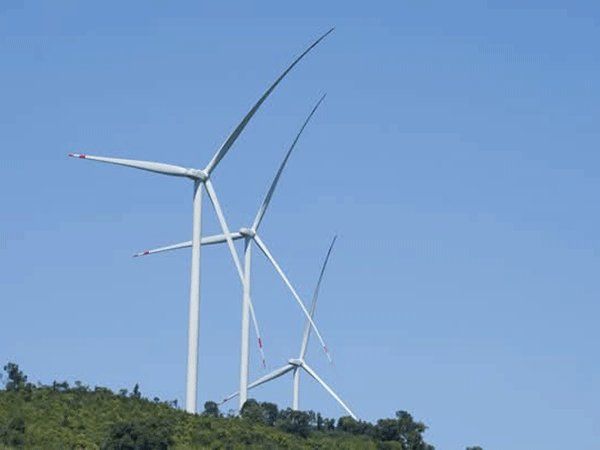
Three flagship infrastructure initiatives dominate the bilateral agenda for the coming years. The Vientiane-Hanoi Expressway will dramatically reduce transit times between Laos's capital and Vietnam's major economic hub, facilitating the movement of goods and people across a critical economic corridor. The Vientiane-Vung Ang Railway, meanwhile, will provide an alternative transport mode for bulk commodities, potentially reducing road congestion and lowering logistics costs for traders. A proposed 500-kilowatt transmission line represents an equally transformative energy dimension, enabling Laos to export hydroelectric power to Vietnam while enhancing the interconnectedness of regional electricity grids. Beyond these megaprojects, officials highlighted progress on warehouse facilities, oil pipeline infrastructure, and frameworks for cross-border electricity trading.
The emphasis on energy connectivity reflects shifting regional dynamics in Southeast Asia's power sector. Laos possesses substantial hydroelectric resources and has positioned itself as a potential regional power exporter, particularly to energy-hungry neighbours including Vietnam, Thailand, and Cambodia. A high-voltage transmission line linking the two countries would cement this role whilst generating revenue for Laos's national budget. For Vietnam, securing energy supplies from a reliable neighbour reduces dependence on more distant or geopolitically uncertain sources. This mutually beneficial arrangement exemplifies how infrastructure projects can address each nation's strategic priorities whilst strengthening bilateral bonds.
Additionally, the cooperation committees identified several development initiatives sponsored by Vietnam in Laos that merit continued support. The Xaysomboun Provincial Agricultural Technical Centre, the Savannakhet Provincial Technical and Vocational School, expanded facilities at Vangvieng district hospital, and the Laos-Vietnam Friendship University represent capacity-building investments that enhance human capital and institutional quality in Laos. These ventures, whilst less visible than transportation corridors, build the social and institutional foundations necessary for sustained development and deepen people-to-people connections that complement official relationships.
Both governments have assessed that their 2026 cooperation targets are substantially on track, having achieved most milestones during the first eight months of the year. Officials stressed their satisfaction with progress, though they acknowledged lingering implementation challenges requiring continued attention. The frank acknowledgement of outstanding issues—typical in bilateral forums—reflects a pragmatic understanding that infrastructure projects of this scale encounter technical, financial, and bureaucratic hurdles that demand persistent problem-solving.
Looking ahead, Laos and Vietnam have committed to implementing their comprehensive five-year Cooperation Plan for 2026-2030, a framework that extends beyond trade and infrastructure to encompass political coordination and foreign policy alignment. The two countries pledge to translate high-level political agreements into granular operational programmes that guide day-to-day cooperation across multiple sectors. Political and diplomatic cooperation will receive explicit priority, recognising that stable state-to-state relations provide essential prerequisites for economic integration. This holistic approach distinguishes Laos-Vietnam ties from purely commercial partnerships, embedding commercial ties within broader strategic relationships.
The bilateral agenda places special emphasis on attracting Vietnamese investment to Laos, a priority that acknowledges Vietnam's superior capital accumulation and technological capabilities. By establishing favourable conditions for Vietnamese enterprises to expand into Laos, both nations expect to generate employment, transfer technology, and stimulate economic dynamism in the less developed neighbour. Such foreign direct investment complements infrastructure development, as improved logistics networks and energy connectivity directly benefit Vietnamese firms operating in Laos.
For Southeast Asia, the intensifying Laos-Vietnam partnership represents a strategic realignment with significant ramifications. Laos's historically precarious position between Thailand and Vietnam—two significantly larger powers—may stabilise as Vietnamese investment and infrastructure integration deepen ties with Hanoi. Malaysian and other regional businesses should monitor how improved corridor connectivity affects supply chain routing, as the Vientiane-Hanoi linkages could alter traditional trade flows through Thailand. The energy dimension warrants particular attention, as a functioning regional electricity grid including Laos-Vietnam connectivity could reshape power markets across Indochina.
The cooperation committees' commitment to accelerating infrastructure projects whilst increasing bilateral trade reflects both practical economic reasoning and strategic calculation. Enhanced transportation and energy connectivity will reduce transaction costs and expand market opportunities for businesses in both countries. Simultaneously, deepening economic interdependence typically strengthens political stability and reduces the likelihood of bilateral disputes. For Laos, accelerating integration with Vietnam offers a pathway to more rapid development; for Vietnam, a prosperous and stable neighbour serves broader strategic interests in an increasingly contested region.

