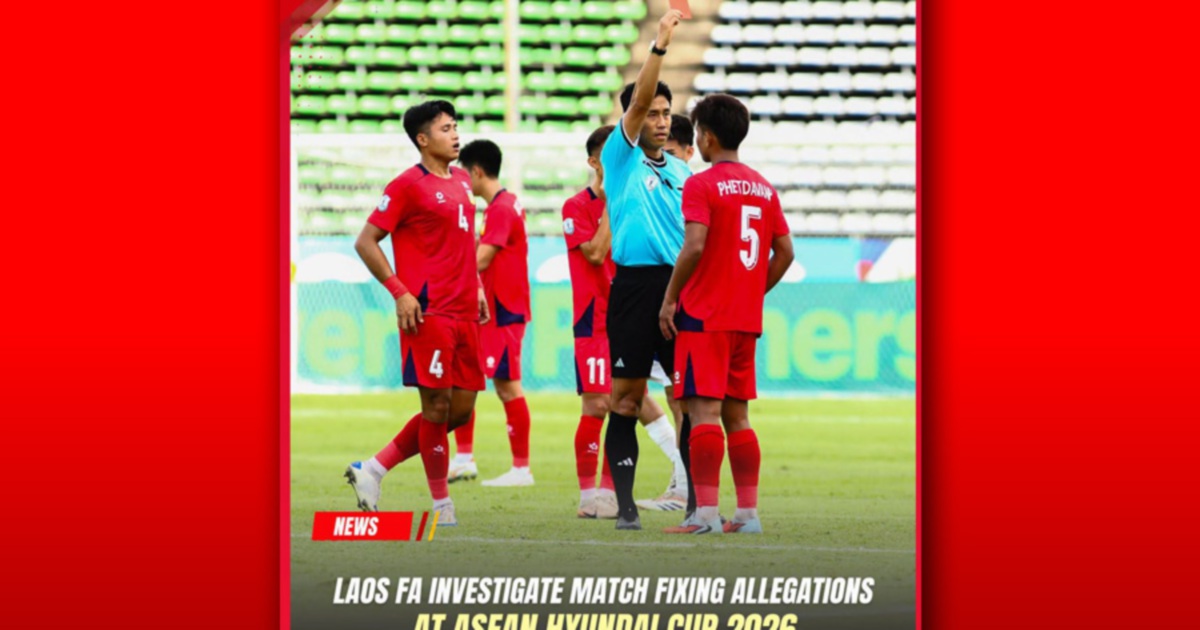
The Lao Football Federation has triggered a major corruption inquiry into its national team following revelations of alleged match-fixing, bribery, and unlawful gambling activities, marking a significant integrity crisis for Southeast Asian football on the continental stage. The federation's decision to escalate the matter to investigation level signals the gravity with which officials are treating what could become one of the region's most damaging sports scandals in recent memory.
Match-fixing in professional football remains a persistent threat across Asia, with the ASEAN Cup serving as a particularly high-stakes tournament where national pride and financial interests intersect. The allegations against Laos players strike at the credibility of the competition itself, raising fundamental questions about whether results across multiple matches may have been predetermined or influenced by external actors seeking profit through illegal gambling networks. Such compromises undermine the legitimacy of all participating nations and cast doubt on the competitive integrity that the tournament is designed to showcase.
The involvement of bribery alongside match-fixing suggests a coordinated scheme rather than isolated incidents of individual player misconduct. When administrators, intermediaries, or other stakeholders orchestrate such arrangements, they create systemic vulnerabilities that can be difficult to detect and even harder to eradicate. For Malaysian football authorities and other ASEAN bodies, the Lao case serves as a cautionary reminder that their own national competitions and athlete pools require constant vigilance against similar infiltration by criminal gambling syndicates.
The emergence of illegal gambling networks as a driving force behind these allegations reflects how underground betting operations have become increasingly sophisticated in targeting professional football across the region. These operations typically operate across multiple jurisdictions, exploiting regulatory gaps and poor information-sharing between countries. Southeast Asia's geographic positioning and relatively nascent sports governance infrastructure can make it an attractive target for international gambling cartels seeking to manipulate outcomes for massive financial returns.
For the Lao Football Federation, the investigation represents both a reputational challenge and an opportunity to demonstrate institutional commitment to clean sport. How thoroughly officials pursue the matter—whether they cooperate with regional bodies, share findings with law enforcement, and implement structural reforms—will determine whether this moment becomes a catalyst for systemic improvement or merely another scandal that dissipates into historical footnotes. The federation's credibility in handling the inquiry will influence perceptions of Southeast Asian football governance more broadly.
The timing of these allegations during the ASEAN Cup carries particular significance, as the tournament represents the region's premier national team competition and attracts significant media attention and gambling activity. Players from smaller football nations like Laos often face unique pressures due to relatively modest professional salaries and limited career prospects, potentially making them more susceptible to financial incentives offered by fixers. Understanding these socioeconomic factors is crucial for developing effective prevention strategies that address root causes rather than merely symptoms.
Regional football bodies including the ASEAN Football Federation will likely face pressure to strengthen oversight mechanisms and establish clearer protocols for investigating corruption allegations that cross national boundaries. The current decentralized approach, where each national federation operates with considerable autonomy, can create gaps that bad actors exploit. Coordinated action, standardized investigation procedures, and information-sharing protocols between federations would represent significant institutional evolution for Southeast Asian football governance.
Malaysia's own football ecosystem, which includes a professional league and regular international competition, must heed the lessons from Laos. The Malaysian Football League and Football Association of Malaysia should review their own safeguarding measures, educate players about corruption risks, and establish clear reporting mechanisms for suspicious approaches. Engaging with law enforcement agencies to disrupt gambling networks operating within Malaysian territory would complement internal football governance efforts.
The broader implications extend beyond football into questions about Southeast Asia's capacity to combat organized crime that exploits sports for money laundering and profit generation. Match-fixing serves criminals by generating cash flows that can be subsequently laundered through legitimate channels, making corruption in sports an international policing concern. Governments working alongside sports authorities to strengthen anti-corruption frameworks represent a more comprehensive response than football organizations acting independently.
Lookout expectations suggest that the Lao investigation may reveal connections to international gambling operations based outside Southeast Asia, possibly in jurisdictions known to host underground betting syndicates. Such findings would prompt discussions about regional cooperation mechanisms for combating cross-border sports corruption, potentially leading to enhanced information-sharing agreements and joint investigation protocols among ASEAN nations. The scandal, while damaging in the short term, could catalyze meaningful institutional reforms if authorities pursue it with genuine commitment.
Player education and prevention work must become central to how Southeast Asian football develops its workforce. Young athletes entering professional ranks need clear guidance about corruption approaches, the legal consequences of participation, and proper channels for reporting attempted bribery. This represents an investment in long-term integrity rather than reactive crisis management after scandals emerge.
For regional fans and observers, the Lao investigation underscores how corruption in football ultimately diminishes the sport's appeal by introducing doubt into competition outcomes. When audiences cannot trust that matches reflect genuine competitive effort, the emotional investment that sustains fan engagement erodes. Southeast Asian football's development as a commercially and culturally significant sector depends on maintaining competitive credibility, making anti-corruption work fundamentally aligned with the sport's growth interests rather than merely an compliance exercise.

