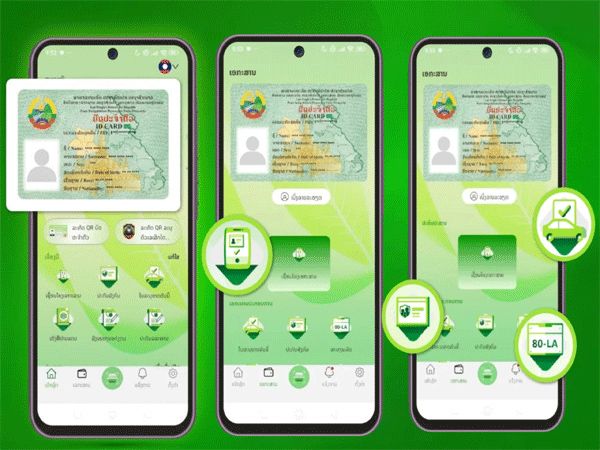
Laos has taken a decisive step toward digitisation by retiring its traditional paper-based identity system in favour of a comprehensive mobile application that promises to simplify how citizens interact with government institutions across the Southeast Asian nation. The Ministry of Public Security has formally inaugurated the LAeID application while simultaneously invalidating the decades-old white and green identity cards and household registration books that have long been staples of Lao bureaucracy. This transition represents a significant modernisation effort designed to reduce administrative friction and accelerate the country's journey toward a fully digital public sector.
Effective from July 18, the old identity documents can no longer be used for official transactions, compelling the nation's 7 million citizens to migrate toward the new system. The rollout has been coordinated across all government ministries and agencies, with public security offices throughout the country now equipped to process digital identity registrations at the district and provincial levels. This nationwide implementation underscores the government's commitment to making the transition accessible to citizens regardless of their geographic location or prior experience with digital systems.
The LAeID application fundamentally reimagines how personal identification functions in the digital age by consolidating multiple critical documents into a single smartphone-based platform. Rather than maintaining separate physical papers for identity verification, household registration, and other government interactions, citizens will eventually carry all essential documentation through one unified digital wallet. This architectural approach mirrors similar initiatives implemented across Asia, where countries like Singapore, Thailand, and Indonesia have pursued comparable digital identity frameworks to enhance administrative efficiency.
At its current inception, the system prioritises the core digital identity card function, with plans to progressively integrate additional government databases and services. Future iterations will link birth certificates, marriage certificates, health insurance information, social security records, vehicle registration details, driving licences, and passport data into the LAeID ecosystem. This phased implementation strategy allows the Ministry of Public Security to refine the platform's technical infrastructure while gradually expanding its integration with other government departments, reducing the risk of system failures that could disrupt critical public services.
The registration process itself has been deliberately simplified to encourage widespread adoption. Citizens establish accounts using their identity numbers as usernames, with the system automatically generating passwords transmitted via SMS upon approval, or alternatively allowing users to create custom credentials during initial registration. This dual-option approach accommodates varying levels of technological familiarity across Laos' diverse population, from urban professionals to rural inhabitants with limited prior exposure to digital authentication systems.
For ordinary Lao citizens, the practical implications are substantial and immediately tangible. The elimination of paper document requirements means fewer items to carry and considerably less time spent queuing at government offices to obtain various stamps and approvals. Administrative transactions that previously required visits to multiple offices while presenting different sets of documents can now potentially be conducted through single smartphone interactions, fundamentally transforming the citizen experience of government interaction from a time-consuming chore into a streamlined digital process.
Beyond individual convenience, the LAeID system promises significant systemic benefits that extend throughout Laos' public administration apparatus. By consolidating government records into a unified digital architecture, the Ministry of Public Security gains substantially improved data management capabilities and enhanced oversight of administrative processes. The reduction in paper-based workflows simultaneously decreases operational costs for government agencies while generating parallel savings for citizens no longer purchasing physical document copies or bearing transportation costs associated with office visits. These economic efficiencies, when multiplied across millions of transactions annually, represent meaningful resource reallocation opportunities for a developing nation.
The digital transformation initiative also addresses longstanding data accuracy and accessibility challenges inherent in paper-based systems. Physical household registration books and identity cards are susceptible to loss, damage, and falsification—risks that digital systems with encryption and audit trails substantially mitigate. Enhanced data integrity strengthens the government's ability to administer services equitably and detect fraudulent claims, while simultaneously providing citizens with verifiable documentation accessible instantly rather than contingent upon retrieving physical records.
Laos' adoption of the LAeID platform situates the nation within a broader regional trend toward digital public administration across Southeast Asia. Malaysia, Thailand, and Vietnam have similarly pursued comprehensive digital identity initiatives over recent years, creating a quasi-standardised approach to government modernisation across the region. This convergence suggests potential future interoperability opportunities, whereby Lao citizens might eventually conduct transactions or verify identity credentials across neighbouring countries using compatible digital systems, facilitating cross-border commerce and mobility within ASEAN frameworks.
The phased rollout strategy reflects lessons learned from digital identity implementations elsewhere that encountered resistance or technical difficulties when attempting instantaneous nationwide transitions. By prioritising core identity functions initially and gradually adding services, the Lao government can identify technical vulnerabilities and user experience problems while maintaining system stability and public confidence. This measured approach acknowledges that transforming centuries-old administrative practices requires not merely technical capability but also sustained citizen engagement and institutional readiness across disparate government entities.
Looking forward, the LAeID system's success hinges substantially on consistent government investment in digital infrastructure, particularly in rural areas where internet connectivity remains inconsistent. The Ministry of Public Security must ensure that digital identity registration remains equally accessible across urban and provincial centres, preventing a two-tiered system where urban populations enjoy seamless digital services while rural citizens encounter persistent barriers. Additionally, cybersecurity frameworks protecting sensitive personal information stored within LAeID will require continuous reinforcement as threats evolve and data volumes expand.
The ultimate vision underlying LAeID—a comprehensive digital wallet integrating Laos' entire ecosystem of personal government records—represents an ambitious endpoint that will require years of additional development and institutional coordination. Success demands not only technical achievement but also cultural acceptance of digital-first governance among populations accustomed to tangible paper documentation. As Laos progresses through successive implementation phases, the LAeID platform's trajectory will offer valuable insights for other developing nations contemplating comparable digital transformation initiatives.

