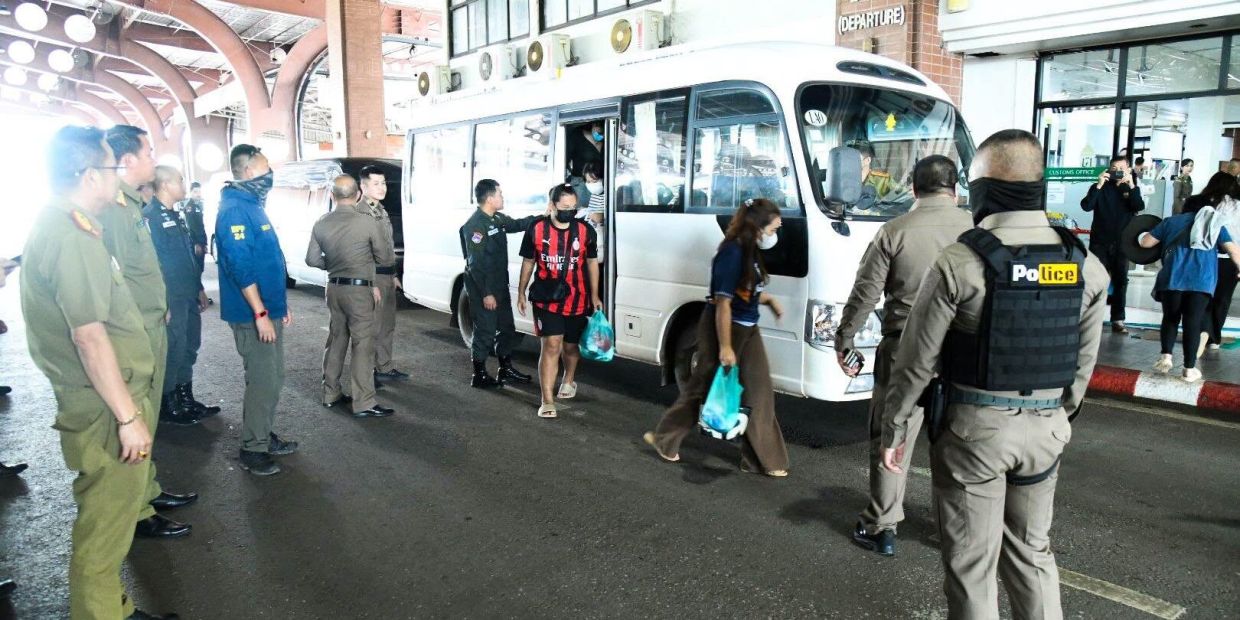
Laos has taken significant enforcement action against transnational criminal networks operating within its borders, deporting 32 Thai nationals who were detained during a sweeping operation targeting one of Southeast Asia's largest alleged fraud hubs. The group was handed over to Thai counterparts on 6 August at the First Lao-Thai Friendship Bridge connecting Vientiane with the Thai city of Nong Khai, marking another step in the Lao government's intensifying campaign against organised cybercrime and gambling operations.
The deportations stem from a major police raid conducted on 18 July at the ST Vegas complex located in Dongphosy village within Hatxayfong district of Vientiane Capital. The operation proved to be a significant undertaking, with authorities detaining 589 individuals across four separate nationalities in what is being portrayed as one of the largest busts of its kind in the region. The composition of those apprehended reveals the international nature of these criminal enterprises—Thai nationals made up the largest contingent at 373 people, followed by 199 Lao citizens, 15 Vietnamese nationals, and two Cambodian nationals.
The ST Vegas operation represents merely one component of a much broader enforcement strategy that Lao authorities have implemented to suppress the proliferation of online fraud schemes and illegal gambling networks. In recent weeks, police have conducted multiple coordinated raids throughout the greater Vientiane region, systematically targeting suspected criminal headquarters and operational centres. These actions reflect official concern about the country's emerging reputation as a base for international cybercriminal activity, a vulnerability that has attracted criminal organisations targeting victims across the wider region and beyond.
The scale of the broader crackdown became apparent when authorities conducted simultaneous operations on 1 August across Sikhottabong and Hadxayfong districts, resulting in the detention of 63 additional suspects. That operation netted individuals from Chinese, Lao, Cambodian, and Thai backgrounds, with investigators indicating that the network had been orchestrating sophisticated call-centre and online fraud schemes specifically targeting victims in China. This geographical focus suggests that criminal groups have been leveraging Laos's relative geographic proximity to China and cross-border connections to conduct their illicit activities.
The crackdown carries significant implications for regional security and cross-border cooperation. Laos has faced mounting international pressure from neighbouring countries and the international community regarding the prevalence of organised cybercrime and online gambling operations conducted from Lao territory. These illicit activities have reportedly generated substantial revenues for criminal syndicates while simultaneously inflicting financial and psychological damage on victims across Southeast Asia and East Asia. The escalation in enforcement actions suggests that Vientiane is attempting to address these concerns through visible demonstration of commitment to tackling the problem.
Prime Minister Sonexay Siphandone underscored the gravity of the situation during remarks to the National Assembly in July, revealing that authorities had apprehended more than 4,400 individuals in the first half of 2026 in cases connected to cybercrime, online fraud, and illegal gambling. These figures represent a substantial law enforcement effort and suggest that the problem has reached significant proportions within Lao society. The statistics also indicate widespread participation across different demographic and national groups, though independent verification of these figures has not been possible.
The enforcement trajectory has accelerated notably in recent months, with authorities reporting the detention of more than 1,000 additional individuals during July alone. This surge in arrests demonstrates a marked intensification of the crackdown, though the reliability of these figures remains uncertain given the challenges in independently verifying official statistics from Lao government sources. Nevertheless, the consistency of reporting across multiple operations and the public statements from senior leadership suggest a genuine scaling-up of law enforcement capacity and political will.
The deportation of Thai nationals aligns with established protocols for handling foreign nationals and reflects cooperative frameworks between Lao and Thai governments. Cross-border coordination on criminal matters has improved in recent years, though challenges remain in achieving seamless information-sharing and coordinated prosecution strategies. For Thailand, the return of its nationals presents both opportunities and challenges—allowing the Thai justice system to pursue domestic charges while also potentially exposing weaknesses in how Thai law enforcement has monitored the involvement of its citizens in these international criminal networks.
For Malaysian observers and policymakers, these developments in Laos carry important lessons regarding the transnational nature of modern organised crime. The ST Vegas raid and associated operations demonstrate how criminal enterprises exploit the porous borders and regulatory gaps that characterise Southeast Asia, drawing in participants from multiple countries to operate sophisticated fraud schemes that target victims across the region. Malaysia, with its own significant online financial services sector and established telecommunications infrastructure, faces similar vulnerabilities to exploitation by these networks.
The ability of criminal organisations to establish and operate large-scale fraud complexes with hundreds of employees underscores the operational scale of these enterprises and the financial resources available to them. The involvement of Chinese, Thai, Vietnamese, Cambodian, and Lao nationals within single operations indicates a level of organised coordination and transnational recruitment capacity that exceeds typical criminal activities. This internationalisation presents particular challenges for law enforcement agencies operating within national borders, where jurisdictional limitations and varying legal frameworks can hamper coordinated response.
Laos's enforcement efforts, while substantial in terms of arrest numbers, also raise questions about the sustainability and effectiveness of these operations. Large-scale arrests without corresponding improvements in prosecution capacity, judicial processes, and international extradition mechanisms may have limited long-term deterrent effect. The sophisticated nature of these criminal networks suggests that they possess significant financial resources to relocate operations, corrupt officials, or adapt their methods in response to law enforcement pressure.
The crackdown also reflects evolving geopolitical dynamics within Southeast Asia, where China's concerns about internal fraud affecting its citizens have prompted regional governments to take more aggressive stances. As criminal networks based in Laos have specifically targeted Chinese victims through organised call-centre operations, Beijing has likely applied diplomatic pressure on Vientiane to address the problem. This dynamic demonstrates how transnational crime has become intertwined with broader regional relations and international pressure.
Moving forward, the effectiveness of Laos's enforcement campaign will depend on sustained commitment, adequate resourcing, and genuine institutional reform to address the structural vulnerabilities that have allowed these networks to flourish. For Southeast Asia more broadly, the ST Vegas case serves as a cautionary example of how criminal enterprises can exploit regulatory gaps and geographic positioning to establish substantial operations. Regional governments, including Malaysia, must strengthen border controls, enhance financial monitoring systems, and improve cross-border intelligence-sharing to address this persistent challenge.

