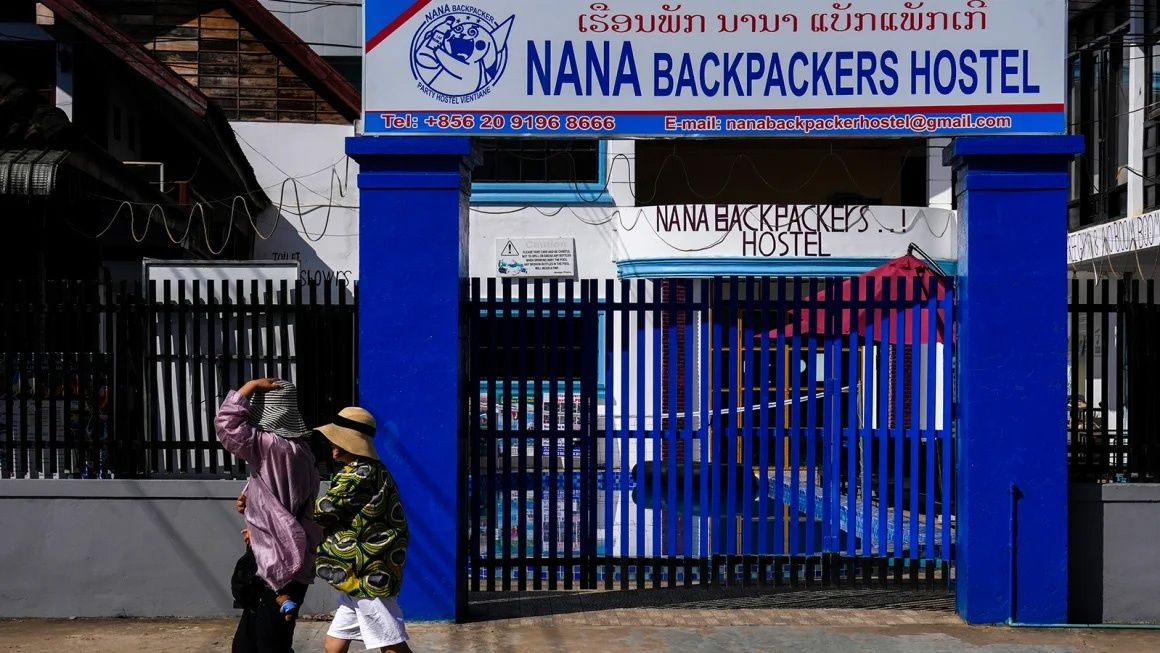
A Laotian court has brought charges against a distillery owner in relation to the deaths of six foreign tourists poisoned by contaminated spirits at a backpacker hostel in the popular tourist town of Vang Vieng last November, Denmark's foreign ministry revealed on Friday. The charges carry potential penalties of between three months and four years imprisonment alongside financial penalties if the accused is convicted, but family members and governments of the deceased have roundly condemned the decision as inadequate given the gravity of the incident.
The victims included two young Danish women—Anne-Sofie Orkild Coyman, aged 20, and Freja Vennervald Sorensen, 21—alongside Australian teenagers Bianca Jones and Holly Morton-Bowles, both 19; British legal professional Simone White, 28; and American citizen James Louis Hutson, 57. All perished after consuming what is believed to have been methanol-laced alcoholic drinks at the Nana Backpacker Hostel, which had been offering complimentary shots to guests staying on its premises. The precise circumstances of how the toxic substance entered the supply chain remain under investigation, though authorities subsequently discovered the victims consumed spirits from the hostel before visiting other entertainment venues in the locality.
According to statements from Laotian authorities cited by Denmark's foreign ministry, the charges relate specifically to selling foodstuffs harmful to human health and conducting business operations without proper licensing. Critically, the announcement indicated that the case would formally remain open for a period of fifteen years, leaving the possibility for prosecutors to upgrade charges to more serious criminal offences such as negligent homicide should sufficient evidence emerge. However, the ministry's statement did not clarify whether charges apply uniformly to all six deaths or only some of the victims, raising questions about the consistency of the investigation's scope.
Danish Foreign Minister Lars Løkke Rasmussen expressed profound disappointment with the indictment, stating it fails to adequately represent the seriousness and extent of a tragedy that has shattered multiple families across international borders. While Rasmussen acknowledged the inherent complexity of establishing the precise legal threshold necessary for mounting more serious charges in circumstances of this nature, he emphasised that the lenient nature of the charges proves difficult to accept given the loss of life involved. Copenhagen indicated it would now coordinate with bereaved families and other affected governments to determine appropriate next steps in pursuing justice.
Australia's government and the families of the two deceased Australian teenagers launched an early morning press conference to condemn the anticipated charges before the formal announcement, characterising them as grossly inadequate. Michelle Jones, mother of Bianca, expressed anguish at what she perceived as a dismissal of her daughter's life and value, noting that the young women were simply engaging in the kind of travel experiences undertaken by millions of young people annually. Shaun Bowles, father of Holly Morton-Bowles, warned that the Laotian authorities' apparent indifference toward safeguarding tourist welfare would likely discourage international visitors from choosing the destination, potentially damaging the nation's crucial tourism sector.
Australian Foreign Minister Penny Wong issued her own statement characterising the decision as both deeply frustrating and bitterly disappointing, specifically criticising the authorities' failure to pursue the most serious available charges. Australia dispatched a senior envoy to Vientiane on Friday to formally register the government's objections and reinforce expectations for an investigation yielding genuine accountability for the victims. Additionally, Australian officials summoned Laos' ambassador based in Canberra, a diplomatic gesture signalling Canberra's serious dissatisfaction with the handling of the matter by the Laotian government.
The families of the Danish victims have highlighted disturbing gaps in the investigation process itself. According to reports from Danish public broadcaster DR, the parents of Freja Vennervald Sorensen stated they have received minimal communication regarding their daughter's death since the November tragedy. More troublingly, no autopsy examination was conducted on their daughter, and the official death certificate attributes her passing to natural causes—specifically cardiac arrest—rather than methanol poisoning, a discrepancy that suggests significant investigative oversights or record-keeping failures. The family reported they were unaware that methanol contamination posed such a serious risk to travellers, and they have committed to raising public awareness regarding this danger.
Methanol poisoning represents a persistent global public health challenge extending far beyond tourist populations, particularly affecting residents of economically disadvantaged regions where illicit alcohol production and consumption remain widespread. International medical assistance organisation Doctors Without Borders has documented that Indonesia, India, and Russia consistently report the highest concentrations of suspected methanol poisoning cases globally. The toxic substance typically enters alcohol supplies through two principal mechanisms: deliberate adulteration by disreputable vendors seeking to reduce production costs by substituting cheaper methanol for ethanol, or inadvertent contamination arising from deficient distillation techniques employed in informal home-brew operations. The Vang Vieng incident raises serious questions about the regulatory oversight of alcohol distribution and venue safety standards throughout Laos' tourism sector.
Vang Vieng holds particular appeal for international backpackers seeking adventure activities and nightlife, making it among Southeast Asia's most visited destinations for young budget travellers. The town's prominence in the global backpacker circuit means that safety failures occurring there attract international scrutiny and diplomatic attention disproportionate to similar incidents in less-visited locations. The incident has prompted legitimate concerns among prospective visitors regarding personal safety and the reliability of local regulatory frameworks. Shaun Bowles articulated this concern explicitly, noting that Laos' demonstrated approach to the matter would almost certainly influence young Australian travellers' destination choices going forward, potentially affecting the nation's substantial reliance on international tourism revenues.
Laos, as one of Southeast Asia's most economically constrained nations, derives significant revenue from international tourism, which makes the diplomatic crisis arising from this incident particularly consequential for the government. The country operates as an authoritarian single-party communist state characterised by strict information controls and limited transparency regarding official proceedings. When The Associated Press sought official comment, Laotian authorities declined to grant media access to the announcement proceedings, permitting only domestic and embassy-based journalists to attend. This opacity, combined with what grieving families perceive as inadequate charges, has created an international credibility challenge for the Laotian government, potentially undermining confidence among international visitors and friendly governments regarding Laos' commitment to accountability and justice.

