The Malaysian government is preparing to present a transformative proposal to Parliament that would fundamentally reshape how the nation's prosecutorial authority operates. The Special Select Committee report on separating the Attorney General and Public Prosecutor roles is set for tabling in the Dewan Rakyat tomorrow, representing a critical step in the MADANI administration's broader push to strengthen institutional independence and democratic accountability within the judicial system.
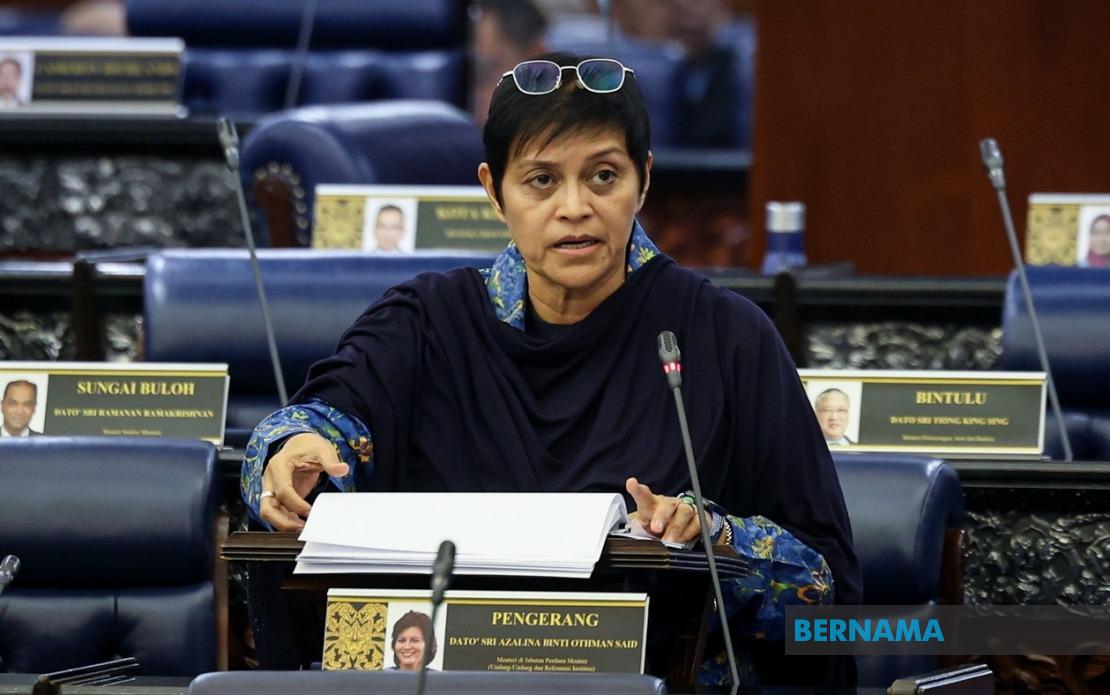
Minister in the Prime Minister's Department (Law and Institutional Reform) Datuk Seri Azalina Othman Said framed the proposal as evidence of the government's commitment to fortifying the rule of law and restoring public confidence in Malaysia's justice apparatus. The committee's deliberations across seven meetings have crystallised into a comprehensive reform package designed to insulate the Public Prosecutor's office from political pressure and executive interference, addressing longstanding concerns about the independence of prosecutorial decisions in the country.
Central to the proposed separation is a restructured appointment mechanism that would substantially diminish the Prime Minister's influence over prosecutorial leadership. Under current arrangements, the Public Prosecutor operates under the Attorney General's portfolio, creating potential conflicts of interest and perceived vulnerability to political direction. The new framework envisions the Public Prosecutor's appointment flowing through the Judicial and Legal Service Commission without prime ministerial or Cabinet involvement—a crucial safeguard against the weaponisation of prosecutorial power for partisan advantage.
The committee has recommended seven substantial improvements addressing independence, integrity and accountability concerns. These proposals reflect international best practices observed in comparable democracies where prosecutorial independence serves as a cornerstone of democratic governance. By explicitly excluding executive branch influence from the appointment process, Malaysia would align itself with institutional standards increasingly recognised as essential for credible justice systems throughout the region and globally.
A defining innovation within the reform package is the introduction of a fixed, non-renewable seven-year term for the Public Prosecutor position. This tenure framework prevents indefinite reappointment contingent on political patronage or executive satisfaction, while the prohibition on renewal eliminates incentives to maintain favour with sitting administrations. The fixed-term approach creates meaningful breathing room for prosecutorial independence, allowing office-holders to pursue cases and prosecutions based on evidence and law rather than political calculation about future advancement.
The proposed constitutional amendment to Article 145A reflects the government's intention to embed parliamentary oversight into the appointment architecture itself. The Judicial and Legal Service Commission would forward candidate nominations to the Dewan Rakyat Speaker, triggering formal scrutiny by the House Select Committee before recommendation returns to the commission. This layered process incorporates legislative input into what has historically been an executive-dominated selection, distributing institutional power and creating multiple veto points against unsuitable appointments.
The establishment of a Code of Ethics specifically governing Public Prosecutors represents another dimension of the transparency agenda. Such a code would codify behavioural standards and ethical expectations, providing a framework against which prosecutorial conduct could be evaluated and external pressure resisted. Combined with parliamentary empowerment to enact additional strengthening legislation, the proposals create an adaptive institutional architecture capable of responding to future vulnerabilities or emerging challenges.
Azalina emphasised that the reform transcends mere administrative restructuring, positioning it instead as foundational institutional renewal targeting public trust. The separation acknowledges a basic principle: institutions maintaining genuine independence from political control generate legitimacy that those subordinate to executive will cannot replicate. For Malaysia, where questions about prosecutorial autonomy have occasionally surfaced in high-profile cases, institutional redesign carries significance beyond technical governance—it speaks to whether ordinary citizens can expect the justice system to function impartially regardless of political connections or government composition.
For Southeast Asia more broadly, Malaysia's institutional reforms offer a regional benchmark. Democratic backsliding across the region has frequently involved prosecutorial weaponisation, where justice mechanisms become instruments of political advantage rather than neutral arbiters. By proactively strengthening institutional safeguards before crisis demands them, Malaysia demonstrates preventive institutional stewardship that could inspire similar efforts elsewhere in the region struggling with judicial independence concerns.
The parliamentary tabling tomorrow initiates what will likely be substantive legislative debate. Opposition parties, civil society organisations and legal practitioners will scrutinise the proposals against genuine concerns about whether the mechanisms sufficiently protect independence or whether political influence can penetrate proposed safeguards through subtle channels. The committee's seven-meeting deliberation process presumably addressed numerous such concerns, though public discussion may surface additional considerations.
Implementing these changes will require constitutional amendments and legislative action, consuming parliamentary time and potentially proving contentious. Some government backbenchers might harbour concerns about diminishing executive prerogatives, while others may question whether the modifications adequately shield the Public Prosecutor from inappropriate influence. Successfully navigating these parliamentary hurdles will test the government's genuine commitment to institutional independence versus mere rhetorical commitment to reform.
The timing assumes significance given Malaysia's trajectory toward strengthening democratic institutions following previous governance challenges. This report demonstrates that institutional reform remains an active government priority, not merely campaign rhetoric subsequently abandoned. The proposal's scope—touching constitutional provisions, statutory frameworks and ethical standards—indicates comprehensive institutional thinking rather than superficial tinkering. Whether Parliament embraces these proposals with sufficient enthusiasm to enact implementing legislation will reveal how seriously Malaysia's political establishment takes the separation of powers and institutional independence.

