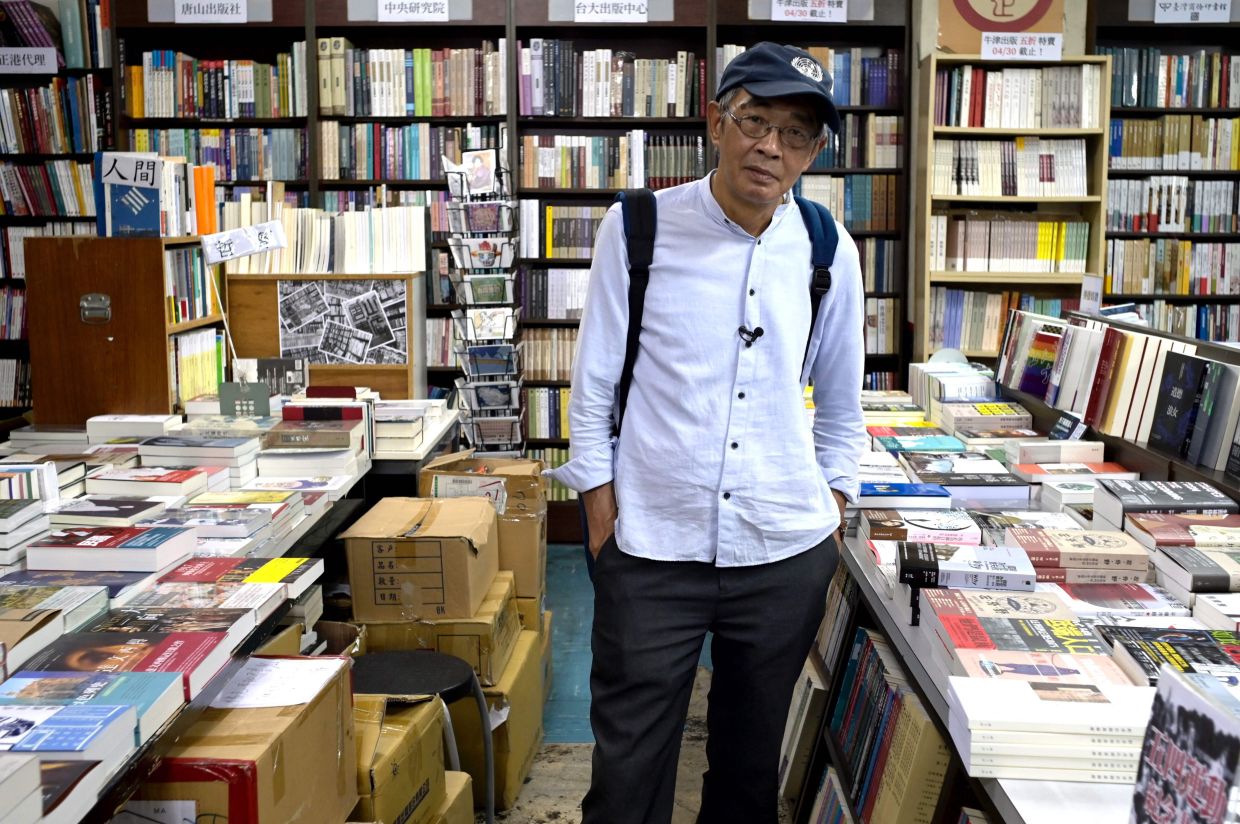
Lam Wing-kee, the Hong Kong bookseller whose mysterious detention by Chinese state security became a watershed moment for global concerns about Beijing's grip on Hong Kong, has died in Taiwan at age 70. The Taiwan Central News Agency confirmed his death on Thursday evening after he fell into a coma at MacKay Memorial Hospital in Taipei, where he had been admitted following a relapse of cancer. His passing marks the end of a life that became inseparable from the fight for press freedom in one of Asia's most politically contested territories.
Lam's prominence originated from his management of Causeway Bay Books, a Hong Kong establishment that occupied a precarious niche in the city's media landscape. The bookstore specialised in publications unavailable on the Chinese mainland, particularly volumes alleging to expose sensitive details about Communist Party leadership and their alleged misconduct. This business model, while operating within Hong Kong's then-robust legal protections, made the shop and its operators targets of intense scrutiny from Beijing authorities who viewed such materials as subversive.
In late 2015, Lam and four colleagues associated with the bookstore vanished in circumstances that alarmed journalists, academics, and democracy advocates worldwide. The disappearances appeared coordinated and mysterious, with no official announcements preceding their detention. Lam's abduction differed markedly from the others: he was seized after crossing from Hong Kong into Shenzhen, the border city in Guangdong Province, suggesting deliberate capture by mainland operatives rather than Hong Kong police. This distinction underscored Beijing's willingness to exercise extraterritorial reach to neutralise perceived threats to Party interests.
The ordeal Lam endured during his captivity exposed the systematic methods employed by Chinese security apparatus against perceived opponents. Transported blindfolded on a 13-hour train journey to Ningbo, a port city in Zhejiang Province, he was confined to a single room under constant surveillance by rotating teams of two guards for five months. During this period, he was coerced into appearing on Chinese state television to broadcast confessions to unstated crimes, a propaganda tactic designed to discredit him and discourage similar activities. His 2016 account delivered at a Hong Kong press conference represented an act of considerable courage, directly contradicting official narratives from Beijing and Hong Kong authorities.
Among the five disappeared, Gui Minhai, a publisher and part-owner of Causeway Bay Books, suffered perhaps the most severe consequences. Gui vanished from a Thai beach resort, demonstrating that Beijing's security operations extended beyond its borders. He was subsequently convicted in 2020 on charges of illegally transmitting intelligence overseas and sentenced to a decade of imprisonment, effectively disappearing into China's opaque penal system. His case exemplified how Beijing treats foreign nationals and those with international connections as expendable threats requiring decisive state action.
Fearing further legal jeopardy under Hong Kong's transformed legal environment, Lam relocated to Taiwan in 2019, seeking refuge on an island that had become the natural destination for Hong Kong refugees and dissidents. The decision reflected his recognition that Hong Kong no longer offered safety for those who had challenged Beijing's authority. In 2020, he reopened Causeway Bay Books in Taipei, attempting to continue his life's work in a jurisdiction where the rule of law and press freedoms remained substantially intact, though increasingly pressured by cross-strait tensions.
Taiwan's response to Lam's death underscored the political dimensions of his life and legacy. President Lai Ching-te issued a formal condolence statement describing Lam as an embodiment of ordinary courage and a testament to democracy's value. Lai's remarks positioned Lam within Taiwan's own struggle to preserve democratic institutions against authoritarian pressure, framing his sacrifice as instructive for all societies defending freedom. The president's words resonated with Taiwan's self-perception as a democratic alternative to mainland authoritarianism, with Lam serving as a living bridge between Hong Kong's extinguished freedoms and Taiwan's precarious liberty.
The trajectory of Hong Kong's political landscape following Lam's departure has only vindicated his decision to flee. The 2019 anti-government protests triggered a comprehensive security crackdown that has systematically dismantled institutional safeguards for free expression and political activity. The 2024 National Security Law represented the legal architecture for this transformation, granting authorities expansive powers to prosecute speech and association deemed threatening to state interests. In June 2024, Hong Kong police acting under this legislation arrested two individuals operating a bookstore on suspicion of selling seditious publications and receiving foreign funding, demonstrating that the vulnerabilities that forced Lam into exile remain acute threats to Hong Kong's remaining civil society actors.
Lam's death occurs at a moment when the consequences of Hong Kong's integration into China's security state have become unmistakable and irreversible. The contrast between his initial hopes for Hong Kong's autonomy and the current reality reflects not merely institutional change but a civilisational shift in how mainland authorities exercise power over the territory. His temporary closure of the Taipei bookstore due to health complications represented a poignant symbol of loss extending beyond individual mortality to encompass the closure of spaces for intellectual freedom and dissent.
For Malaysian observers, Lam's trajectory offers sobering lessons about the fragility of jurisdictional autonomy and press freedom in the Asia-Pacific context. Malaysia's own media landscape, constrained by sedition laws and security legislation of varying vintage, shares structural vulnerabilities with Hong Kong's pre-2015 system. The speed with which Beijing dismantled Hong Kong's protections and the international community's inability to intervene suggest that institutional assurances and diplomatic commitments offer limited protection against determined state power. Lam's symbolic legacy rests not in triumph but in testimony: his documented account of persecution stands as evidence of state violence committed against ordinary citizens exercising basic freedoms.
The white rose left outside the Taipei bookstore the day after Lam's death represents a quiet act of remembrance and continued defiance. Such gestures, modest yet meaningful, maintain the thread of resistance that Lam embodied throughout his final years in exile. His passing removes a living witness to China's assault on Hong Kong's freedoms, yet his documented testimony endures as permanent record of what was taken and what continues to be defended on Taiwan's shores.

