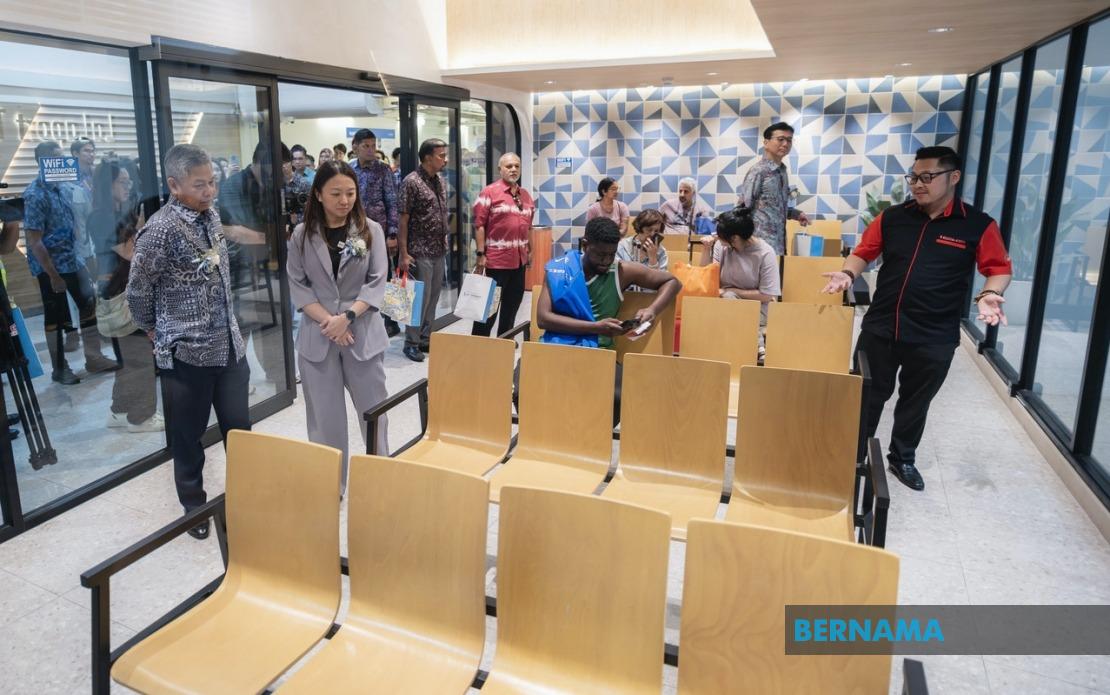
The LaLaport Transportation Hub has officially begun operations as an ambitious piece of urban mobility infrastructure designed to streamline how millions of people move through Malaysia's capital. Located at the East Atrium beside the Hang Tuah LRT and Monorail interchange, this integrated facility represents a significant upgrade to how the city manages passenger flows during peak hours and represents a shift toward more coordinated transport planning in Southeast Asia's major metros.
Minister in the Prime Minister's Department (Federal Territories) Hannah Yeoh unveiled the facility, emphasizing that the hub aspires to process approximately 10,000 travellers each day while functioning as a unified boarding and departure point. The terminal's location directly adjacent to existing rapid transit infrastructure signals a deliberate strategy to eliminate the fragmentation that typically characterises transport nodes in developing cities, where passengers must navigate confusing transfers and walk considerable distances between different modes. By concentrating rail, express coaches, taxis, e-hailing dispatches, and shared mobility platforms under one roof with sheltered walkways, planners have attempted to reduce friction and make public transport more competitive against private vehicle use.
The hub's strategic positioning reflects the enormous scale of daily mobility demands within Kuala Lumpur. The minister highlighted that 1.2 million individuals cross the city boundary each day, while the municipal area itself experiences approximately 5.5 million individual journeys throughout each 24-hour period. These figures underscore why transport infrastructure investment has become critical for maintaining economic competitiveness and quality of life. Congestion, pollution, and lost productivity from inefficient travel represent growing drains on the capital's potential, making facilities that consolidate transport options essential interventions.
The terminal also serves as a crucial interchange for cross-border connectivity, functioning as a gateway for travellers between Kuala Lumpur and Singapore. This dimension carries particular importance for Malaysia's regional position, as the city must facilitate seamless movement to neighbouring Singapore's economic powerhouse while competing as a destination itself. The presence of a licensed, professional terminal offering 24-hour express coach services to the island nation reflects Malaysian efforts to strengthen bilateral transportation links and capture transit passenger revenue.
From an operational standpoint, the hub incorporates modern facilities designed to enhance user experience and reduce dwell time. Within the fully air-conditioned East Atrium space on level LG1, operators have installed eleven dedicated bus bays, staffed information counters, self-service ticketing kiosks, and a Passenger Information Display System providing real-time scheduling updates. These amenities move beyond basic functionality toward creating an environment where passengers can navigate transport choices confidently and access information instantly, addressing longstanding complaints about Malaysian transport hubs lacking transparency and comfort.
Approximately 30 bus operators are anticipated to utilise the LaLaport facility as their primary city-centre transit hub, concentrating what were previously scattered departure points. This consolidation offers operators economies of scale and passengers concentrated information sources, though it also represents a significant shift in how intercity coach services operate from the capital. The hub expects to accommodate roughly 150 daily bus trips, establishing itself as a significant volume facility that will generate consistent demand from transport companies seeking reliable, legal, and customer-friendly boarding locations.
Asia Success Resource Sdn Bhd, the hub's operator, has implemented complementary services extending beyond traditional bus terminals. The Boleh-Boleh Ride on-demand van shuttle system connects hub passengers to key city-centre destinations, addressing the "last-mile" problem that frequently deters public transport usage. Additionally, shuttle van services link passengers directly to Kuala Lumpur International Airport Terminals 1 and 2, streamlining airport access for non-driving travellers and creating a unified journey experience from city to aircraft without multiple transfers.
The facility's governance reflects evolving regulatory approaches to transport infrastructure in Malaysian cities. The Dewan Bandaraya Kuala Lumpur (DBKL) recently reformed its licensing regime, replacing annual renewal cycles with three-year operating permits that provide operators greater certainty for long-term investment and service planning. This reform signals recognition that volatile regulatory environments discourage quality service provision and professional infrastructure development. Simultaneously, DBKL is deploying approximately 10,000 operational CCTV cameras across the city, addressing security and safety concerns that have historically plagued transport nodes and deterred potential passengers.
The launch attracted international attention, with Japan's Ambassador to Malaysia Noriyuki Shikata present to witness the opening. His attendance underscores how Malaysian transport development attracts regional diplomatic interest, particularly given Japan's prominence in transit infrastructure expertise and investment. The ambassador contextualised the hub within broader Malaysia-Japan cooperation on sustainable urban development, noting that Prime Minister Datuk Seri Anwar Ibrahim's recent Japan visit reaffirmed bilateral commitments to advancing energy security and development partnerships. The 75th anniversary of Malaysia-Japan diplomatic relations next year will further cement the importance both nations place on deepening cooperation across economic sectors.
The LaLaport Transportation Hub's opening demonstrates how Malaysia's largest city is attempting to modernise its transport architecture to compete with regional peers and accommodate explosive urban growth. While 10,000 daily passengers represents substantial traffic, the facility's success will ultimately depend on operator participation, service reliability, and whether passengers perceive the hub as genuinely convenient compared to private alternatives. The integration of multiple transport modes under professional management with customer-focused amenities positions the hub to become a model for how secondary Malaysian cities might upgrade their mobility infrastructure, though sustained performance and passenger satisfaction will determine whether this investment translates into meaningful shifts in how urban residents choose to travel.

