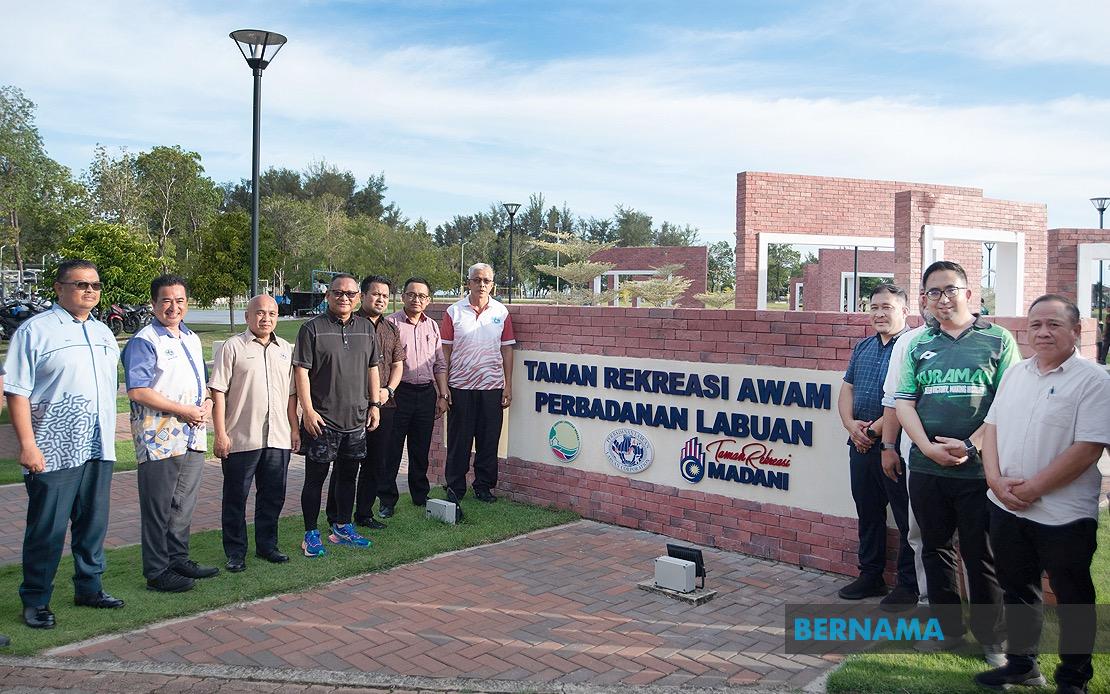
Labuan has opened the doors to its newly revamped Public Recreation Park at Tanjung Purun, marking the completion of a RM495,382 renovation that aims to strengthen the federal territory's commitment to active living and community wellness. The transformation represents a significant step forward in the Madani Recreation Park initiative, which focuses on converting underutilised public spaces into vibrant hubs for residents and visitors alike.
According to Labuan Corporation chief executive officer Rithuan Ismail, the facility embodies a deliberate strategy to reshape how the community engages with public infrastructure. Rather than serving merely as a recreational amenity, the park has been conceptualised as an inclusive gathering space designed to accommodate people across all age groups and fitness levels. This inclusive approach reflects broader thinking about urban planning in Malaysian towns, where public spaces must serve multiple demographic needs simultaneously.
The project received funding from the National Landscape Department under the Ministry of Housing and Local Government (KPKT) in 2024, enabling the conversion of the previously underutilised LDA Field into a contemporary recreational facility. The selection of this particular site was deliberate, capitalising on its strategic location in downtown Labuan, convenient accessibility, adequate land area, and the absence of complex land ownership complications that often encumber development projects.
Before the upgrade, the location had languished as an underutilised urban space, hampered by poor lighting infrastructure, limited recreational facilities, and ageing casuarina trees that posed potential safety hazards to visitors. These deficiencies, despite the site's inherent advantages and prime positioning, had rendered it largely unattractive to residents seeking recreational venues. The transformation therefore represents not just a physical renovation but a reversal of urban decline in a central location.
The upgraded facility now features several modern amenities designed to appeal to different user groups and preferences. Visitors can utilise an 800-metre jogging track suitable for runners and walkers of varying abilities, a welcoming garden space conducive to relaxation and social gathering, concrete seating areas, and outdoor fitness gym equipment that enables strength training without requiring memberships or expensive facilities. These additions collectively position the park as one of Labuan's premier evening leisure destinations, a timing consideration that reflects understanding of local usage patterns and climate factors affecting outdoor activity preferences in tropical settings.
Planned future enhancements will expand the facility's appeal further. Labuan Corporation intends to complete construction of three open courts dedicated to pickleball and sepak takraw by year's end, adding sports-specific infrastructure that caters to organised recreation and competitive play. This phased development approach allows for staged investment while generating early community engagement and feedback to inform subsequent improvements.
Rithuan emphasised that the park's success depends fundamentally on community stewardship and responsible use of facilities. Rather than positioning the Corporation as sole custodian, he explicitly called upon residents to participate in preserving the amenities, framing maintenance as a collective responsibility essential to ensuring long-term benefits for the broader population. This partnership approach to public space management recognises that formal maintenance alone cannot sustain facilities facing regular use without community investment in their upkeep.
The park's opening carries significance beyond Labuan itself, illustrating broader Malaysian policy priorities around health promotion and quality of life enhancement in smaller towns. The Madani framework underpinning this project emphasises that recreational infrastructure should not concentrate exclusively in major urban centres, but rather distribute across federal territories and states to serve all communities equitably. For residents in Labuan, the facility addresses longstanding limitations in readily accessible leisure infrastructure.
From a Southeast Asian perspective, the development reflects growing recognition among Malaysian authorities that combating sedentary lifestyles requires investment in easily accessible, free or low-cost public facilities rather than reliance on private gyms and commercial recreation venues. This approach democratises fitness and wellness access, extending opportunities beyond individuals with disposable income to serve entire community demographics including retirees, youth, and families of modest means.
The transformation of the LDA Field illustrates how strategic public investment can reclaim underutilised urban space and redirect it toward community benefit. By addressing specific deficiencies including lighting and equipment while capitalising on existing advantages such as central location and adequate land area, planners maximised return on investment. The RM495,382 expenditure represents proportionate spending for comprehensive park upgrading rather than major capital infrastructure.
Looking forward, the facility's success will likely depend on sustained usage patterns and community adoption. Evening activation, as currently observed, reflects responsiveness to local climate and lifestyle factors. Seasonal variations, maintenance quality, and the attractiveness of planned additions including the sports courts will influence whether the park achieves its ambitious aim of becoming Labuan's preferred community gathering destination.
The initiative underscores federal territory administration's capacity to identify neglected public assets and catalyse their transformation through targeted investment and thoughtful planning. As other Malaysian towns evaluate their own underutilised public spaces, the Labuan model offers practical lessons in site selection, phased development, and community partnership approaches to sustainable public amenity management.

