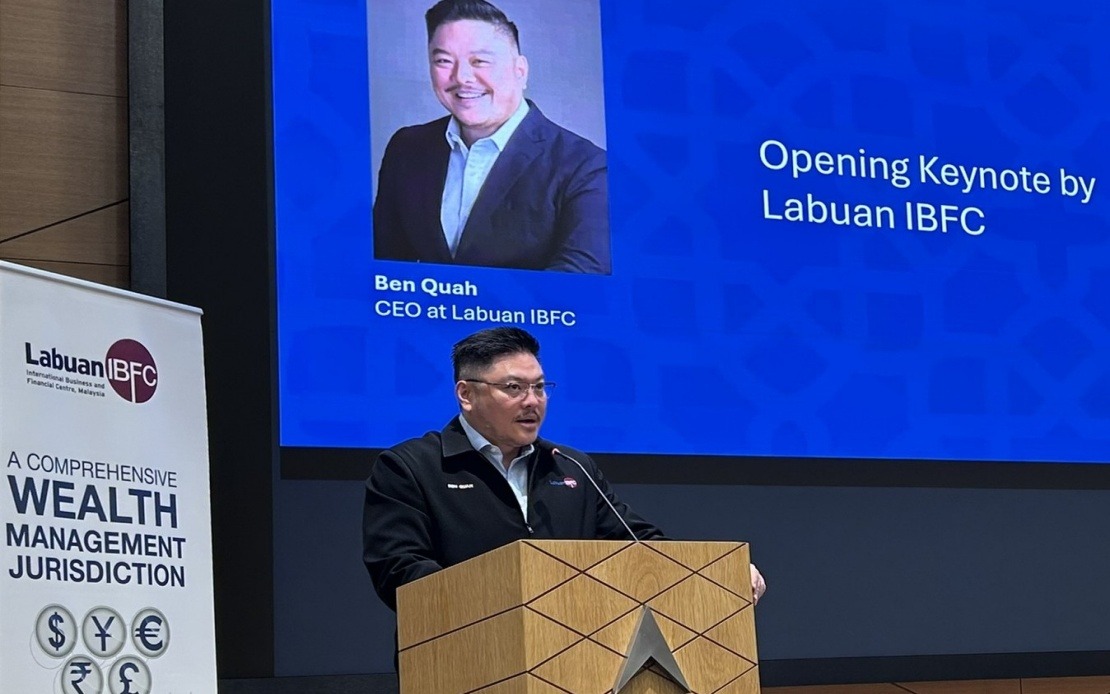
Three leading organisations have joined forces to elevate professional standards in Islamic wealth planning across Malaysia and beyond. Labuan IBFC Incorporated Sdn Bhd, the marketing and development entity for Labuan International Business and Financial Centre, hosted the 'Islamic Wealth & Legacy Forum 2026 - Beyond Faraid: Islamic Wealth Governance, Labuan Structures and Legacy Continuity' in Kuala Lumpur, bringing together the Association of Shariah Advisors in Islamic Finance Malaysia (ASAS) and the Society of Trust and Estate Practitioners (STEP) Malaysia. The collaboration reflects a strategic recognition that Islamic wealth management requires an integrated approach combining international structuring expertise, Shariah jurisprudence, and professional estate administration practices.
The forum assembled a diverse coalition of specialists including Islamic estate planning professionals, Shariah advisers, trust and estate practitioners, wealth managers, and legal experts. This convergence of disciplines underscores a fundamental challenge facing affluent Muslim families: the need to reconcile Islamic succession principles with increasingly complex, cross-border asset holdings and contemporary wealth structures. As economies globalise and families accumulate assets across multiple jurisdictions, the traditional application of faraid alone often proves insufficient for comprehensive wealth preservation and intergenerational continuity.
Central to the forum's discussion was the concept articulated in its title: moving "beyond faraid." Farah Deba, chair of STEP Malaysia Branch, clarified this framing in her welcome remarks, emphasising that the phrase does not suggest abandoning Islamic principles but rather recognising that Islamic law permits sophisticated planning mechanisms beyond the mechanical division of estates according to faraid rules. This distinction carries significant implications for Malaysian wealth planners, many of whom have operated within a traditional framework that treats Islamic succession law as a fixed constraint rather than a foundation upon which flexible, Shariah-compliant structures can be built.
Ben Quah, chief executive officer of Labuan IBFC Inc, positioned the international financial centre as uniquely suited to address the needs of contemporary Islamic wealth planners. He highlighted how Labuan IBFC serves as a platform for private wealth planning and cross-border solutions, offering families asset protection and succession continuity mechanisms while complementing Malaysia's established leadership in Islamic finance. For Malaysian high-net-worth individuals and their advisers, this framing suggests that Labuan structures need not represent a departure from Islamic wealth management principles but rather an extension of them, enabling protection of assets and preservation of family legacy across generations and jurisdictions.
The forum's opening session, titled 'Beyond Faraid - The Real Challenges in Muslim Estate Administration', examined the practical impediments that administrators and planners encounter when executing succession intentions within an Islamic framework. These challenges extend beyond theoretical jurisprudence to encompass documentation, asset identification, claim verification, and dispute resolution. By creating space for practitioners to discuss these real-world complications, the forum addressed a gap that exists between academic Islamic law instruction and the messy reality of administering estates worth tens or hundreds of millions of ringgit with multiple beneficiaries, international assets, and family dynamics.
A critical session focused on governance and documentation, exploring how proper structuring and written arrangements can ensure that wealth planning mechanisms function consistently with Shariah requirements. This emphasis on governance reflects evolving international best practice in trust administration and a recognition that good intentions alone do not guarantee Shariah compliance. For Malaysian practitioners, this carries particular relevance given the intersection of common law trust concepts, Islamic principles, and local regulatory requirements that govern family wealth arrangements.
The afternoon programming shifted to implementation mechanics, addressing the practical mechanisms through which wealth plans operate. Discussions covered liquidity management, takaful insurance products, trust structures, and alternative wealth vehicles, with practitioners examining how each can serve different objectives within an Islamic framework. Takaful, Malaysia's homegrown alternative to conventional insurance, features prominently in such discussions because it aligns with Islamic financing principles while providing the risk management and liquidity functions essential to wealth preservation and distribution planning.
Yusaini Yusof, an executive committee member of ASAS, articulated in her closing remarks a unifying theme: Shariah governance ensures that legacies are properly structured, successfully implemented, and ultimately serve Maqasid Shariah—the overarching objectives of Islamic law. This formulation reframes Shariah compliance from a compliance obligation into a substantive objective, suggesting that proper Islamic wealth planning should advance not merely technical adherence to succession rules but the deeper purposes those rules serve: justice, family protection, community welfare, and equitable distribution.
The forum's conclusion featured a panel discussion on strengthening the Islamic wealth planning ecosystem, bringing together voices from wealth management, financial planning, estate administration, and Shariah advisory. This ecosystem-focused approach acknowledges that no single organisation can address the full complexity of contemporary Islamic wealth planning. The collaboration between Labuan IBFC Inc, ASAS, and STEP Malaysia represents a structural response to this reality, with each organisation contributing distinct capabilities and perspectives.
The partnership builds upon a memorandum of understanding previously established between Labuan IBFC Inc and ASAS, while deepening engagement with STEP Malaysia and the broader professional community. For Malaysian readers, this multi-stakeholder approach offers reassurance that efforts to advance Islamic wealth planning standards involve not just commercial entities but professional associations and international practitioners committed to elevating industry practices. The forum's emphasis on continued engagement and professionalism suggests an evolving maturation of the Islamic wealth management sector in Malaysia, moving from occasional transactions toward systematic, standardised practices.
The timing of this forum reflects broader trends in the Islamic finance sector. As the global Islamic wealth management market expands and as Malaysian families accumulate increasingly complex asset portfolios, demand for sophisticated yet Shariah-compliant planning tools has grown substantially. The forum addresses this demand by creating spaces for practitioners to share expertise, discuss challenges, and collectively develop approaches that serve clients' wealth preservation objectives while maintaining Islamic integrity. For Malaysia's position as a global Islamic finance hub, such initiatives strengthen the human capital and professional infrastructure that underpin the sector's competitiveness.
For Malaysian families and their advisers, the convergence of these three organisations signals expanding availability of integrated Islamic wealth planning services. Practitioners attending the forum can expect to encounter more sophisticated approaches to Shariah governance, more nuanced understanding of how trusts, takaful, and alternative structures can serve Islamic objectives, and clearer pathways for implementing plans across borders while maintaining compliance. This professional development benefits not only high-net-worth families but also the broader Islamic finance ecosystem, enhancing Malaysia's reputation as a centre where complex wealth planning can occur within a robustly Islamic framework.
Looking forward, the collaboration between Labuan IBFC Inc, ASAS, and STEP Malaysia appears poised to generate ongoing professional development and standards-setting initiatives. As Malaysia continues to position itself as a premier global hub for Islamic finance and wealth management, initiatives like this forum strengthen the sector by ensuring that practitioners across disciplines—Shariah advisers, estate planners, trust administrators, and wealth managers—operate from shared understandings of best practice and maintain collective commitment to advancing the professionalism of Islamic wealth planning.

