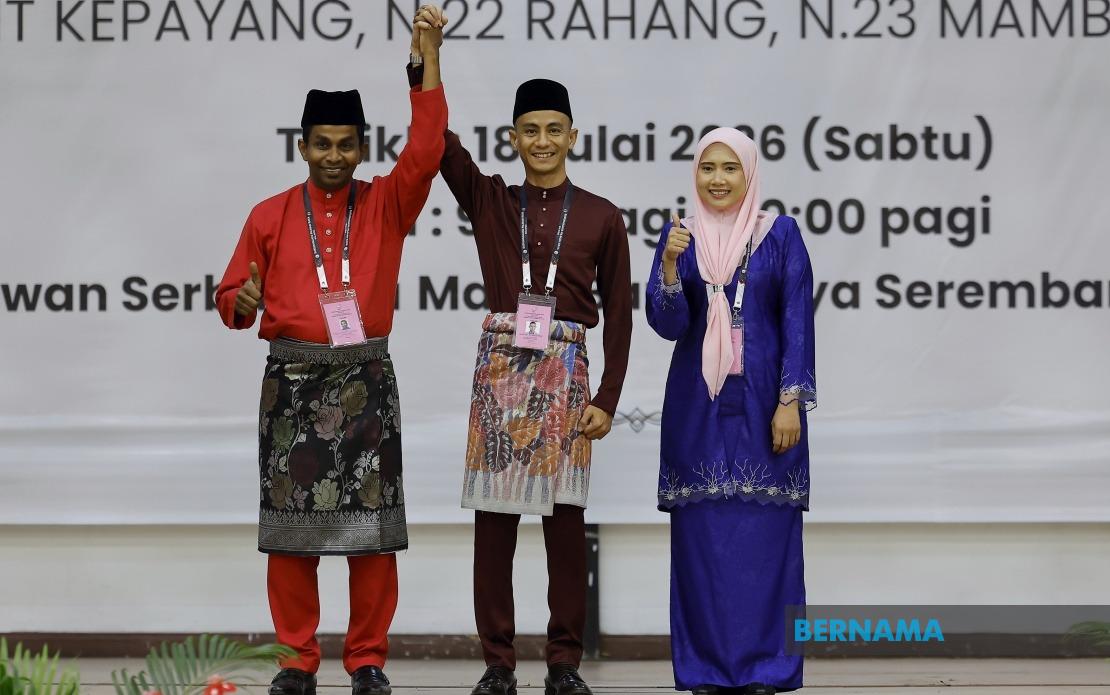
Datuk Ahmad Faez Abdul Razak, the Pakatan Harapan-backed PKR candidate contending for the Labu state seat, has embarked on his electoral journey with a commitment to reconcile rapid development with the genuine needs of local residents. Speaking at the nomination centre in Seremban on July 18, the property developer expressed both enthusiasm and nervousness about his maiden parliamentary contest in the 16th Negeri Sembilan state election, having invested nearly three years cultivating grassroots connections across the constituency.
The political landscape in Labu reflects the increasingly complex balancing act facing Malaysian state governments. Ahmad Faez's professional background in property development positions him as a candidate seeking to leverage sectoral expertise in addressing constituency concerns. His campaign platform centres on the tension between progress and preservation—a theme particularly relevant to Labu, which ranks among Negeri Sembilan's fastest-expanding electoral divisions. The constituency sits within the Malaysia Vision Valley development corridor, a sprawling 11,000 to 12,000-hectare zone designated for mixed industrial and residential projects anticipated to generate substantial employment.
Yet this expansion trajectory presents genuine governance challenges that extend beyond marketing rhetoric. Ahmad Faez recognises that rapid urbanisation without deliberate community planning risks alienating voters who have traditionally inhabited these areas. His manifesto addresses this by prioritising the construction of dedicated youth recreational facilities and community centres, infrastructure he identifies as conspicuously absent from current provision. Such grassroots amenities often reflect the gap between top-down development schemes and the quotidian expectations of ordinary constituents—a distinction that frequently determines electoral outcomes in semi-urban constituencies.
The incumbent, Mohamad Hanifah Abu Baker of Bersatu-Barisan Nasional, secured the seat in 2023 with a narrow 1,640-vote margin over PH's Datuk Ismail Ahmad, who garnered 10,021 votes. That relatively tight victory suggests volatility in voter preference, particularly relevant given the present three-cornered contest also involving BN's Siti Nur Umaira Hasim. The 32,884 registered voters in Labu, according to the Election Commission's May 31, 2026 roll, constitute a modest but decisive electorate where personalised campaigning and local issue amplification carry measurable weight.
Ahmad Faez's framing of development management reflects broader Southeast Asian concerns about uncontrolled urbanisation eroding social cohesion. The Malaysia Vision Valley initiative, while economically significant, requires careful gubernatorial stewardship to prevent the environmental degradation and community fragmentation that have characterised comparable corridors across the region. His positioning as a developer willing to critique unbridled expansion demonstrates political sophistication—acknowledging economic benefits whilst validating residents' anxieties about lifestyle disruption and resource strain.
The Negeri Sembilan government's alignment with federal policy frameworks, Ahmad Faez argues, has consolidated public confidence and provided institutional foundations for sustained development. This intergovernmental coordination matters considerably in Malaysian federalism, where state assemblies increasingly function as implementation vehicles for centrally-conceived economic zones. Labu voters, therefore, assess not merely individual candidate capability but regime legitimacy and administrative coherence across jurisdictional levels.
As a property development professional contesting his first election, Ahmad Faez occupies an unusual political niche. Malaysian voters harbour ambivalent attitudes toward business-sector politicians—appreciating practical expertise whilst suspecting conflicts of interest. His explicit acknowledgment that balancing commercial expansion with villager welfare represents an active challenge, rather than an automatic outcome, signals awareness of this credibility tension. Such candour, whether strategically calculated or genuinely held, typically resonates with semi-urban electorates increasingly sceptical of predetermined narratives.
The electoral timeline compresses consideration significantly. Early voting occurs on July 28, with polling day set for August 1, 2026, affording candidates approximately two weeks for intensive ground mobilisation. In a three-cornered contest where 2023 results showed concentrated competition between two frontrunners, vote fragmentation becomes a critical variable. Ahmad Faez's challenge involves simultaneously recovering PH's lost ground whilst maintaining sufficient organisational momentum to capitalise on any incumbent weakness or third-candidate vote-splitting.
Labu's demographic composition—32,869 ordinary voters plus 15 police personnel and associated family members—suggests a constituency mixing rural traditionalism with emerging suburban aspirations. This heterogeneous voter base responds differently to development narratives depending on personal economic exposure. Industrial corridor expansion benefits some households through employment whilst inconveniencing others through congestion and environmental change. Ahmad Faez's youth-focused manifesto pledges implicitly target younger voters less invested in traditional agriculture or smallholding livelihoods, recognising generational political realignment within Malaysian constituencies.
The broader political context matters considerably. Pakatan Harapan's capacity to recapture seats lost in 2023 depends substantially on demonstrating renewed governance credibility and policy differentiation from BN alternatives. Ahmad Faez's emphasis on community consultation and balanced development represents PH's attempt to rebrand itself post-2023 as a coalition genuinely responsive to local preferences rather than pursuing imposed technocratic models. Whether voters perceive authentic commitment or performative positioning will largely determine Labu's outcome.
Ultimately, Ahmad Faez's electoral viability hinges on converting nearly three years of constituency presence into tangible voter mobilisation. His mixed emotions about electoral debut appear genuine—few first-time candidates approach contests without recognising their own limitations. The question confronting Labu voters is whether his development sector expertise genuinely equips him to navigate the competing pressures of regional economic corridors and community preservation, or whether such balancing acts fundamentally exceed individual assemblyman capacity under current Malaysian governance structures.

