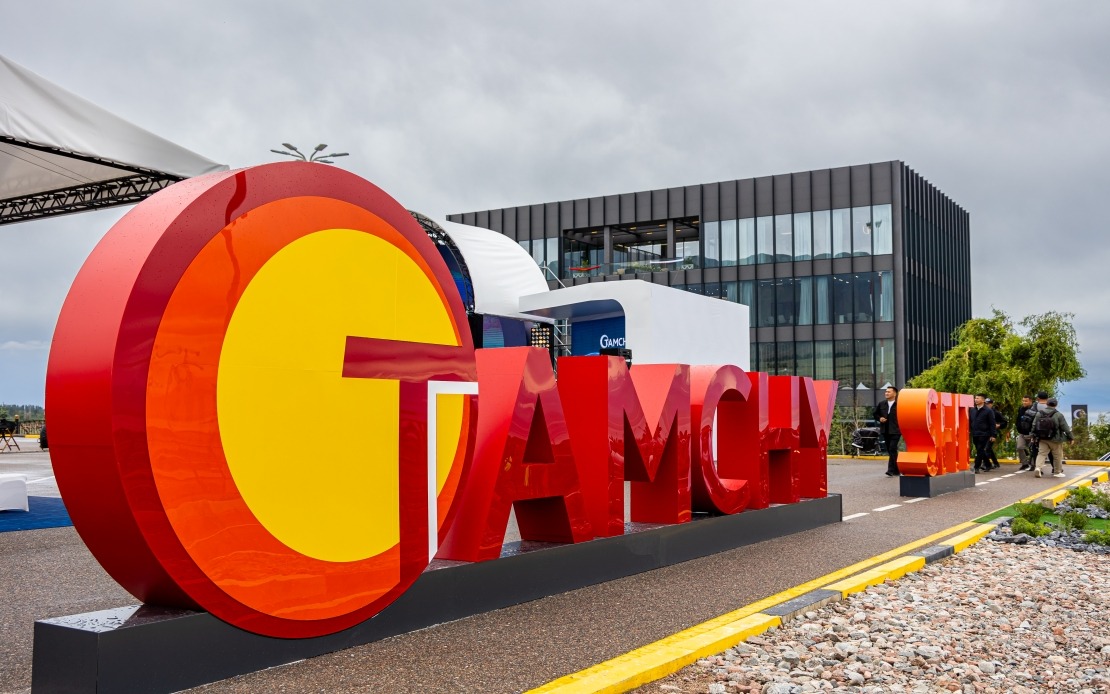
Kyrgyzstan has officially opened the Tamchy Special Financial Investment Territory (SFIT), a newly established financial and investment jurisdiction designed to appeal to international capital, financial services firms and technology enterprises looking for structured access to the broader Eurasian economic region. Strategically positioned at a crucial junction connecting multiple continental trade and financial networks, Tamchy positions itself as an intermediary platform that could facilitate Malaysian business expansion into markets spanning Central Asia, West Asia and Europe whilst remaining embedded in emerging global supply chain frameworks.
The geography underpinning Tamchy's appeal is significant for Malaysian entrepreneurs and corporations evaluating regional expansion strategies. Spanning 6,000 hectares across the shores of Lake Issyk-Kul, the territory benefits from nearby international aviation infrastructure and contemporary logistics facilities, reducing operational friction for companies establishing their Eurasian presence. For Malaysian firms already operating in ASEAN but seeking to extend their footprint westward, the arrangement provides a consolidated base for conducting business across fragmented and often administratively complex regional markets.
The initiative reflects a broader economic narrative within Central Asia, where Kyrgyzstan itself has demonstrated robust macroeconomic momentum. National gross domestic product expanded from approximately US$8 billion in 2020 to surpass US$22 billion by 2025, translating to a growth trajectory exceeding 11 per cent annually in the most recent reporting period. This expansion suggests underlying structural improvements in Kyrgyzstan's business environment, potentially reducing sovereign risk perceptions for foreign investors contemplating long-term commitments to the region.
President Sadyr Japarov articulated the jurisdiction's philosophical positioning during the launch ceremony, emphasising that globalised economic forces are generating demand for alternative business centres capable of combining international standards with genuine operational flexibility and protection for sustained investment horizons. The president's framing suggests Kyrgyzstan intends to position Tamchy as an antidote to perceived rigidities or unpredictability elsewhere in the international financial architecture, though the track record remains untested.
The legal framework governing Tamchy operations carries particular relevance for Malaysian stakeholders accustomed to common law jurisdictions. The territory functions under English common law principles, a legal tradition historically emphasising contractual clarity, precedent-based reasoning and institutional transparency. Malaysian corporate counsel and executives would encounter familiar interpretive methodologies, reducing the learning curve associated with navigating unfamiliar legal environments. Reinforcing this foundation, the jurisdiction maintains an independent judicial system, an International Dispute Resolution Centre and a dedicated financial regulator, ostensibly insulating investment protections from political fluctuation.
The fiscal incentive structure represents perhaps the most immediately compelling aspect of Tamchy's offering for Malaysian investors. Eligible residents benefit from a zero-tax regime spanning 49 years, a substantial incentive for companies seeking to optimise capital efficiency over medium-term horizons. Additionally, the jurisdiction permits complete foreign ownership of enterprises without domestic equity requirements, eliminates restrictions on virtual asset operations, and permits fully remote business operations through a consolidated administrative interface. These provisions collectively lower barriers to entry and reduce administrative burdens for geographically dispersed or digitally native organisations.
Initial resident composition suggests institutional confidence in the jurisdiction's viability. Established investors from South Korea, the United Arab Emirates, Hong Kong, Switzerland and Kazakhstan have already established presence within Tamchy, indicating that sophisticated international actors perceive the arrangement as sufficiently credible for capital deployment. This early adoption may reduce perceived risk for subsequent waves of investment, as demonstrated operational functionality typically attracts additional participants through signalling effects.
Ali Ijaz Ahmad, First Deputy Chairman of the Tamchy SFIT Management Council, characterised the jurisdiction as purpose-built to address concrete requirements of international capital and commercial operators. His statement emphasises the deliberate design process underlying the territory, suggesting that policymakers invested substantial analytical effort in identifying institutional gaps and regulatory friction points that deter foreign investment in alternative venues. For Malaysian decision-makers evaluating regional expansion options, this framing implies a jurisdiction constructed with pragmatic awareness of investor preferences rather than ideological positioning.
The timing of Tamchy's launch acquires broader significance when contextualised within post-pandemic reconfiguration of global value chains. Multinational enterprises increasingly diversify supply chain geography to reduce concentration risk, actively seeking alternative production hubs and distribution nodes beyond traditional Asian manufacturing clusters. A Kyrgyzstan-based presence could enable Malaysian companies to service European and Central Asian markets whilst leveraging proximity to Chinese markets and Russian territories, potentially offering logistical advantages for companies serving geographically dispersed customer bases.
However, Malaysian investors contemplating Tamchy participation should acknowledge several structural considerations. Kyrgyzstan's political environment, whilst stabilising, retains characteristics of post-Soviet Central Asian jurisdictions, including occasional governance transitions and civil unrest. The jurisdiction's isolation from established financial centres and shipping routes may impose logistical costs offsetting tax benefits for certain business categories. Additionally, the 49-year tax exemption, whilst substantial, terminates eventually, requiring long-term strategic flexibility regarding cost structures and operational locations. Furthermore, the track record of English common law protections in a post-Soviet jurisdiction remains relatively untested in international commercial disputes.
For Malaysian corporations seeking genuine diversification beyond ASEAN markets, Tamchy warrants serious evaluation as part of broader regional expansion strategy. The jurisdiction's combination of legal familiarity, financial incentives and strategic geography addresses multiple investor concerns simultaneously. Yet prudent capital allocation would counsel treating initial deployment as exploratory rather than committing substantial resources until operational experience validates the jurisdiction's administrative effectiveness and dispute resolution impartiality. The opening of Tamchy ultimately represents an opportunity for Malaysian business to participate in Eurasia's economic development, but success depends upon methodical assessment of specific organisational requirements against the jurisdiction's practical capabilities.

