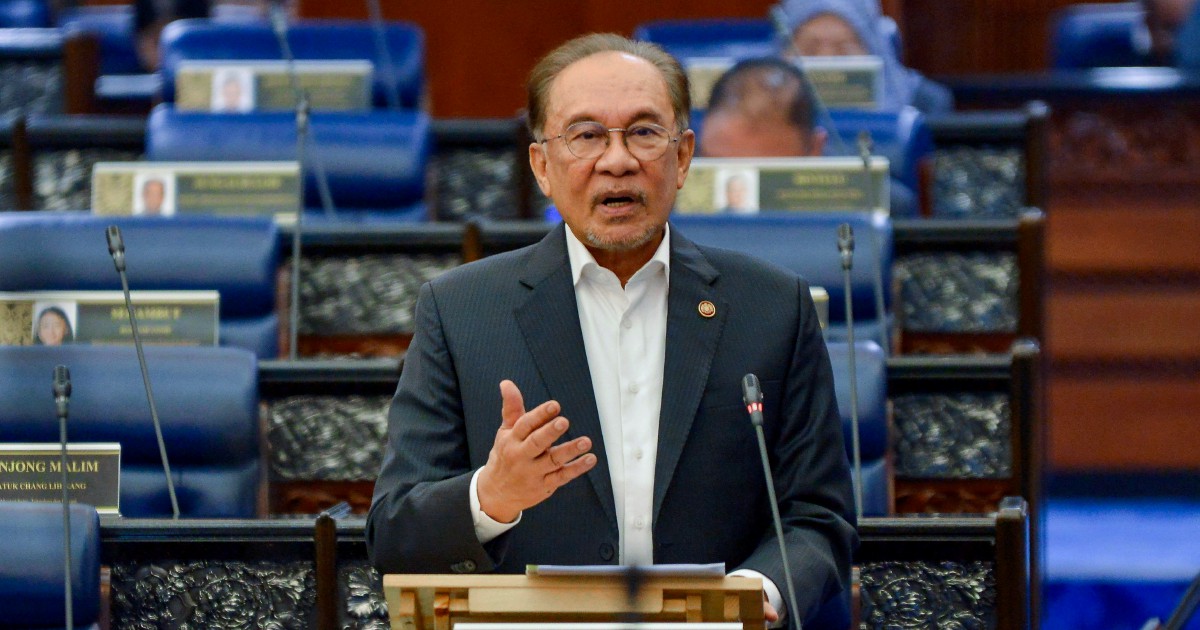
Malaysia's public pension scheme faces a significant funding gap that has drawn the attention of the nation's highest leadership. Prime Minister Datuk Seri Anwar Ibrahim highlighted the shortfall recently, noting that the Retirement Fund Incorporated's (KWAP) annual investment returns of RM12.9 billion fall far short of the RM45 billion needed annually to meet government pension obligations, a disparity that underscores mounting pressures on the country's long-term fiscal health.
The gap between investment earnings and pension liabilities represents a structural challenge that threatens Malaysia's ability to sustain its current pension system without additional government funding. KWAP, which manages retirement benefits for civil servants and military personnel, generates respectable returns through its investment portfolio, yet these earnings cover barely 28 per cent of annual pension payments. This means the government must bridge the remaining 72 per cent—some RM32 billion annually—through direct budget allocations, diverting scarce resources from other critical priorities including healthcare, education, and infrastructure development.
The scale of Malaysia's pension obligations has grown substantially as the civil service has expanded and retirees have increased in number and longevity. The country currently supports hundreds of thousands of retired government employees, each entitled to monthly stipends and related benefits. As life expectancy increases and more workers retire from lengthening careers, the demographic structure of the pension system has shifted unfavourably, with fewer active contributors relative to beneficiaries. This trend mirrors challenges faced by developed nations and other Southeast Asian governments grappling with ageing populations and unsustainable entitlement programmes.
The Prime Minister's acknowledgment of this imbalance signals official recognition that the current trajectory is unsustainable without intervention. Anwar's public statement reflects growing awareness among senior policymakers that business-as-usual approaches will eventually force difficult budgetary choices. Officials have begun examining options ranging from gradually increasing contribution rates to adjusting benefit formulas, though any such reforms face resistance from labour unions and civil service representatives who argue that pensions represent deferred compensation earned through years of service.
MALAYSIA's reliance on budget funding to plug pension gaps constrains the government's fiscal flexibility during economic downturns or when competing demands surge. A significant portion of annual government spending increasingly flows to pension payments rather than productive investments. During the recent pandemic and subsequent recovery, this burden intensified as economic growth lagged while pension obligations remained fixed contractual commitments. The situation creates what economists term a "crowding out" effect, where mandatory entitlement spending squeezes discretionary allocations.
Comparable pension systems in developed nations have undergone significant restructuring over recent decades. Singapore's Central Provident Fund model, which emphasises individual savings accounts and defined contributions rather than unfunded government promises, offers lessons that policymakers in Kuala Lumpur have studied. Australia, Canada, and European countries have gradually extended retirement ages, adjusted benefit calculations, and improved investment returns through professional fund management—approaches that could inform Malaysian policy discussions, though implementation requires careful sequencing to avoid social disruption.
KWAP's investment performance, while producing RM12.9 billion annually, reflects both the fund's size and the challenging global investment environment. Fund managers face pressure to balance yield with prudent risk management, particularly given their fiduciary responsibility to retirees whose livelihoods depend on stable pension payments. Enhancing returns through more aggressive strategies carries risks that could jeopardise beneficiary security. This tension between seeking higher yields and protecting accumulated pension assets constrains the fund's ability to independently narrow the earnings-obligations gap.
The sustainability question extends beyond KWAP to encompass government workers' pension schemes more broadly. Military personnel, police, and various grades of civil servants participate in interconnected systems, each with distinct formulas and benefit structures. Collectively, these schemes represent one of government's largest contingent liabilities—obligations not recorded in balance sheets but looming as future fiscal demands. International financial institutions have repeatedly flagged this issue in assessments of Malaysia's long-term fiscal trajectory, recommending preemptive reforms before demographics worsen further.
Policymakers face an unenviable trilemma: maintaining existing benefit levels requires either dramatically increasing contribution rates (which would burden active civil servants), injecting vastly larger sums from the federal budget (which would crowd out other spending), or accepting that pension payments will eventually consume an unsustainable share of government revenues. Most policy analysts suggest a gradual combination of approaches—modest contribution increases, slow benefit adjustments for new retirees, gradual retirement age extensions, and enhanced investment governance to optimise KWAP returns—rather than sudden, disruptive reforms.
The Anwar administration's public acknowledgment of this challenge indicates willingness to begin serious policy discussions, though converting recognition into action typically requires consensus-building across multiple stakeholder groups. Civil service unions, retiree associations, and opposition political forces all monitor pension policy closely. Previous attempts at pension reform in Malaysia have encountered resistance that delayed or diluted changes, suggesting that any future overhaul will require carefully sequenced implementation, transparent communication about long-term fiscal pressures, and assurances that current retirees will not experience benefit cuts.
Regionally, Malaysia's pension challenges reflect broader patterns affecting middle-income nations. Thailand, Indonesia, and the Philippines grapple with comparable issues as their own civil services expanded during earlier decades of development and now face demographic shifts. Learning from each other's experiences, successes and setbacks could inform regionally appropriate solutions that balance fiscal sustainability with social stability, crucial considerations as Southeast Asia navigates demographic transitions that will reshape public finances across the region.

