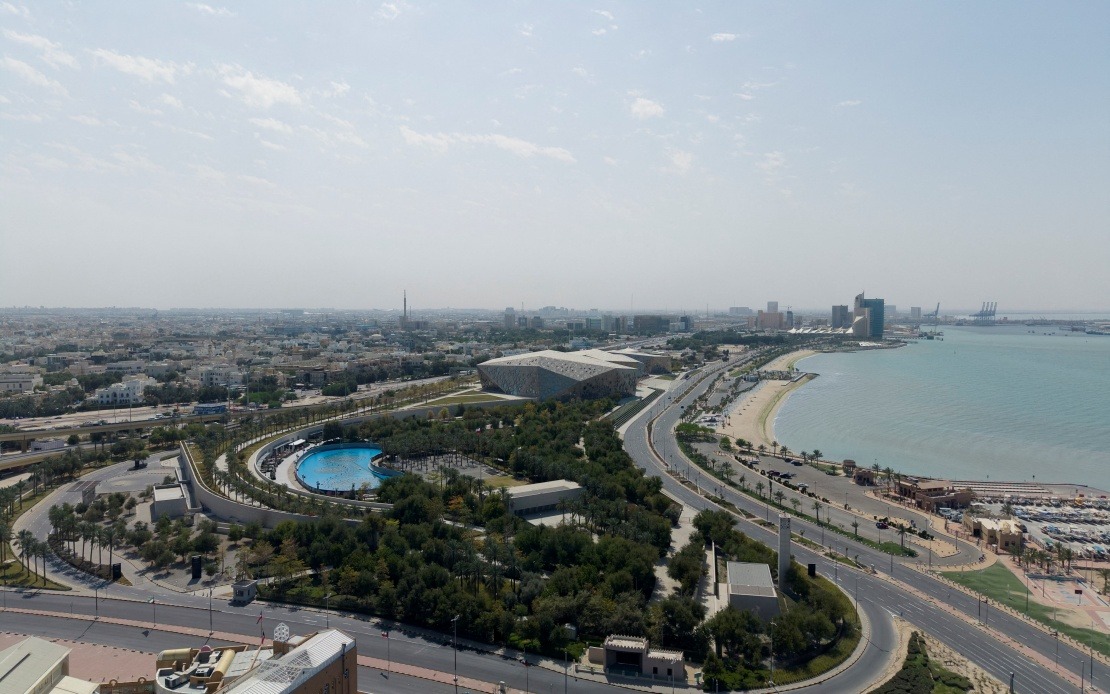
Kuwait's armed forces mobilised their air defence network early Wednesday morning to counter what military officials described as hostile unmanned aerial assaults originating from Iran. The defensive operations triggered a series of explosions visible and audible across portions of the country as interceptor systems engaged the incoming targets. Military authorities immediately advised residents to expect these detonations and instructed the public to adhere to safety protocols disseminated by government agencies responsible for civilian protection.
The timing and coordination of the attack on Kuwait coincided with similar threats against neighbouring Bahrain, where the Interior Ministry activated air raid sirens and instructed citizens and expatriate residents to relocate to the nearest designated shelter locations. This simultaneous engagement across multiple Gulf states underscores the breadth of Iranian operational capability and the vulnerability felt by smaller Gulf nations caught between the competing interests of major regional and international powers.
Kuwaiti authorities confirmed that a fire had broken out at an unspecified installation targeted during the Iranian operation, though emergency services swiftly contained the blaze. Officials were notably reticent about releasing details regarding the site's identity, function, or strategic importance, maintaining operational security while acknowledging the incident's occurrence. The absence of casualty reports provided marginal reassurance to the broader population, though the escalatory nature of the assault raised questions about the adequacy of existing protective infrastructure.
Bahrain's response mirrored the security posture adopted by Kuwait, reflecting shared vulnerability among smaller Gulf states facing potential Iranian aggression. The previous day, Bahrain's Defence Force had already announced the successful interception and destruction of what it characterised as treacherous Iranian aerial operations, suggesting that Tehran had already initiated a sustained campaign targeting multiple objectives throughout the Arabian Gulf region. The repeated deployment of air defence assets within a 24-hour window indicated heightened alert status among Gulf Cooperation Council nations.
These developments emerged amid an alarming escalation in direct military confrontation between the United States and Iran across the broader Middle East theatre. American forces have conducted offensive operations against Iranian targets, while Tehran has responded with reciprocal strikes against US military installations dispersed throughout the region. The cycle of action and counteraction has created an environment of acute instability, where miscalculation or unintended escalation could rapidly spiral into broader regional conflict.
The situation is further complicated by the existence of a Pakistani-mediated memorandum of understanding theoretically intended to de-escalate tensions and establish frameworks for durable peace between Washington and Tehran. Despite this diplomatic mechanism, both sides have continued military operations, suggesting that the formal agreement has proven insufficient to restrain operational commanders or deter strategic decisions made at the highest levels. The persistence of hostilities despite diplomatic channels raises doubts about the effectiveness of current conflict-resolution mechanisms.
For Malaysia and Southeast Asian observers, these Gulf developments carry significant implications. The Strait of Hormuz remains critical infrastructure for regional energy security, with Malaysian imports and broader Asian supply chains dependent upon unimpeded transit through these waters. Any further deterioration in security conditions could disrupt petroleum markets, elevate shipping insurance costs, and impose inflationary pressures on energy-dependent economies throughout Southeast Asia. Malaysia's substantial petrochemical sector and energy requirements make regional stability in the Gulf a matter of direct national interest.
The attacks also highlight the expanding sophistication of Iranian drone technology and the strategic challenges posed by asymmetric capabilities. Smaller Gulf states lack the sophisticated air defence networks that larger nations maintain, creating security gaps that sophisticated unmanned systems can exploit. This technological asymmetry raises questions about the adequacy of current deterrent structures and whether conventional defence arrangements can effectively protect against evolving threats.
The broader geopolitical context reveals how regional proxy conflicts and great-power competition intersect to destabilise the Gulf. Iran's willingness to conduct direct attacks on neighbouring states, even those maintaining formal diplomatic relations, suggests that Tehran perceives the strategic environment as sufficiently permissive to justify escalatory actions. The absence of effective restraining mechanisms or credible consequences may encourage further operations, particularly if Iran calculates that the international community will tolerate limited strikes against Gulf states while maintaining focus on preserving broader regional balance.
For Southeast Asian policymakers, these developments underscore the importance of maintaining economic and security engagement with Gulf states while avoiding entanglement in their conflicts. Malaysia's strategic position as a bridge between the Indian and Pacific Oceans depends upon maintaining stable relationships across the Middle East without becoming a proxy venue for great-power competition. The situation in Kuwait and Bahrain serves as a cautionary reminder of how quickly regional tensions can materialise into direct military confrontation, with consequences extending far beyond immediate geographic boundaries.

