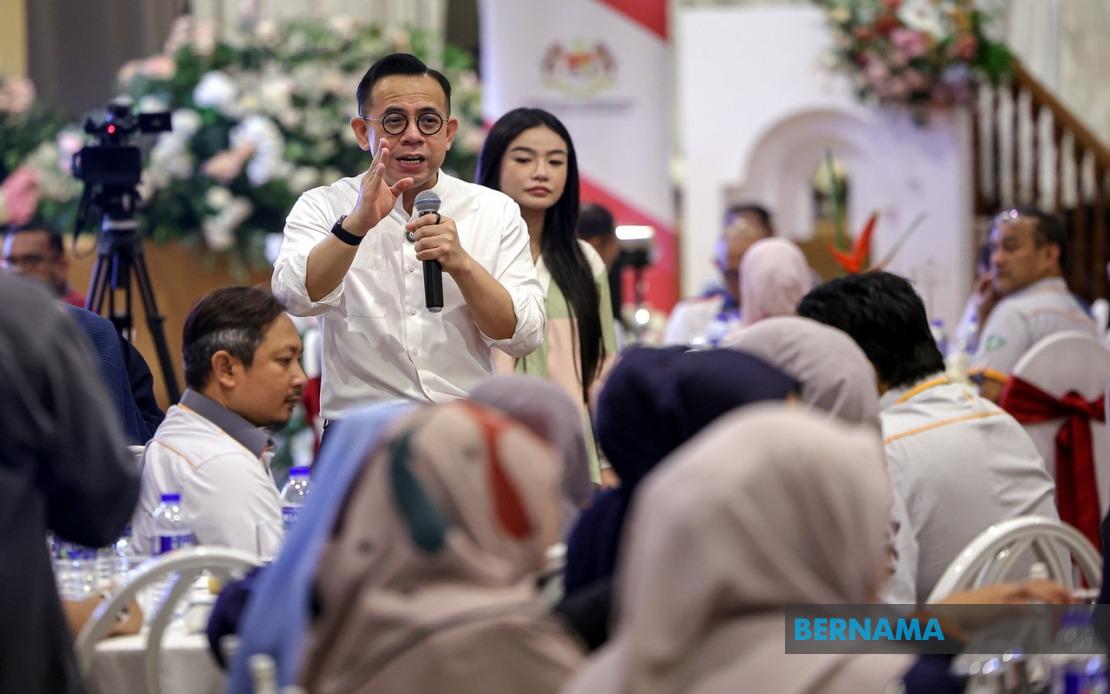
The Ministry of Entrepreneur Development and Cooperatives (KUSKOP) has accelerated its support for Malaysia's entrepreneurial ecosystem, releasing approximately RM7 billion across the first six months of 2026 through the Power Up 10K initiative. Minister Steven Sim announced the achievement while attending the Negeri Sembilan KUSKOP assembly, highlighting how the funds have reached more than 213,000 micro, small and medium enterprises across the country. The government has set an ambitious full-year target of RM15 billion in disbursements, positioning this initiative as a cornerstone of its economic resilience strategy during uncertain global times.
The distribution mechanism encompasses multiple financing and support programmes designed to address diverse entrepreneurial needs. Rather than adopting a one-size-fits-all approach, KUSKOP has structured the Power Up 10K initiative to accommodate businesses at various developmental stages, from startup ventures requiring seed capital to established enterprises seeking growth financing. This differentiated strategy reflects a maturing understanding within the ministry that entrepreneurs face distinct challenges depending on their business maturity, sector, and local market conditions.
Negeri Sembilan has emerged as a notable success story within the broader rollout. The state received RM345 million in funding directed toward more than 6,600 local entrepreneurs during the same six-month period. This regional breakdown demonstrates that KUSKOP's delivery mechanisms are functioning effectively at the grassroots level, translating ministerial directives into tangible capital access for business owners operating beyond major urban centres. The Negeri Sembilan outcome suggests the initiative is successfully bridging the historical gap between federal funding announcements and their practical implementation in smaller states.
Minister Sim framed the distribution drive as evidence of KUSKOP's commitment to sustaining Malaysia's MSME sector amid volatile global economic conditions. The context is significant: small and medium enterprises form the backbone of Malaysia's employment structure and contribute meaningfully to GDP, yet they remain vulnerable to external shocks including currency fluctuations, supply chain disruptions, and commodity price volatility. By channelling substantial capital toward these businesses, the government is attempting to bolster their competitive positioning and enhance their capacity to absorb economic pressures.
Beyond capital deployment, KUSKOP is pursuing a structural recalibration of how its agencies interface with entrepreneurs. Sim outlined a new operational philosophy emphasizing efficiency, reduced bureaucratic friction, and proactive engagement. Crucially, the minister acknowledged that while the government cannot control global factors such as oil price movements, it has direct influence over domestic compliance burdens. This recognition signals a shift away from purely financial assistance toward comprehensive support encompassing regulatory streamlining and administrative cost reduction—factors that often drain entrepreneurial resources as significantly as capital constraints.
The minister's directives to state-level agencies reveal awareness of implementation gaps common in centrally-designed programmes. Rather than adopting a passive posture whereby entrepreneurs must navigate government systems to locate available support, KUSKOP agencies are being encouraged to adopt proactive outreach strategies. Sim explicitly urged regional teams to accelerate fund disbursements independently and to intensify their promotional footprint through both digital channels and ground-level engagement. This shift from pull-based to push-based distribution reflects lessons learned from earlier iterations of entrepreneurship support programmes that struggled with low uptake despite substantial budget allocations.
The emphasis on roadshows, social media campaigns, and physical outreach addresses a persistent challenge in Malaysian entrepreneurship support: information asymmetry. Many eligible entrepreneurs, particularly those in semi-rural or economically disadvantaged areas, remain unaware of available schemes and assistance mechanisms. By compelling agencies to compete for entrepreneurs' attention and business, the ministry is introducing market-like dynamics into the public funding landscape, theoretically improving both awareness and accessibility across different demographic groups and geographic regions.
The Power Up 10K initiative must be understood within Malaysia's broader economic positioning. As a middle-income nation navigating the transition toward higher-value manufacturing and services, Malaysia's economic trajectory increasingly depends on entrepreneurial innovation and SME dynamism. The initiative directly addresses this imperative by ensuring that capital-constrained entrepreneurs can access financing without prohibitive collateral requirements or extended approval processes that often discourage applications from less-established businesses.
For Southeast Asian context, Malaysia's MSME support infrastructure stands comparatively advanced, though not without limitations. The RM7 billion midyear achievement demonstrates commitment to scale, though the actual capital-to-MSME ratio remains modest when distributed across 213,000 businesses. Neighbouring economies face similar challenges in achieving meaningful MSME penetration, suggesting that Malaysia's evolving approach—combining financial support with administrative simplification and institutional restructuring—may offer relevant lessons for the broader region.
The full-year RM15 billion target, if achieved, would represent a significant MSME investment commitment. Success will depend on whether state agencies can effectively implement the proactive engagement mandate and whether entrepreneurs can access funds within decision-making timeframes relevant to their operational needs. The minister's emphasis on reducing compliance costs suggests KUSKOP recognizes that capital availability alone is insufficient; the entire entrepreneurial support ecosystem requires optimization to generate meaningful business expansion and economic multiplier effects across Malaysian communities.

