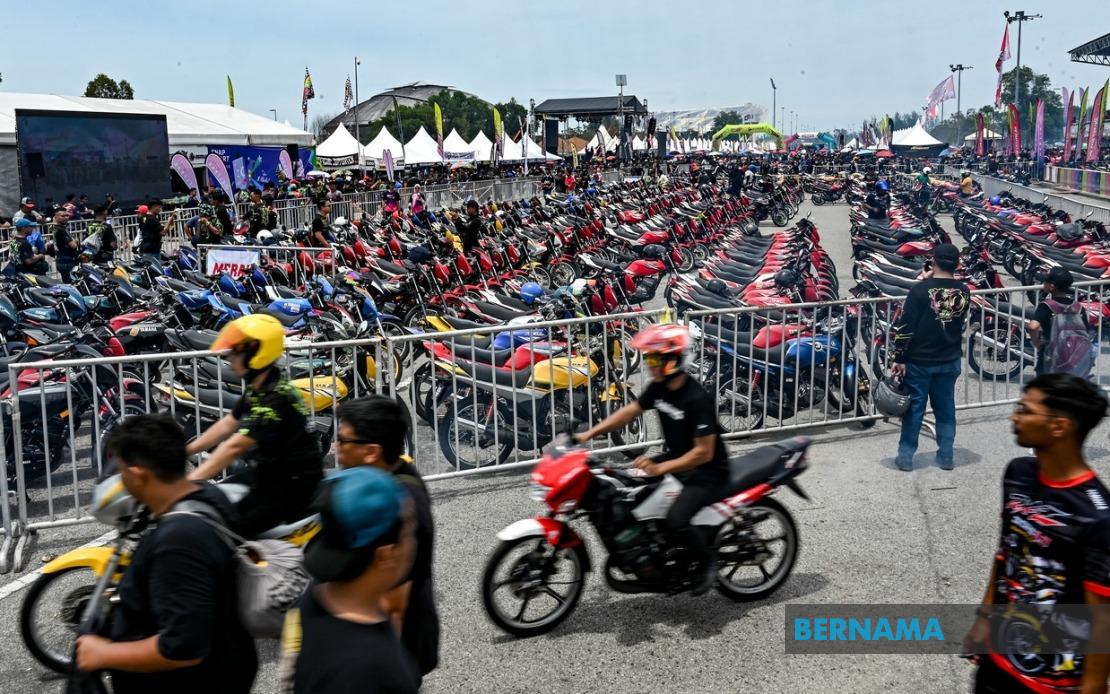
The Kuala Terengganu City Council (MBKT) has disclosed that it spent RM40,000 managing waste at the RXZ Members 8.0 event held at the Gong Badak Motor Racing Circuit, underlining growing concerns about environmental stewardship at large public gatherings in Malaysia. The costs emerged following the event's two-day run from Friday through Saturday, during which the venue attracted over 100,000 participants. MBKT mayor Lizan Che Mamat revealed that the expenditure encompassed overtime compensation for sanitation workers, supplementary waste removal trips, and extended processing hours at the Sungai Ikan landfill facility.
The cleanup operation recovered approximately 130 tonnes of solid waste from the event grounds, predominantly comprising food and beverage packaging materials. This substantial volume necessitated an expanded collection schedule that required MBKT personnel to work beyond standard hours to restore the motor racing circuit to acceptable cleanliness standards. The financial and logistical burden placed on the municipality raises questions about event management responsibilities in an era when outdoor entertainment programmes increasingly draw massive crowds to Terengganu and other states.
Mayor Lizan pointed out a significant paradox: despite MBKT positioning rubbish receptacles throughout the venue, attendees nonetheless engaged in widespread littering. This pattern reflects a broader environmental challenge affecting Malaysia's event industry, where the availability of proper disposal infrastructure does not necessarily translate into responsible participant behaviour. The disconnect between provided facilities and actual usage patterns suggests that awareness campaigns and behavioural change must accompany physical infrastructure improvements.
While acknowledging that the sheer attendance figure—exceeding 100,000 people—may have overwhelmed the initial bin capacity calculations, Lizan emphasised that organisers should have encouraged waste aggregation at designated collection stations rather than permitting scattered disposal across the grounds. This distinction highlights how event planning involves not merely providing receptacles but establishing clear logistical frameworks that guide participant behaviour from the outset.
The incident has prompted MBKT to pursue preventive measures for future events. The council now intends to mandate that organisers of large-scale gatherings submit comprehensive solid waste management plans as a prerequisite for municipal approval. This requirement would shift responsibility upstream, compelling event hosts to anticipate waste volumes, design collection protocols, and coordinate disposal logistics before seeking permits. Such a policy represents a significant tightening of local authority oversight.
Additionally, MBKT is reviewing its cleaning deposit system—fees collected from event organisers ostensibly to offset council cleaning expenses. The mayor indicated that the council would examine whether current deposit levels adequately compensate the municipality for actual cleanup costs or whether they require adjustment. This recalibration could make event organisation costlier, potentially incentivising organisers to invest more substantially in their own waste management infrastructure and participant education.
Mayor Lizan articulated an important recognition: large-scale events generate genuine economic and tourism benefits for Terengganu, attracting visitors who support hotels, restaurants, retail establishments, and transportation services. This acknowledgment reflects understanding that event restrictions must balance environmental concerns against regional development objectives. The statement demonstrates awareness that policy must encourage quality tourism activities while establishing enforceable environmental standards.
The RXZ Members 8.0 incident encapsulates a recurring tension in Malaysian urban management. As the nation hosts increasingly ambitious public events, local authorities must determine how to harness their economic potential while protecting civic spaces from environmental degradation. The challenge extends beyond Terengganu, as municipal councils nationwide grapple with waste management at festivals, concerts, sporting events, and cultural programmes that routinely surpass 50,000 attendees.
Implicitly, the situation reflects inadequate pre-event coordination between councils, organisers, and participants regarding environmental responsibilities. Successful waste management at large gatherings typically requires a three-part approach: organisers designing and communicating clear disposal systems, councils providing adequate infrastructure and oversight, and participants embracing shared responsibility for cleanliness. When any component fails, financial consequences and environmental impacts fall disproportionately on municipal budgets.
The RM40,000 expenditure also raises questions about cost recovery mechanisms. Malaysia's event industry has expanded substantially, yet municipalities often absorb cleanup expenses that arguably should be distributed among organisers and, potentially, ticket holders. Some international jurisdictions employ event-specific surcharges or require organisers to post environmental bonds, creating financial incentives for comprehensive waste management plans. MBKT's deposit review may signal movement toward similar mechanisms.
Moving forward, the council's emphasis on mandatory waste management plans represents a pragmatic regulatory approach. By requiring advance submission of disposal strategies, councils can identify inadequacies before events occur, negotiate with organisers regarding infrastructure provision, and establish clear accountability frameworks. Such requirements need not discourage event organisation but rather encourage professionalism and environmental consciousness within the industry.
For Malaysian event organisers and municipal authorities across the region, the Kuala Terengganu experience offers instructive lessons. As tourism and entertainment programming expand, environmental stewardship cannot remain an afterthought accommodated through reactive cleanup operations. Instead, integrated planning that anticipates waste volumes, establishes participant education initiatives, and allocates resources appropriately represents the sustainable pathway forward. The council's proposed regulatory adjustments, if implemented thoughtfully, could establish a model for other municipalities facing similar challenges.

