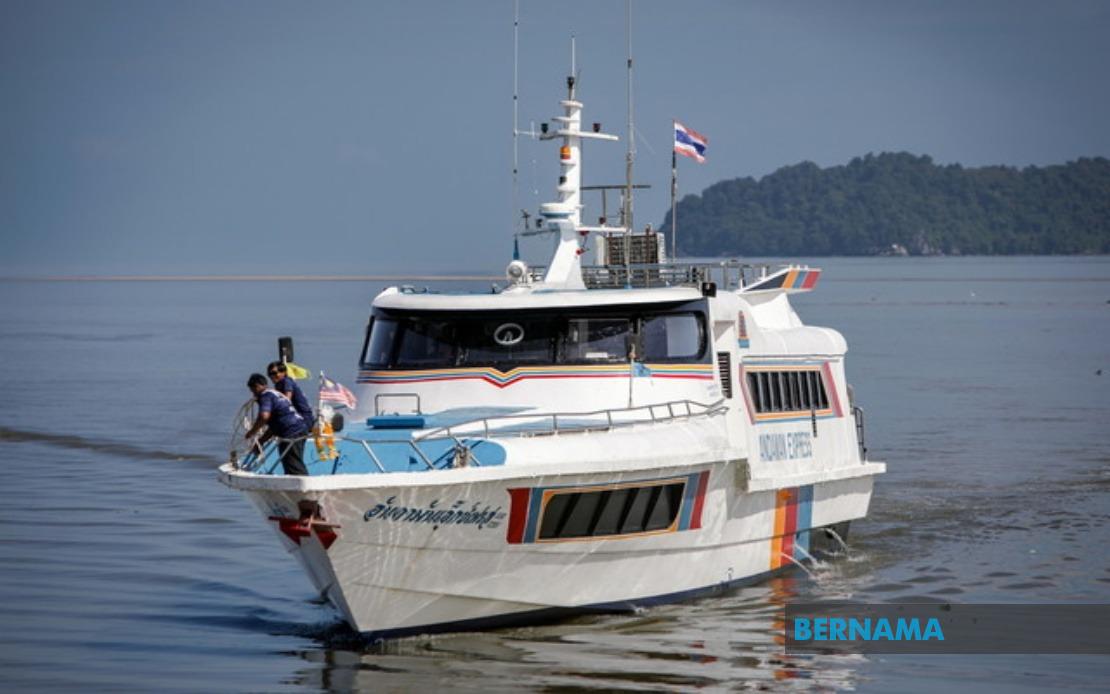
The maritime connection between Perlis and Thailand's Satun province will reopen its doors this Thursday after lying idle for over three years, with officials from both nations signalling the service as a catalyst for deepened cross-border tourism and economic integration. The Kuala Perlis-Satun ferry route, suspended during the COVID-19 pandemic, represents more than a simple restoration of transport infrastructure; it embodies a strategic initiative to weave together the tourism potential of three UNESCO-designated geopark regions and position them as a cohesive destination within Southeast Asia's competitive tourism landscape.
Perlis Menteri Besar Abu Bakar Hamzah underscored the significance of Thursday's restart during remarks made at Tammalang Jetty in Satun, where Malaysian officials witnessed a full operational simulation of ferry procedures and protocols. The reopening, he explained, will catalyse cooperation among Perlis Geopark, Satun UNESCO Global Geopark, and Langkawi UNESCO Global Geopark, creating a tripartite tourism ecosystem that leverages each region's distinct geological and cultural heritage. For Malaysia, particularly Perlis—one of the country's least densely populated and economically marginalised states—the ferry represents a tangible pathway to diversified revenue streams and employment opportunities in hospitality, transportation, and related services.
The state administration is establishing a formal committee bringing together stakeholders from Perlis, Satun, and Langkawi to coordinate tourism marketing and operational standards across the three jurisdictions. This institutional framework aims to transform what might otherwise be isolated attractions into a regionally recognised circuit, enabling visitors to experience complementary destinations within a single itinerary. Such coordination also reduces transaction costs for tourists and enhances the appeal to organised tour operators who prefer bundled experiences requiring minimal logistical complexity.
Abu Bakar revealed that ferry operators and state officials are engaged in ongoing discussions regarding fare structures, with an explicit commitment to maintaining competitiveness in pricing while exploring introductory promotional rates to drive initial patronage volumes. The cautious, demand-responsive approach adopted here—starting with a single daily sailing before scaling frequency upward—reflects prudence given the service's extended absence from operation and the inherent uncertainty surrounding pent-up demand. This phased expansion allows operators and authorities to identify and resolve teething problems without overcommitting resources or disappointing travellers through service failures.
The Kuala Perlis Roll-on-Roll-off Terminal, the Malaysian embarkation point, is undergoing concurrent infrastructure enhancements including the development of a dedicated vehicular route designed to streamline boarding procedures and reduce operational congestion. These physical improvements are not merely cosmetic; they signal to both Malaysian and foreign travellers that the service meets contemporary safety and convenience standards. For vehicles—whether personal cars or tour coaches—efficient boarding and disembarking protocols reduce transit times and enhance the appeal to business travellers and day-trippers who demand time-efficient cross-border movements.
The operational simulation conducted at Tammalang Jetty encompassed the full spectrum of maritime and administrative procedures, from passenger boarding to customs clearance protocols. Abu Bakar reported that all safety measures, standard operating procedures, and technical aspects of ferry operations performed satisfactorily during this dry run. This meticulous preparation reflects lessons learned from infrastructure projects throughout Southeast Asia, where ceremonial openings occasionally mask operational inadequacies that create negative first impressions and undermine public confidence.
Both Malaysia and Thailand have aligned their regulatory frameworks to facilitate the route's resumption. The Royal Malaysian Customs Department, Malaysian Immigration Department, Marine Department, and corresponding Thai security agencies have completed necessary procedural compliance and coordination. This cross-border regulatory alignment is particularly significant given the region's historical sensitivities and the need to balance sovereignty concerns with seamless passenger flows. The willingness of both nations' security and customs authorities to harmonise protocols reflects the diplomatic maturity and functional cooperation that characterises the Malaysia-Thailand relationship despite occasional tensions.
The implications for Malaysian tourism operators, particularly those based in Langkawi and Kedah, extend beyond the immediate Perlis market. The ferry route effectively transforms the northwestern corner of Peninsular Malaysia into a more accessible destination for Thai nationals and regional tourists traversing the Andaman coast, potentially increasing visitor nights and spending across the broader northern region. Thai tourists, for whom Langkawi holds particular appeal as a duty-free shopping destination, may now access the island through a more direct maritime route rather than navigating road borders and extending their stays to justify the surface journey.
The timing of this reopening aligns with the post-pandemic recovery phase in regional tourism, when both Malaysia and Thailand are actively competing to recapture market share from competing destinations in Bali, the Philippines, and Cambodia. The Kuala Perlis-Satun route differentiates itself by offering a relatively uncrowded, geologically distinctive tourism product centred on geopark-based education and nature-based experiences. This positioning appeals to the growing segment of conscious travellers seeking authentic, sustainable tourism alternatives over mass-market beach resorts.
For Perlis state government, which has historically relied on agriculture and light manufacturing, the ferry service represents a structural diversification opportunity. Revenue from port operations, visitor spending, and ancillary services—accommodation, food service, retail—may generate tax income and employment that reduces fiscal dependence on federal transfers and attracts skilled workers back to a state experiencing outmigration. The trickle-down effects could extend to rural communities through homestays, cultural experiences, and agricultural tourism that convert traditional activities into commercial propositions.
The regional geopolitical context should not be overlooked. Southeast Asian integration, pursued through ASEAN frameworks and bilateral arrangements, requires tangible projects demonstrating mutual benefit and reducing friction at borders. The Kuala Perlis-Satun ferry, though modest in scale, exemplifies functional cooperation that transcends diplomatic rhetoric and produces concrete improvements in cross-border mobility and economic opportunity. This contributes to a climate of constructive engagement that serves broader regional stability and prosperity objectives.
As the ferry service begins operations Thursday, success will not be instantaneous. Building sustainable patronage requires consistent service quality, strategic marketing targeting Thai and regional tourists, and integration with broader tourism packages offered by operators throughout Langkawi and Perlis. Initial passenger volumes and satisfaction levels will determine whether this link becomes a thriving transnational corridor or fades into underutilisation. The coming months will reveal whether the optimism expressed by officials translates into the commercial viability and tourism transformation that the region seeks.

