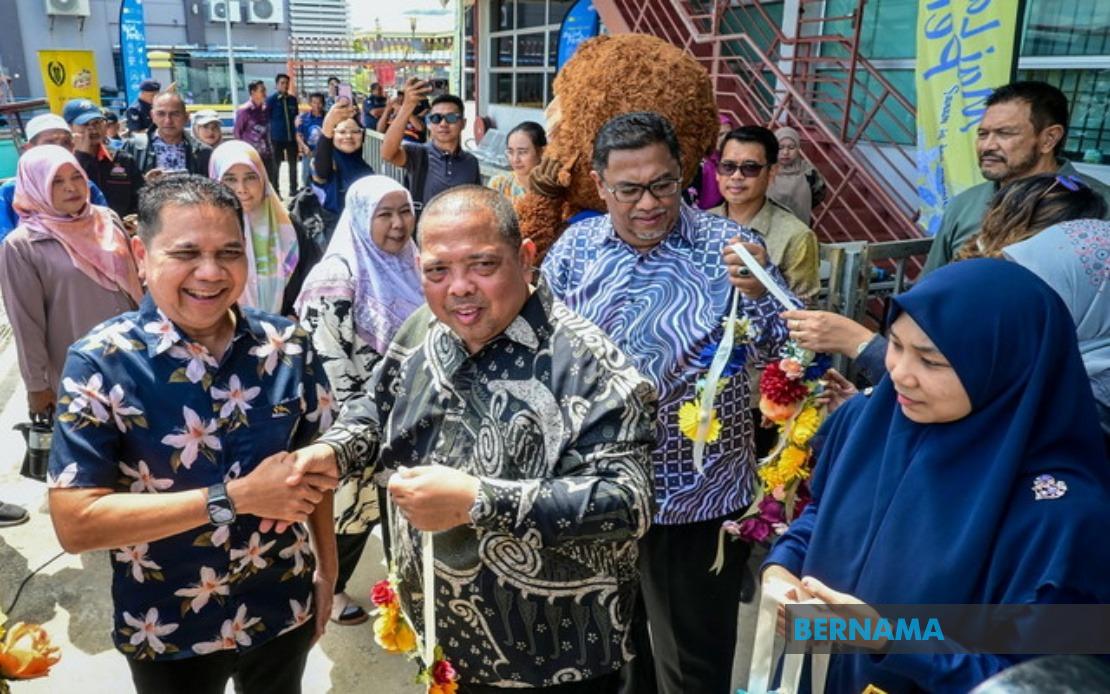
The northern state of Perlis is banking on renewed maritime connectivity to revitalise its tourism sector following the reopening of the Kuala Perlis-Satun ferry service, with state leadership projecting tourist arrivals of between 5.5 million and six million visitors this year. The service, which had been suspended since the onset of the COVID-19 pandemic, resumed operations on July 9, marking a significant milestone for regional travel and commerce along the Malaysia-Thailand maritime border.
Menteri Besar Abu Bakar Hamzah voiced optimism that the restored sea corridor would unlock considerable economic potential for Perlis, particularly by facilitating seamless passenger movement across the 40-minute journey between Kuala Perlis and Satun. The revival of this route represents more than a simple restoration of pre-pandemic services; it signals a strategic reorientation towards maritime gateways as an alternative to land-based border crossings, which have traditionally borne the brunt of regional cross-border traffic.
The reopening carries particular significance for bilateral relations, as the renewed connection is expected to draw substantial numbers of Thai shoppers to Kuala Perlis, generating retail and hospitality revenue while deepening economic interdependence between the two neighbouring jurisdictions. For Malaysia and Thailand, strengthened people-to-people exchanges through improved transport infrastructure contribute to broader regional integration efforts and goodwill that extend well beyond immediate commercial considerations.
A critical advantage of the ferry resumption lies in its potential to alleviate chronic congestion at the Padang Besar land crossing, especially during peak travel periods and public holidays when vehicle queues routinely extend for hours. By offering travellers a viable maritime alternative, authorities hope to distribute demand across multiple entry and exit points, reducing bottlenecks and improving overall border management efficiency. This distributional benefit extends to the wider Asean framework, where seamless transnational movement enhances logistics and tourism competitiveness across the region.
The journey itself has been reimagined as an experiential attraction rather than mere transit. The 40-minute voyage affords passengers scenic vistas of the Andaman Sea coastline, positioning the ferry crossing as a tourism product in its own right rather than simply instrumental transit. This experiential dimension may appeal particularly to visitors seeking distinctive travel narratives beyond conventional highway routes, potentially attracting boutique tourism segments with higher spending profiles.
Infrastructural challenges have necessitated near-term solutions that reflect the technical complexities of operating a maritime service in Southeast Asian waters. Abu Bakar disclosed plans to deploy a floating pontoon system to overcome recurring berthing complications stemming from tidal fluctuations and shallow draught conditions at the Kuala Perlis terminal. Such adaptive infrastructure represents pragmatic problem-solving in environments where natural geography imposes constraints on conventional port development.
Longer-term ambitions extend considerably beyond simple ferry restoration. The state administration is actively investigating the reactivation of Roll-on/Roll-off services, enabling vehicular transport across the strait without requiring passengers to disembark. This cargo-inclusive modality would substantially expand the economic utility of the maritime corridor, facilitating goods movement that complements passenger services and supporting supply chain integration across the border.
Most ambitiously, preliminary discussions are underway regarding a RM500 million maritime bridge project spanning approximately two kilometres into the sea, designed to surmount the persistent shallow-water navigation challenges that constrain current operations. Such a megastructure would fundamentally transform Perlis's geographical relationship to Satun, creating a permanent fixed link comparable to existing cross-strait bridges elsewhere in the region. While such projects entail considerable capital commitment and environmental assessment, they reflect confidence in the long-term strategic importance of Malaysia-Thailand connectivity.
For Malaysian policymakers, the Kuala Perlis ferry reopening serves as a microcosm of broader questions regarding how secondary border towns can leverage geographical proximity and cross-border commerce to drive sustainable economic development. Perlis, historically overshadowed by larger neighbouring Kedah, has an opportunity to position itself as a maritime gateway rather than remaining primarily a terrestrial transit zone. This repositioning could attract investment in tourism infrastructure, hospitality, and retail sectors that historically gravitate towards major urban centres.
The timing of the ferry resumption also reflects post-pandemic normalisation across Southeast Asia, where maritime services had suffered disproportionately during lockdown periods. The revival signals growing confidence among operators and authorities in regional stability and consumer demand for cross-border travel. As vaccination rates have stabilised and quarantine requirements have been lifted across the region, pent-up demand for international tourism is being released across multiple corridors simultaneously.
Regionally, Perlis's maritime initiative sits within a broader context of Southeast Asian states seeking to diversify border connectivity through multimodal transport solutions. Rather than relying exclusively on congested land crossings, countries are increasingly investing in complementary sea and air linkages that distribute traffic and create redundancy in their transport networks. This diversification enhances regional economic resilience and reduces friction costs associated with traditional bottlenecks.
The involvement of investors in discussions regarding major infrastructure projects underscores the commercial viability that market participants perceive in enhanced Malaysia-Thailand connectivity. Private sector interest validates governmental confidence in the economic fundamentals underlying tourism and cross-border trade expansion, suggesting that the ferry service may catalyse additional downstream investment in accommodations, dining, and retail establishments throughout Perlis.
As Perlis pursues these interconnected initiatives—from immediate floating pontoon deployment through medium-term Ro-Ro service activation to transformational bridge construction—the state is articulating a vision of itself as an open, accessible regional node rather than a peripheral hinterland. The ferry service represents not merely a transportation solution but a statement of strategic intent, positioning Perlis to capture tourism revenue and bilateral trade opportunities that have historically flowed through alternative routes.

