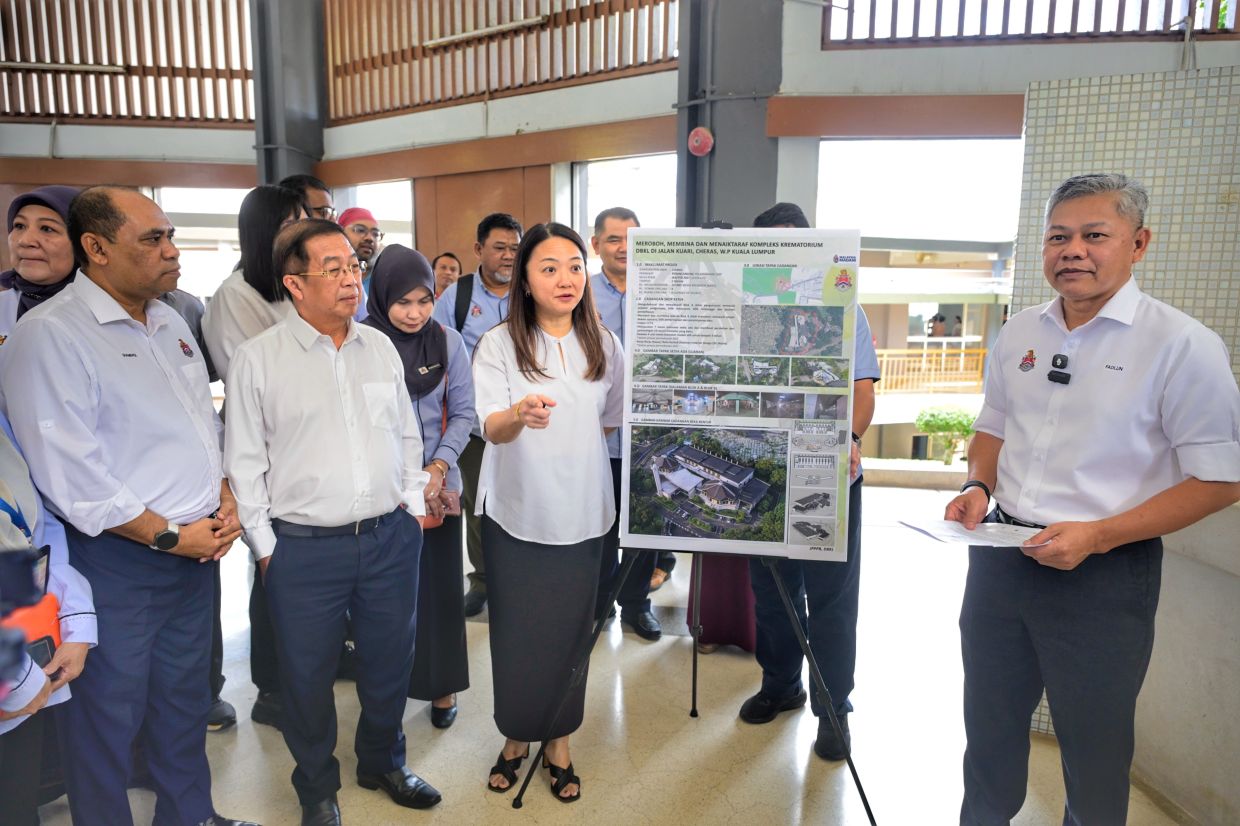
Kuala Lumpur's aging crematorium facility in Cheras is set for a significant overhaul as the city authority moves to address capacity constraints facing the non-Muslim communities it serves. The RM45 million upgrade programme at the Jalan Kuari complex represents a substantial commitment to modernising infrastructure that has operated beyond its original design capacity for years, reflecting growing recognition that Kuala Lumpur's religious and cremation services require urgent expansion to match demographic changes.
Mayor Datuk Seri Fadlun Mak Ujud outlined the ambitious renovation blueprint during an inspection of the facility on Wednesday, revealing plans to add three new cremation units alongside the existing seven operational units currently in service. The enhancement project, which has secured funding approval through the 13th Malaysia Plan, will commence in February 2026 and is projected to take approximately two years to reach completion. This phased approach to construction demonstrates careful planning to prevent substantial service disruptions during the expansion phase.
The staging strategy is particularly significant given the facility's central role in serving Kuala Lumpur's diverse population. Rather than shutting down entirely during renovations, four cremation units will remain fully operational throughout the upgrading period, ensuring continuity of services for bereaved families. This operational continuity reflects a balanced approach between necessary modernisation and public service delivery, minimising inconvenience during what will inevitably be a complex construction process in an active facility.
The Cheras crematorium has operated continuously since 1977, making it one of Kuala Lumpur's longest-serving municipal infrastructure facilities. Currently, the complex processes more than 5,800 cremations annually, according to official figures maintained by Kuala Lumpur City Hall, underscoring the heavy reliance placed upon this single installation by the capital's non-Muslim population. As the sole DBKL-operated crematorium serving the entire city, it bears an outsized burden relative to its original engineering specifications, creating operational pressures that expansion will substantially alleviate.
City Hall officials framed the investment as part of a broader strategic shift toward responsive urban governance that evolves alongside population needs. Mayor Fadlun characterised the initiative as exemplifying the authority's commitment to upgrading municipal services in response to changing public requirements. This messaging reflects a administrative perspective that treats infrastructure provision not as a static historical function but as a dynamic responsibility requiring continuous assessment and upgrading as communities grow and demographics shift.
Cheras MP Tan Kok Wai, who participated in the facility inspection alongside the mayor, advocated for accelerating the project timeline despite the already-compressed two-year schedule. Tan emphasised that the complex's half-century age mandates urgent attention, particularly given Kuala Lumpur's expanding population base that places ever-increasing demands on cremation and funeral services. His advocacy signals political pressure from the parliamentary representative to prioritise this matter, reflecting constituent concerns about service availability and capacity constraints.
Minister in the Prime Minister's Department (Federal Territories) Hannah Yeoh's attendance at the inspection underscored federal-level interest in ensuring adequate funeral infrastructure across the capital. Beyond the crematorium discussion, Yeoh disclosed ongoing federal-state negotiations with Selangor authorities to establish additional Muslim cemetery sites in Semenyih. This broader infrastructure conversation reveals that Kuala Lumpur faces systematic shortages across multiple funeral and burial service categories, not merely cremation capacity.
The land constraint challenge facing Kuala Lumpur presents a fundamental planning problem that neither simple expansion nor relocation can fully resolve. The capital's geographic boundaries, combined with intensive urban development and limited available space, constrain both crematorium facilities and burial grounds. Selangor's involvement in discussions about Semenyih cemetery sites indicates recognition that solutions may require cross-boundary cooperation and utilisation of adjacent jurisdictions' resources, a pragmatic acknowledgment that Kuala Lumpur cannot independently satisfy all funeral infrastructure needs internally.
For Malaysian families from Hindu, Sikh, Christian, and Buddhist communities, the Cheras facility represents an essential service whose capacity limitations directly affect the ability to conduct culturally appropriate funeral rites. Cremation remains a fundamental religious requirement or strong preference for adherents of these faiths, making adequate crematorium facilities not merely a convenience but an integral component of respecting diverse religious traditions within a plural society. The expansion project thus carries significance beyond mere facility management, touching fundamental questions about religious accommodation within urban planning.
The RM45 million investment reflects a broader pattern of municipal spending on utilities and public services that have historically received insufficient attention relative to more visible infrastructure projects. Cremation and funeral services operate largely outside public discourse until crises emerge, yet they represent essential components of urban functionality that serve every community regardless of religious affiliation. This upgrade demonstrates that city authorities increasingly recognise the importance of adequate provision across all service categories including those addressing end-of-life requirements.
Southeast Asian cities increasingly face similar infrastructure pressures as urbanisation accelerates and populations diversify. Kuala Lumpur's experience with crematorium capacity constraints resonates across the region, where rapid city growth often outpaces municipal service expansion. The approach taken here—phased expansion within existing complexes rather than developing entirely new facilities—offers a potentially replicable model for other urban centres confronting similar demographic pressures and space limitations.
Successful completion of this upgrade will position the Cheras complex to serve Kuala Lumpur's projected population needs for the foreseeable future. The addition of three new units represents a 43 per cent increase in cremation capacity, substantially addressing existing bottlenecks while providing buffer capacity for future growth. Implementation success will depend on timely contractor execution and municipal oversight, with any delays potentially perpetuating service pressures that communities currently experience during periods of high demand.

