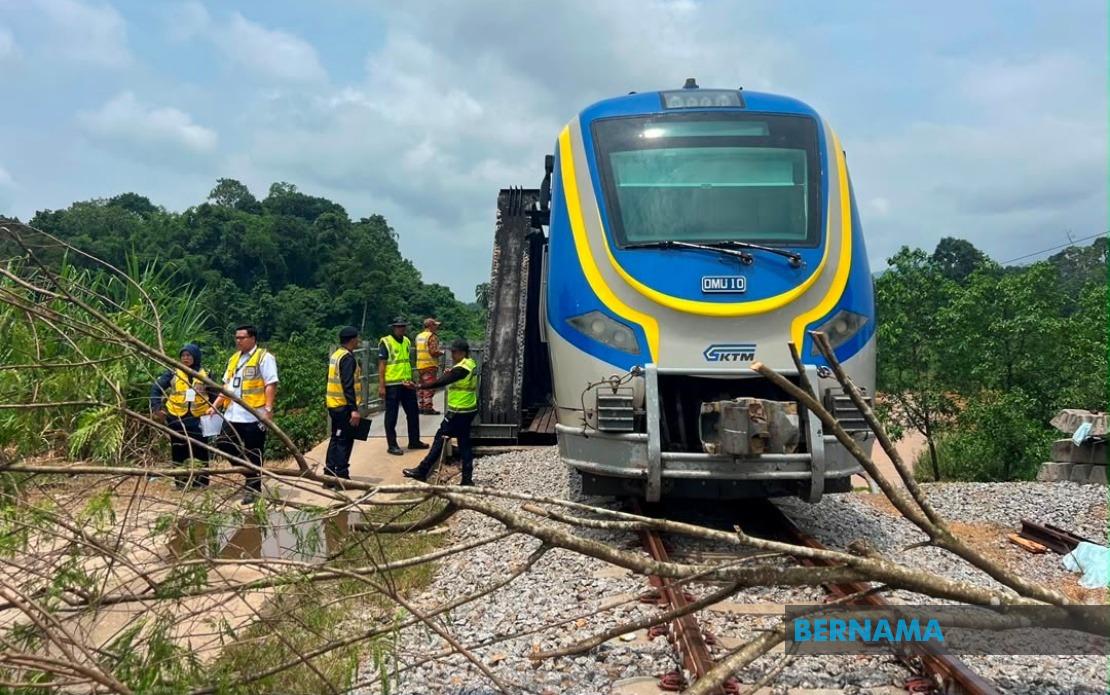
Keretapi Tanah Melayu Berhad (KTMB) is evaluating its emergency preparedness capabilities through a large-scale training exercise on the EX-Kemubu route in Kuala Krai, with particular focus on three critical operational challenges: securing rapid access to remote accident sites, minimising response times from rescue services, and ensuring effective communication channels during crisis situations. The initiative reflects growing recognition within Malaysia's national rail operator that railway emergencies in rural areas demand specialised coordination protocols distinct from urban incident management.
Khairul Naim Johdi, KTMB's Occupational Safety, Health and Environment general manager, outlined the strategic rationale for concentrating the evaluation on these three pillars during the training programme. The EX-Kemubu corridor presents distinct geographical obstacles that complicate emergency response efforts—the railway line traverses areas distant from main transportation arteries, cutting through terrain marked by river proximity and limited road connectivity. These characteristics transform what might be routine rescue operations in populated regions into logistically complex undertakings requiring enhanced interagency coordination and planning.
The remoteness factor distinguishes rural railway emergencies from their urban counterparts in fundamental ways. In densely populated areas, emergency services typically operate with established infrastructure, pre-positioned resources, and shorter response distances. Conversely, the EX-Kemubu corridor's isolation means rescue teams must often contend with substantial travel times before reaching incident locations, creating potential delays in medical intervention, passenger evacuation, and situation assessment. Khairul Naim identified this access challenge as perhaps the most pressing operational consideration, emphasising that training must validate whether established response protocols can withstand the friction imposed by geographical distance.
The training programme convened approximately 350 personnel representing 11 government and emergency services agencies, creating an unusually comprehensive cross-sector coordination platform. Participants included the Royal Malaysia Police, the Malaysian Fire and Rescue Department, the Ministry of Health, the Malaysian Civil Defense Force, and the Department of Social Welfare, alongside KTMB staff. This broad institutional participation reflects the inherently multidisciplinary nature of railway emergencies, where passenger safety depends on seamless collaboration between security forces, medical responders, civil protection authorities, and social services support.
EX-Kemubu was deliberately selected as the training location precisely because its operational environment encapsulates the risks facing KTMB's rural rail network. The route combines multiple hazard categories—proximity to water bodies introduces drowning and contamination risks, while remote positioning necessitates self-sufficiency in initial response phases. By conducting realistic exercises in actual operational terrain rather than controlled facilities, KTMB gains invaluable insights into how personnel perform under conditions matching genuine incident scenarios.
The evaluation methodology incorporates structured post-exercise analysis examining multiple performance dimensions. Khairul Naim explained that this review process captures feedback from all participating agencies, specifically analysing response delays, first responder effectiveness, access routes and entry procedures, and information transmission accuracy and timeliness. This granular assessment approach moves beyond simple pass-fail evaluations to identify specific friction points and capability gaps requiring remediation. The process acknowledges that emergency management excellence emerges through iterative improvement rather than single-event correction.
KTMB conducts these large-scale emergency drills on a rotating basis across its four operational regions annually, supplementing region-wide exercises with smaller-scale scenario training conducted throughout the year to maintain personnel proficiency at sustained levels. This structured approach recognises that emergency response capabilities atrophy without consistent reinforcement and practice. By distributing major exercises across regions and maintaining intermediate training activities, KTMB institutionalises crisis readiness as an ongoing operational requirement rather than periodic compliance exercise.
Internal communication protocols receive particular emphasis in KTMB's emergency framework, reflecting lessons from previous incidents where information delays complicated response coordination. The established procedure requires frontline staff to immediately notify KTMB's central operation controller upon detecting emergencies. This control centre functions as the information hub, receiving incident details and rapidly disseminating relevant information to external agencies—police, fire services, medical facilities, and civil defence authorities. Effective functioning of this communication architecture directly determines whether response agencies receive timely, accurate situational awareness enabling rapid deployment.
Beyond external coordination mechanisms, KTMB emphasises intensive internal preparation encompassing personnel training, procedural documentation, and skill validation for staff performing critical functions. Passenger evacuation procedures receive particular focus, as safe movement of potentially large numbers of individuals from train carriages demands well-coordinated execution by trained personnel working under stressful conditions. KTMB invests substantially in ensuring its workforce develops competency in these emergency functions through regular practice and scenario-based training modules.
The railway operator's comprehensive emergency preparedness strategy extends beyond reactive response capabilities to encompass preventive and preparedness dimensions. Khairul Naim highlighted that effective emergency management integrates training delivery, procedure establishment, and personnel skill development into an interconnected system. Should genuine emergencies occur on the Dabong-Kemubu corridor, this integrated preparation framework enables all stakeholders—KTMB staff, government agencies, and external responders—to comprehend their respective responsibilities and execute coordinated actions prioritising passenger and employee safety.
For Malaysian rail passengers and the broader travelling public, these systematic emergency drills represent concrete institutional commitment to safety management. The willingness to conduct realistic, large-scale exercises in challenging rural environments demonstrates that KTMB recognises passenger protection as requiring investment beyond basic compliance. As Malaysia's rail network expands and regional connectivity improves, maintaining and enhancing emergency response capabilities in remote corridors becomes increasingly critical to ensuring passenger confidence and operational resilience.

