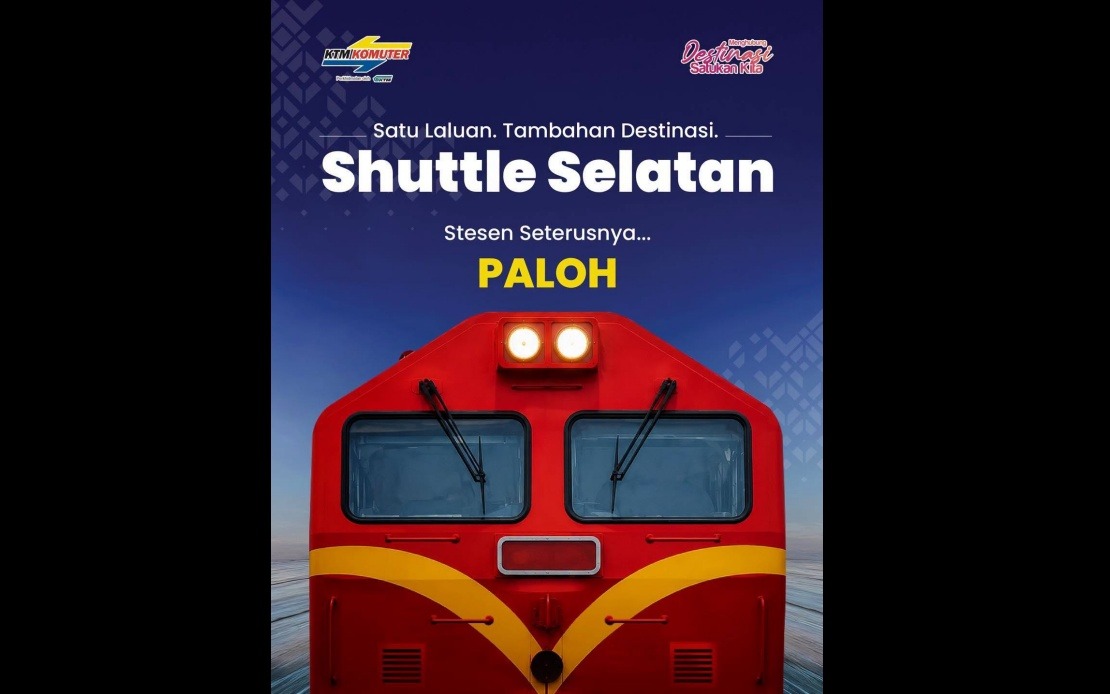
Keretapi Tanah Melayu Berhad (KTMB) is rolling out an expanded Southern Shuttle service from August 8, significantly broadening rail connectivity across the Johor corridor. The extension represents a deliberate effort by Malaysia's national rail operator to provide commuters with direct access between suburban communities and the region's vital economic centers, particularly Kulai and JB Sentral.
The enhanced network will encompass seven stations in total: Paloh, Kluang, Renggam, Layang-Layang, Kulai, Kempas Baru and JB Sentral. A complete journey from Paloh to JB Sentral will require approximately two hours, positioning the service as a practical alternative to road congestion for workers, students and cross-border travelers. This expansion comes remarkably swiftly—less than three months after the initial phase commenced—underscoring government determination to accelerate rail infrastructure deployment in the region.
The initiative capitalizes on segments of the Gemas-Johor Bahru Electrified Double-Track Project (PLBEGJB) infrastructure, demonstrating efficient utilization of existing railway alignment to deliver immediate public benefit. By routing through the central Johor corridor, KTMB can serve intermediate communities that previously lacked convenient rail options, thereby addressing a longstanding connectivity gap between rural and urban Johor.
Operational capacity has been designed to accommodate substantial passenger volumes. Each service will carry up to 400 travelers, with the timetable structured to support daily commuter patterns. The earliest departure from Paloh leaves at 3:55 am, arriving in JB Sentral by 5:52 am—timing that explicitly targets workers transiting to Singapore via the Johor Bahru border crossing. The final service departs JB Sentral at 8:30 pm, arriving Paloh at 10:27 pm. This dual focus on predawn and evening services reflects careful attention to cross-border workforce mobility, a critical economic consideration for the region.
Ten daily trips—five in each direction—will ensure reasonable frequency without overextending operational resources. This frequency level sits between true rapid transit (which demands trains every 10-15 minutes) and traditional intercity rail (operating several trains daily), positioning Southern Shuttle as a hybrid service tailored to suburban commuter needs.
Fares have been substantially discounted during the promotional period, with the full Paloh-JB Sentral journey reduced from RM15.30 to RM7.70 one-way. These incentive fares will persist until new electric trains arrive in the fleet, removing a potential barrier to adoption during the critical phase when ridership patterns establish. The MyRailLife Pass scheme has been extended to cover the expanded service through December 31, offering free or subsidized travel for children aged four to six, students from Year One through Form Six, and persons with disabilities, widening accessibility across demographic groups.
A crucial connectivity advantage emerges at Kempas Baru Station, where passengers can interchange to the Kempas Baru-Pasir Gudang route. This transfer option strengthens regional economic integration by linking the Paloh-Kluang-Kulai-Johor Bahru corridor with Pasir Gudang's substantial industrial zone. Manufacturing and logistics firms operating in Pasir Gudang gain improved access to suburban labor markets, potentially enhancing workforce recruitment flexibility and reducing dependency on private shuttle services.
The Transport Ministry's strategic framing emphasizes the service's role in advancing the Johor-Singapore Special Economic Zone (JS-SEZ), an ambitious development framework requiring robust cross-border connectivity. Enhanced rail mobility reduces vehicle congestion at border facilities and decreases atmospheric emissions, aligning with environmental commitments while improving border crossing efficiency. For Singapore-bound workers, the service provides a reliable alternative to private vehicle ownership and parking expenses.
Early reception has been encouraging. Since launching the two initial routes, KTMB recorded 3,209 passenger journeys, suggesting latent demand for reasonably-priced, comfortable rail options in suburban corridors. This uptake provides quantifiable evidence that Johor residents will embrace rail services when pricing, timing and routing address genuine mobility requirements. The expansion testifies to this demand validation, as KTMB would unlikely extend service without confidence in commercial viability.
Broader implications for Malaysia's transport ecosystem warrant consideration. The extension demonstrates that electrified infrastructure investments, once completed, can support relatively rapid service deployment with minimal capital outlay beyond the original railway construction. This model suggests potential for accelerated service launches across other completed sections of major rail projects, including the Klang Valley Double-Track Project and proposed expansions into Selangor's industrial corridors.
The initiative also carries implications for Singapore-Malaysia economic integration. Improved rail commuting reduces cross-border traffic pressure and enhances workforce mobility in both directions, supporting labor market flexibility in the JS-SEZ and adjacent industrial zones. As both nations emphasize supply-chain resilience and cross-border collaboration, infrastructure enabling smooth worker movement becomes strategically valuable.
From a public health perspective, shifting commuter journeys from private vehicles to rail reduces individual exposure during periods of poor air quality and supports sustainable mobility patterns contributing to long-term carbon reduction targets. The service's design—with emphasis on early morning and evening peaks—aligns with genuine commuter behavior rather than imposing artificial scheduling.
Looking forward, KTMB's emphasis on new electric train deliveries suggests future fare normalization once fleet expansion completes. Whether promotional pricing will extend permanently or contract to cost-recovery levels remains an open policy question that will influence long-term ridership sustainability. The success of this Johor corridor extension may ultimately determine whether comparable service expansions proceed across other electrified sections of Malaysia's rail network, making August 8's launch a meaningful marker in the nation's public transport evolution.

