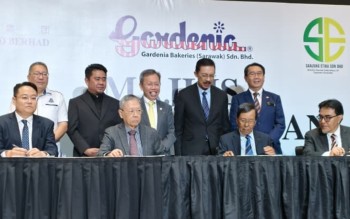
Kim Teck Cheong Consolidated Bhd (KTC) has committed to a significant economic expansion in Sarawak, pledging RM30 million toward establishing a Gardenia bread manufacturing facility in Kota Samarahan. The ambitious project will establish a platform for 500 employment opportunities aimed specifically at attracting local graduates and skilled workers to the state's growing food manufacturing sector. The investment represents a substantial vote of confidence in Sarawak's economic prospects and its emerging workforce capabilities.
The partnership framework emerged from a memorandum of understanding signed between KTC's subsidiary Gardenia Bakeries (East Malaysia) Sdn Bhd, Sanjung Etika Sdn Bhd (a wholly owned subsidiary of Yayasan Sarawak), and the Sarawak government. This tripartite collaboration will establish a new entity called Gardenia Bakeries (Sarawak) Sdn Bhd, structured as a joint venture that combines Gardenia's established manufacturing expertise with Yayasan Sarawak's focus on human capital development and community engagement programmes. The arrangement reflects an increasingly common model in Malaysian economic development where private sector operational capability merges with state-level institutional support and investment.
The parties expect to finalise formal joint venture and shareholders' agreements within a three-month window, clearing the path for the new company to begin commercial operations. KTC has already applied to the Sarawak State Government for a 7.56-acre parcel of land where the manufacturing plant will be constructed. This procedural timeline suggests the company anticipates relatively rapid progress through state approval mechanisms, positioning the facility for potential commencement within 2024 or early 2025. The project's structure indicates confidence that regulatory pathways and land allocation will proceed smoothly, though typical manufacturing facility development timelines typically span 18 to 24 months from groundbreaking to full production capacity.
KTC executive director Datuk Dexter Lau characterised the investment as validation of Sarawak's economic trajectory and human resource quality. He highlighted that KTC's decade-long presence in the state has expanded from zero employees to a current workforce of 400 Sarawakians, representing 32.5 per cent of the company's total operational headcount. This composition underscores a commitment to local employment that extends beyond top-tier positions into middle management and technical roles. Lau attributed this capacity partly to Sarawak's education system, administrative effectiveness, and social welfare architecture, positioning the state's workforce development initiatives as competitive assets for attracting corporate investment.
The broader financial picture reveals KTC's substantial footprint in Sarawak prior to this latest commitment. The company has already deployed RM300 million across its Sarawak operations, generating annual revenue of RM400 million. Operating and trading assets under management total RM140 million, indicating a diversified portfolio spanning multiple sectors or business lines beyond bread manufacturing alone. This accumulated investment demonstrates that KTC views Sarawak as a long-term strategic market rather than a temporary expansion opportunity, and the new Gardenia facility represents an extension of an already-established commercial presence.
The employment dimension carries particular significance for Sarawak's economic development agenda. Creating 500 new positions in a single manufacturing facility would substantially augment opportunities for local talent seeking stable, skilled employment. Given that the roles target graduates and trained workers specifically, the project aligns with state-level aspirations to retain educated personnel within Sarawak rather than experiencing brain drain toward Peninsular Malaysia or overseas destinations. The facility would serve as a tangible demonstration that career progression and professional development opportunities exist within the state's private sector ecosystem.
Beyond straightforward employment generation, the investment contributes to Sarawak's food manufacturing and processing industry development. Bread manufacturing, while seemingly straightforward, requires supply chain infrastructure, quality assurance systems, distribution logistics, and technical expertise. A facility of this scale would necessitate local sourcing of inputs where feasible, supporting agricultural producers and complementary businesses throughout the value chain. The manufacturing capacity would also enable product distribution across Sarawak and potentially into neighbouring Peninsular Malaysian markets, positioning the state as a production hub for regional food commerce.
The partnership with Yayasan Sarawak introduces a community development dimension that extends beyond conventional corporate-government engagement. Yayasan Sarawak's involvement in human capital initiatives means the joint venture could incorporate workforce training, scholarship programmes, or educational partnerships that strengthen institutional capacity within the state's technical and vocational education framework. This collaborative approach potentially creates spillover benefits beyond the immediate factory workforce, contributing to broader human resource capability development across Sarawak.
KTC's announcement of an exclusive Gardenia "Sarawak Edition" product range and packaging demonstrates commercial awareness of regional identity and cultural appreciation. Such localised product offerings serve dual purposes: they generate consumer goodwill by acknowledging Sarawak's distinct heritage and identity, whilst simultaneously creating differentiated products that can command premium positioning or regional brand loyalty. This marketing strategy reflects understanding that successful multinational food companies adapt offerings to regional preferences and cultural contexts, transforming manufacturing facilities into platforms for locally-resonant products.
For Malaysian policymakers and state governments across the federation, the KTC-Sarawak arrangement illustrates practical mechanisms for translating investment attraction objectives into employment outcomes. The structured partnership approach, incorporating government land provision, corporate capital, and development-oriented institutional participation, represents a model potentially replicable in other Malaysian states pursuing manufacturing expansion. The emphasis on local employment thresholds and graduate targeting also aligns with broader national objectives regarding unemployment reduction and human capital utilisation among qualified workers.
The timing of this announcement reflects broader confidence in Malaysia's post-pandemic economic recovery trajectory and Sarawak's specific positioning within regional commerce. Manufacturing investment decisions involve multi-year planning horizons and capital commitments that typically only proceed when corporate leadership perceives stable regulatory environments and market demand prospects. KTC's willingness to commit substantial capital suggests confidence that Sarawak's economic fundamentals support sustained food manufacturing operations and that domestic consumer demand for branded bread products remains robust. The project proceeds against a backdrop of regional competition for manufacturing investment, positioning Sarawak's incentive frameworks and workforce capabilities as competitively advantageous.

