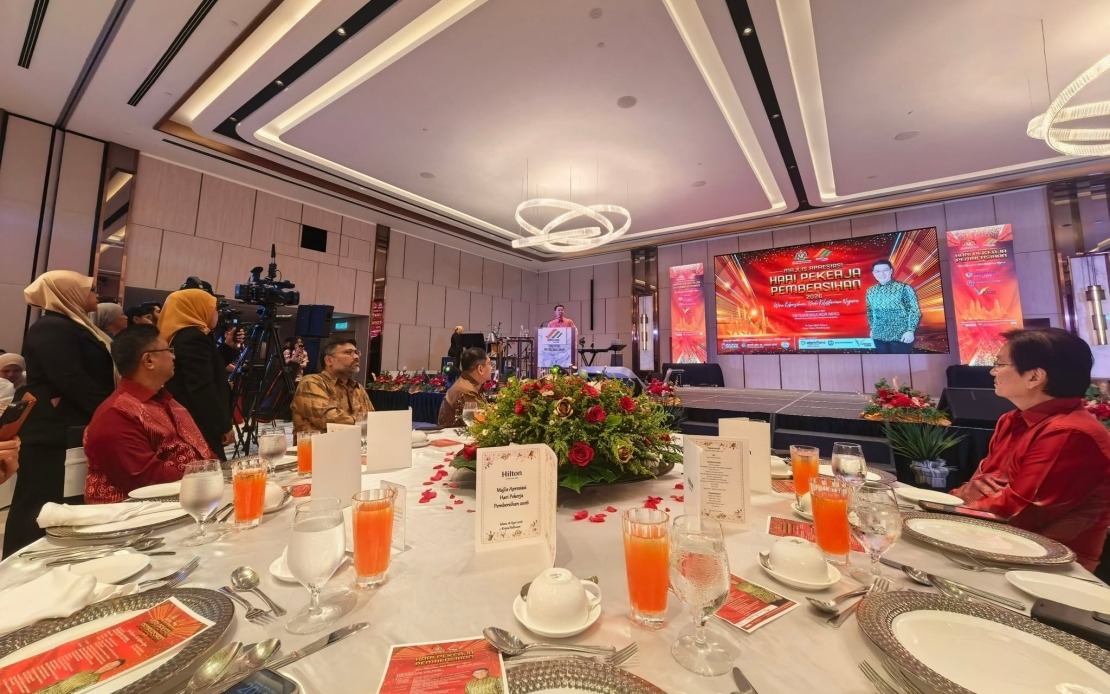
The Housing and Local Government Ministry (KPKT) plans to expand its recognition of cleaning workers by nominating the 2026 Cleaning Workers Award recipients for state honours, a move that underscores the government's growing acknowledgement of the essential role these workers play in maintaining Malaysia's public spaces and environmental standards. Minister Nga Kor Ming announced the initiative during the 2026 Cleaning Workers Appreciation Day ceremony in Petaling Jaya on August 18, signalling a significant shift in how the nation formally recognises those employed in its solid waste management and public cleansing sectors.
The decision to elevate cleaning workers through state-level honours represents a deliberate expansion of a practice that Penang has been implementing for nearly a decade. By extending this recognition programme to other states, the government aims to ensure that the country's sanitation workforce receives consistent appreciation across all regions, rather than remaining confined to isolated state initiatives. Nga's discussion with KPKT secretary-general Datuk Dr Wira M Noor Azman Taib formalised this approach, creating a framework through which award recipients will be forwarded to their respective state palaces for recognition by state rulers.
The cleaning sector in Malaysia represents a substantial workforce that often operates with minimal public acknowledgement despite the critical nature of their contributions. Currently, approximately 26,889 workers employed by various concessionaires maintain the country's solid waste management and public cleaning infrastructure. The longevity of service within this sector is particularly noteworthy, with many workers having dedicated more than a decade to their roles, and some committing nearly three decades to this profession. This extended tenure reflects both personal commitment and the structural importance of these positions within Malaysia's urban and public space management systems.
Nga emphasised that the work performed by cleaning personnel extends beyond routine maintenance to encompass fundamental responsibilities for public health, environmental safety, and the overall comfort of Malaysian communities. Operating largely behind the scenes, these workers enable the functioning of public spaces that millions depend upon daily, yet their contributions frequently escape public recognition and appreciation. By formalising honours through state rulers, the government seeks to elevate the social status and visibility of this workforce, acknowledging that their labour constitutes an indispensable service rather than merely peripheral employment.
The initiative also reflects broader policy considerations regarding shared responsibility for environmental maintenance. Nga stressed that public cleanliness cannot remain the exclusive responsibility of sanitation workers, emphasising that all Malaysians must participate in maintaining their environment. This perspective aligns with the government's "Malaysia Bersih, Rakyat Sejahtera" (Clean and Prosperous Malaysia) aspiration, which conceptualises environmental stewardship as a collective endeavour requiring behavioural change across society. The recognition programme thus serves a dual purpose: honouring dedicated workers while simultaneously reinforcing messaging about universal responsibility for cleanliness.
Enforcement mechanisms complement the recognition initiative, with the government intensifying its approach to public littering through the Community Service Order (PKM) framework under Act 672. As of August 17, the Solid Waste Management and Public Cleansing Corporation (SWCorp) had issued 14,807 offence notices throughout the year, demonstrating sustained enforcement activity. Additionally, 548 individuals had undertaken Community Service Orders in participating states, with 419 completing their obligations and 129 actively serving their sentences. This enforcement strategy positions community service not merely as punishment but as an educational instrument designed to cultivate discipline, responsibility, and environmental consciousness among Malaysian citizens.
The practical implementation of the honours programme emerged during the ceremony, where seven workers received the 2026 Cleaning Workers Award. Two recipients were employees of Alam Flora Sdn Bhd while five represented SWM Environment Sdn Bhd, reflecting the involvement of major private concessionaires in Malaysia's waste management sector. Beyond formal awards, contributions were presented to three additional recipients as tangible expressions of government concern for the welfare and wellbeing of the cleaning workforce. These gestures, though modest, communicate official recognition of the economic pressures facing workers in this sector.
For Malaysian readers, this development carries implications beyond ceremonial recognition. The expansion of state honours for cleaning workers signals governmental prioritisation of service sector appreciation at a time when Malaysia continues developing its public administration and social recognition systems. By formalising this programme nationally, KPKT creates precedent for similar recognition across other essential service sectors that may currently lack comparable acknowledgement. The initiative also demonstrates how regional governance structures, exemplified by Penang's decade-long programme, can influence national policy direction.
The emphasis on shared responsibility for cleanliness represents an important reframing of environmental maintenance as a citizenship obligation rather than exclusively a government or contractor function. This approach acknowledges that Malaysia's continued development and livability depend upon both professional sanitation workers and public compliance with cleanliness standards. The government's simultaneous deployment of enforcement mechanisms through the Community Service Order framework indicates recognition that voluntary compliance requires reinforcement through graduated consequences. Together, these elements construct a more comprehensive strategy for environmental management than honour recognition alone could achieve.
Moving forward, the effectiveness of this expanded honours programme will depend upon consistent implementation across state administrations and genuine integration of cleaning workers into each state's formal recognition ceremonies. The involvement of Deputy Housing and Local Government Minister Datuk Aiman Athirah Sabu at the announcement suggests ministerial commitment to programme continuity. For the cleaning workforce itself, the prospect of state-level recognition may enhance professional dignity and social standing, potentially contributing to workforce retention and morale within a sector traditionally characterised by high turnover and limited career advancement opportunities. The initiative thus represents both symbolic acknowledgement and practical investment in the human infrastructure upon which Malaysia's environmental standards ultimately depend.

