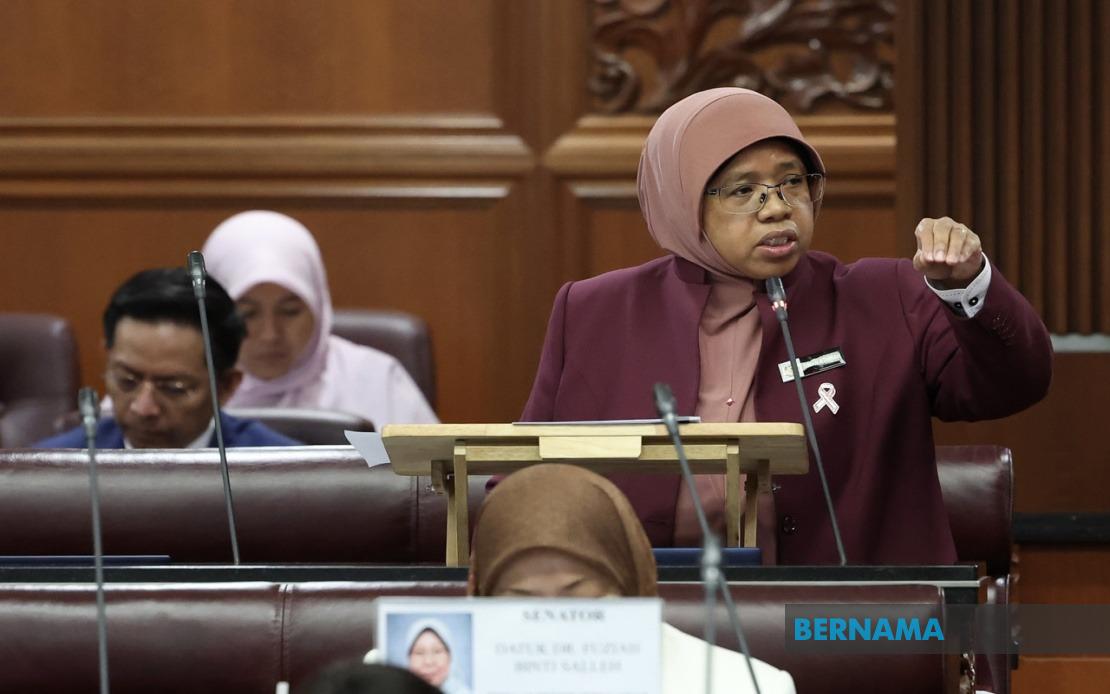
The Ministry of Housing and Local Government has adopted a strategic approach to maintaining the country's aging stock of People's Housing Programme developments, concentrating efforts on properties exceeding ten years in age where critical infrastructure failures pose risks to occupants. Deputy Housing and Local Government Minister Datuk Aiman Athirah Sabu outlined the ministry's maintenance framework during parliamentary proceedings on July 21, explaining how financial constraints have necessitated a more rigorous prioritisation system that channels resources toward defects with the most significant impact on safety and liveability.
Under this framework, the ministry focuses interventions on five core infrastructure systems critical to residential functionality: lift mechanisms, roof structures, water supply infrastructure including storage tanks and distribution networks, sanitary plumbing systems, and electrical installations. Beyond these technical systems, the ministry addresses broader issues affecting shared facilities used by residents across the developments. This targeted methodology reflects recognition that PPR housing, which serves Malaysia's lower-income households, often concentrates maintenance challenges as structures age, making strategic allocation essential where budgets cannot address every identified need simultaneously.
The scale of the maintenance challenge became apparent when examining current application volumes and funding gaps. During 2026, the ministry received 226 maintenance applications spanning ten priority categories, with applicants requesting RM79.9 million in total interventions. However, the approved allocation amounted to only RM44.6 million, representing just 56 per cent of the demanded funding. This substantial shortfall illustrates the persistent tension between maintenance requirements across Malaysia's PPR portfolio and available government resources, a situation that affects hundreds of thousands of residents living in these developments nationwide.
Perspective on the ministry's commitment to PPR maintenance emerges from examining expenditure patterns under the 12th Malaysia Plan framework. Through rolling implementation plans spanning five phases, KPKT disbursed RM159.1 million for maintenance activities targeting high-rise strata PPR complexes distributed across the country. While this represents significant commitment, the figures suggest that annual maintenance demand substantially exceeds available funding, requiring ongoing prioritisation decisions about which projects advance and which face delays.
The bureaucratic pathway for maintenance approvals reveals the complexity governing how PPR residents' repair requests navigate the system. Applications initiated by Joint Management Bodies or Management Corporations—the resident-elected governance structures responsible for day-to-day building operations—must first pass evaluation by either the Commissioner of Buildings or the relevant local authority before forwarding to the ministry level. This multi-stage vetting process, whilst ensuring quality control, extends timelines between residents identifying problems and repairs commencing.
Once submitted, applications enter a cyclical approval process structured around specific deadlines. The ministry accepts maintenance proposals during a three-month window from August through October annually. Following submission closure, a Project Selection Working Committee convenes in November to evaluate applications against priority criteria, followed by a Project Selection Steering Committee meeting in December where recommendations advance for final consideration. The Controlling Officer reviews approved projects in January, with local authorities receiving notification simultaneously and Letters of Acceptance issued by April, permitting project commencement thereafter.
This extended timeline—spanning nine months from application closure to project authorization—creates considerable delays between when building defects are identified and when remedial work begins. For residents experiencing lift breakdowns, roof leaks, or water system failures, the interval represents extended periods of inconvenience or compromised living conditions. The structured approval cycle, whilst enabling systematic review and resource allocation, inevitably means some maintenance emergencies persist longer than residents would prefer.
The maintenance challenge affecting PPR housing reflects broader patterns across Malaysia's aging residential stock. Many PPR developments constructed during the 1990s and early 2000s have now reached phases where original materials and systems require replacement or substantial repair. Simultaneously, the relative affordability of PPR housing means these developments house significant portions of Malaysia's lower-income urban population, many with limited capacity to supplement government maintenance funding through resident contributions. This demographic reality underscores why government maintenance allocation decisions directly affect housing security for vulnerable household segments.
Regional context illuminates Malaysia's PPR maintenance dilemma within Southeast Asia's broader urban development landscape. Across the region, rapid urbanization has created substantial stocks of aging public and affordable housing requiring maintenance investment. Singapore, Thailand, and Indonesia similarly grapple with balancing maintenance demands against available budgets, though differing governance structures and funding mechanisms produce varied outcomes. Malaysia's transparent acknowledgment of funding gaps, whilst highlighting challenges, also demonstrates commitment to open discussion about resource constraints affecting service delivery.
For Malaysian residents in aging PPR housing, the ministry's prioritisation framework offers clarity regarding which defects receive attention under constrained budgets: safety-critical infrastructure takes precedence, and structures exceeding ten years in age qualify for consideration. However, the substantial gap between requested and approved funding suggests many applications will face deferrals into subsequent funding cycles. Residents whose buildings experience non-critical maintenance issues, or whose complexes remain under ten years in age, may experience longer waits for ministry-funded interventions, potentially necessitating alternative funding approaches through enhanced resident contributions or supplementary local government support.

