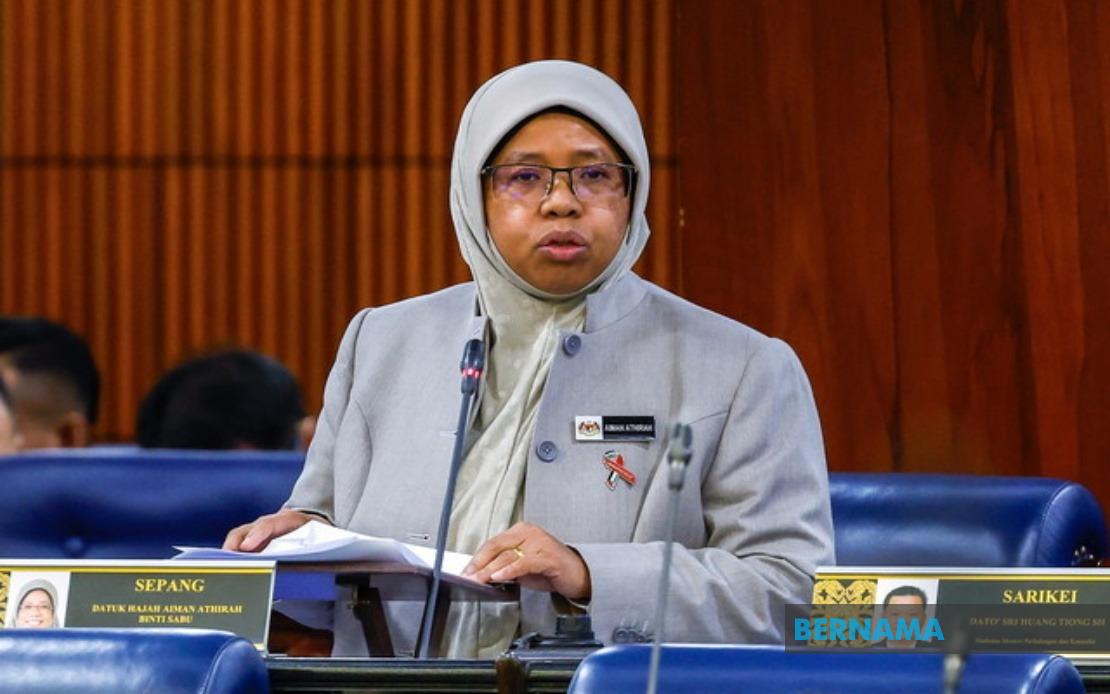
The Ministry of Housing and Local Government has given the green light to 594 development projects targeting Chinese new villages and Indian communities this year, channelling RM73 million into infrastructure upgrades and housing assistance. The approval marks a significant push to address long-standing development gaps in these traditionally underserved communities, with the housing ministry overseeing initiatives that span multiple states across Peninsular Malaysia.
Deputy Minister Datuk Aiman Athirah Sabu outlined the scope of interventions during parliamentary question time, revealing that 573 projects have been greenlit for Chinese new villages while 21 separate initiatives will benefit Indian village residents. For the Chinese new villages specifically, infrastructure development accounts for the bulk of approved projects, with 366 such programmes receiving the nod from the Department of Local Government. Of these, nearly half—148 projects—have already been completed, while 218 remain under active construction, demonstrating steady progress in implementation across the country.
The housing repair assistance component represents the second major pillar of support for Chinese new villages. A total of 197 repair projects have secured approval, though their completion rates tell a slower story: just 47 have been finished to date, leaving 150 still in the pipeline. This gap between approvals and deliverables underscores the logistical challenges involved in managing scattered village communities across multiple jurisdictions. A smaller third component—the New Village Housing Construction Assistance Programme—has seen 10 projects approved, though notably none have yet commenced, suggesting these may be among the most recent green-lights awaiting mobilisation.
The Indian village component of this year's allocation, whilst modest in comparison, represents a strategic expansion of targeted support. Twenty-one projects distributed across six states—Johor, Melaka, Selangor, Kuala Lumpur, Perak, and Negeri Sembilan—are under way, collectively budgeted at RM2 million. These initiatives span infrastructure development, public amenities, and safety enhancements, addressing foundational needs within 18 identified villages. Current implementation status shows five projects completed, thirteen under construction, two in procurement stages, and one still in preliminary planning. This distribution reflects the varied stages of project maturity and the challenges of coordinating development across geographically dispersed settlements with differing infrastructure readiness.
Historical context reveals sustained investment in these communities, though the scale of activity has accelerated recently. Between 2023 and the end of last year, the government deployed RM328.9 million specifically for Chinese new village development schemes, touching 613 villages nationwide and directly improving living standards for tens of thousands of residents. This accumulated spend demonstrates long-term commitment to addressing historical inequalities, though it also raises questions about whether the pace and scale of investment adequately matches the accumulated deficits in these communities.
The approach to Indian villages marks a relatively recent policy shift. Special allocations for Indian village development only commenced in 2025, suggesting this represents a deliberate policy recalibration to address development disparities within this demographic group. The ministry has allocated RM15 million in total for this inaugural year of focused investment, benefiting 22,144 residents across 50 identified Indian villages through 87 separate projects. This targeting reflects data-driven identification of priority communities requiring urgent intervention.
The RM15 million Indian village allocation draws from two distinct sources, each reflecting different policy frameworks. The bulk—RM10 million—derives from KPKT's own 2025 budget allocation, underwriting 54 discrete projects. The remaining RM5 million channels through the Indian Community Socioeconomic Development Programme, which operates under the Malaysian Indian Transformation Unit (MITRA), a dedicated agency focused on the Indian community's broader development agenda. This dual-funding architecture suggests interagency coordination and acknowledgment that grassroots community development requires multiple policy instruments.
The parliamentary revelation of these figures comes amid broader questions about infrastructure equity across Malaysia's diverse demographic landscape. Chinese new villages, dating largely from the colonial and early post-independence era, have historically occupied a structural blind spot in national development planning, despite housing significant populations. Indian village communities face even sharper development deficits, having received minimal systematic policy attention until very recently. The emergence of focused, costed initiatives addressing both groups signals recognition that targeted fiscal intervention is necessary to close welfare gaps.
For Malaysian readers, these initiatives carry implications beyond mere statistics. The projects touch on fundamental quality of life—adequate roads, water supply, housing quality, and public safety—services that should be universally accessible but have proven elusive for many in these settlements. The 2025 allocation to Indian villages, in particular, represents a reversal of decades of relative policy neglect. However, the gap between approvals and completions—evident in both Chinese and Indian village figures—highlights implementation bottlenecks that may limit the real-world impact of announced funding.
Regionally, Malaysia's approach to targeted development for specific ethnic or geographic communities offers a case study in affirmative development policy. As other Southeast Asian nations grapple with development disparities among their own minority or peripheral populations, the mechanisms deployed here—dedicated ministry focus, ring-fenced budgets, community-specific programmes—provide a template worth examining. The 2025 inflection point for Indian village support further demonstrates how policy can shift when political attention and fiscal will align.
Looking forward, the scale of ongoing implementation matters as much as initial approvals. The 594 projects approved this year must translate into completed works that demonstrably improve lives. The tracking and accountability mechanisms governing project delivery, cost management, and timeline adherence will ultimately determine whether these allocations translate into meaningful development or become another layer of bureaucratic activity. Deputy Minister Aiman Athirah's parliamentary response provided the headline figures, but sustained monitoring of completion rates, quality of works, and community satisfaction will be necessary to assess true policy success.

