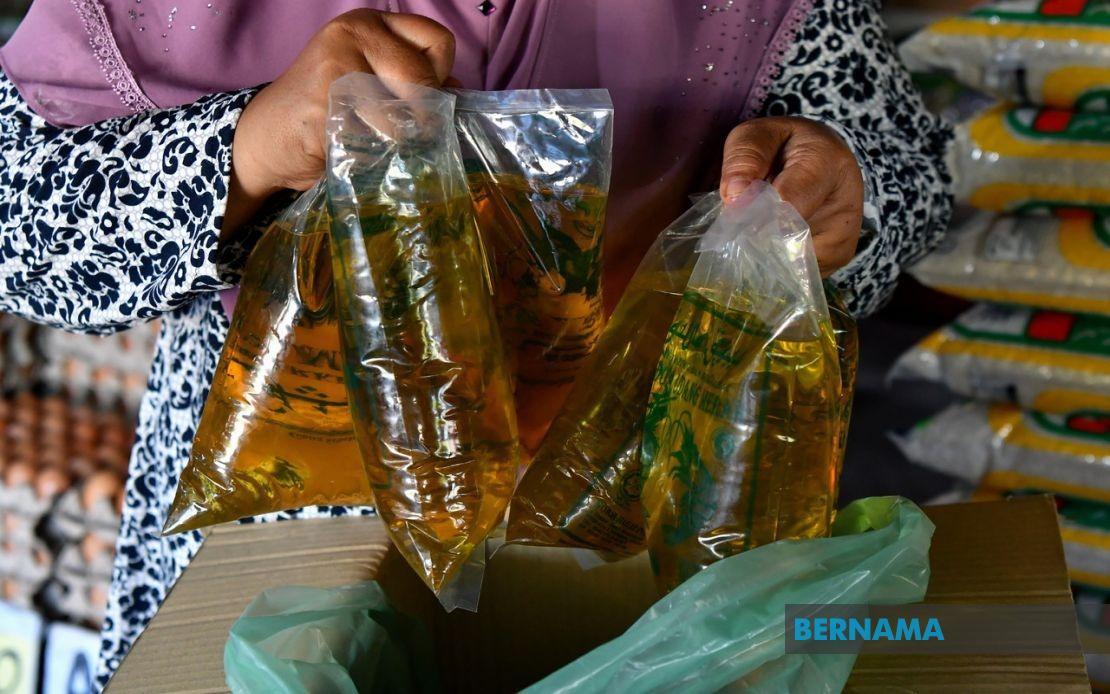
The Domestic Trade and Cost of Living Ministry (KPDN) has committed to carefully examining recommendations from the Public Accounts Committee (PAC) regarding how Malaysia oversees cooking oil pricing and subsidy distribution, with particular emphasis on expanding a digital monitoring system designed to eliminate wastage and prevent unauthorised claims. Minister Datuk Armizan Mohd Ali outlined the ministry's plans in response to the PAC Report DR. 27 of 2026, which was tabled in the Dewan Rakyat on July 16, signalling broad parliamentary concern about the effectiveness of existing subsidy controls.
At the heart of this regulatory overhaul is the Cooking Oil Stabilisation Scheme System (eCOSS), a digital platform that launched in 2023 to replace paper-based subsidy administration. The rollout is proceeding along two parallel tracks: systematic deployment across the entire supply chain from refiners through to retailers, and expansion via the eCOSS Mobile Application, which commenced pilot testing in May 2025. The transition reflects a broader push within Southeast Asia toward digitising welfare and subsidy programmes, a trend driven by revelations of significant fraud losses in traditional manual systems.
Armizan stressed that full eCOSS implementation represents a cornerstone of the ministry's anti-leakage strategy, fundamentally changing how the government verifies eligibility and prevents double-dealing by suppliers. By eliminating manual record-keeping, the system dramatically reduces opportunities for falsification, inventory manipulation, and diversion of subsidised cooking oil to black markets or unlicensed distributors—issues that have plagued Malaysia's subsidy frameworks for years. The technological shift addresses a longstanding vulnerability that has frustrated policymakers and fiscal planners.
A forthcoming enhancement will integrate eCOSS with new identity verification technology, specifically Malaysia's updated national identity card incorporating QR code authentication. This layer ensures that only eligible Malaysian citizens can access subsidised cooking oil at controlled prices, effectively closing a major loophole through which foreign residents and foreign workers have historically obtained capped-price stock intended for locals. The identity verification upgrade exemplifies how biometric and digital tools can tighten programme boundaries in practice.
The PAC has also flagged concerns about market structure within the cooking oil refining sector, recommending that KPDN redistribute refining quotas to favour locally owned companies over foreign-controlled operators. Presently, Malaysia's Cooking Oil Stabilisation Scheme (COSS) does not formally allocate quotas to refineries; instead, repackers independently select suppliers based on factors including logistics efficiency, credit arrangements, pricing competitiveness, supply reliability, and proximity of facilities. This supplier-driven model has enabled foreign firms to consolidate market share while domestic refiners struggle to compete.
KPDN has begun implementing phased interventions to rebalance the sector in favour of Malaysian-owned refineries. The ministry is introducing quota replacement requirements that incentivise repackers to source from local operators, while establishing business matching mechanisms to facilitate direct commercial relationships between domestic refiners and repacking companies. These measures attempt to strengthen the local refining industry's competitiveness without dismantling the broader market-based framework that governs supply chains.
Beyond digital infrastructure and quota redistribution, KPDN has introduced supplementary safeguards to narrow programme loopholes. The ministry has restricted sales of one-kilogramme packets of subsidised cooking oil to non-citizens, recognising that smaller pack sizes are frequently purchased for resale or export to neighbouring countries where prices are substantially higher. Additionally, eCOSS will be integrated with Sumbangan Asas Rahmah (SARA), Malaysia's unified social assistance system, allowing cross-verification of household eligibility across multiple subsidy schemes and reducing duplicate claims.
For Malaysia, the PAC scrutiny and subsequent KPDN response underscore a critical challenge facing middle-income countries: balancing the fiscal necessity of subsidy targeting with the administrative complexity of distributing benefits fairly. Cooking oil, a staple commodity essential to Malaysian food culture and a key input for both home cooking and food manufacturing, carries substantial political weight. However, untargeted subsidies drain government finances and often benefit wealthier households more than intended recipients, creating pressure for reform.
The convergence of digital solutions, structural market adjustments, and stricter enforcement signals a maturing approach to subsidy governance. Rather than abandoning price controls entirely—politically unfeasible in Malaysia and most Southeast Asian democracies—policymakers are engineering smarter systems that reduce fraud while preserving the social compact. eCOSS exemplifies this pragmatism, combining technology, identity verification, and supply-side incentives to deliver subsidy benefits more precisely.
Armizan emphasised that KPDN's reforms draw on multiple evidence streams: internal ministry reviews, an audit report from the National Audit Department released in July 2025, and now the PAC inquiry. This multi-layered scrutiny has apparently identified systemic weaknesses previously invisible to individual agencies. By consolidating findings across oversight bodies, the ministry gains comprehensive intelligence on where leakages occur and which interventions are likely to be most effective.
Enforcement will be pivotal to the scheme's credibility. Armizan pledged rigorous action against refineries, repackers, wholesalers, retailers, and any intermediaries that breach legal requirements or operate outside the regulatory framework. Corruption and non-compliance at any link in the supply chain can undermine subsidy targeting and create perverse incentives throughout the market. The ministry's public commitment to stern enforcement signals resolve, though implementation will require adequate budgets, training, and political insulation from pressure by affected businesses.
Looking forward, Malaysia's approach to cooking oil subsidy reform holds lessons for the broader region. Indonesia, the Philippines, Thailand, and Vietnam all manage comparably complex subsidy regimes, and all face similar pressures from fiscal constraints and governance weaknesses. Digital systems like eCOSS, when deployed competently, can reduce administrative costs while improving targeting accuracy—delivering both fiscal and social dividends. However, success hinges on sustained commitment, inter-agency coordination, and resistance to political pressure to dilute eligibility criteria when votes depend on subsidy expansion.

