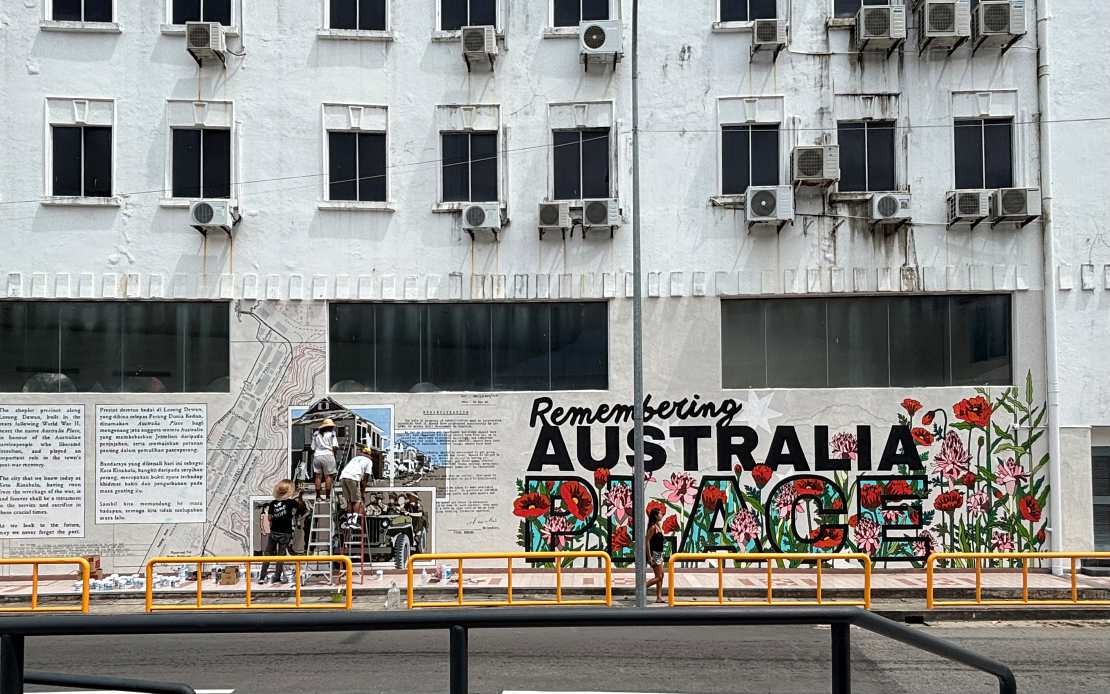
A vibrant new public mural has transformed a long-standing landmark in Kota Kinabalu, formally commemorating the deep historical and cultural bonds that have linked Sabah and Australia for decades. Unveiled on Friday at the Wisma Intiutama building in the informally named 'Australia Place' district, the artwork titled 'Remembering Australia Place' serves as a permanent testament to the friendship and cooperation between the two regions, arriving symbolically on the eve of Sandakan Day.
The mural's unveiling brought together significant figures in Malaysian-Australian relations, including Australian High Commissioner to Malaysia Danielle Heinecke and Kota Kinabalu Mayor Datuk Seri Sabin Samitah. The event attracted parliamentarians, community leaders, and alumni of Australian educational institutions, underscoring the depth of institutional connections between the nations. The participation of these stakeholders reflects how bilateral ties extend beyond government-to-government relations into academic, cultural, and community spheres that have sustained engagement over multiple generations.
Heinecke emphasised that the mural encapsulates more than artistic expression; it represents a narrative of sustained partnership built on shared values and mutual respect. According to her statement, the artwork captures interconnected stories of individuals whose professional, educational, and personal journeys have strengthened the relationship between Australians and Sabahans. The High Commissioner framed the mural as a contemporary anchor point for these connections, ensuring younger generations understand the historical foundations upon which current cooperation rests.
The creative vision behind 'Remembering Australia Place' comes from Pillars of Sabah, a local community arts organisation, which employed artistic storytelling to visually communicate themes of friendship, resilience, and collaborative spirit. The organisation's approach transcends conventional commemorative art by using colour and imagery to explore how shared values have manifested across decades of interaction. This methodology proves particularly effective in creating public spaces that educate and inspire rather than merely document historical events.
Jared Abdul Rahman, co-founder of Pillars of Sabah, brings a uniquely positioned perspective to this project. Born to a Sabahan father and a Tasmanian mother who met while his father studied in Australia under the historic Colombo Plan, Jared embodies the human dimension of bilateral relations that the mural celebrates. His dual heritage informed the artistic direction, allowing him to authentically represent the genuine connections between ordinary Australians and Sabahans that have accumulated over decades. The Colombo Plan reference carries particular significance, as this scholarship programme facilitated educational exchange across the Commonwealth and directly contributed to personal relationships that became foundational to institutional ties.
Rahman's involvement extended beyond artistic direction to community engagement, as he coordinated local participation in the mural's creation. The project deliberately incorporated different generations of Kota Kinabalu residents, particularly students and teachers from Sekolah Menengah Kebangsaan Sanzac. This intergenerational approach served dual purposes: it created ownership of the artwork within the community and ensured younger Sabahans actively engaged with the historical narrative rather than passively receiving it. Such participatory methods prove increasingly valuable in maintaining cultural memory and understanding among populations with limited personal recollection of formative historical periods.
The timing of this mural's unveiling carries deliberate symbolic weight, arriving on the eve of Sandakan Day, which honours one of the most tragic chapters in shared Australian-Malaysian history. Sandakan Day commemorates the 2,434 prisoners of war who perished during the Sandakan Death Marches in World War II, a period that tested both nations' character and commitment to human dignity. The event also acknowledges the remarkable courage of Sabahan civilians who risked their lives to assist escaped prisoners and support resistance efforts, transforming this wartime episode into a story of cross-cultural solidarity amid extraordinary circumstances.
For Malaysia and the broader Southeast Asian region, the mural's installation reflects evolving approaches to commemorating bilateral relationships. Rather than relying exclusively on official monuments or government declarations, this project demonstrates how public art can sustain diplomatic relationships through accessible, emotionally resonant means. The 'Australia Place' district itself represents organic historical development, having acquired its informal name through decades of natural Australian settlement and business activity in Kota Kinabalu. Formalising this informal recognition through public art legitimises community-developed spaces while honouring their authentic origins.
The broader significance of this mural extends to Australia-Southeast Asia relations more generally. Sabah, as an East Malaysian state geographically positioned within the Southeast Asian context, exemplifies how bilateral relationships function at subnational levels. The prominence given to local leadership, community organisations, and educational institutions in the mural's unveiling signals recognition that lasting partnerships require engagement beyond capital cities and national governments. This model proves particularly relevant for Malaysia, where state governments and local communities increasingly shape foreign engagement.
From a cultural diplomacy perspective, the 'Remembering Australia Place' mural represents strategic soft power deployment that emphasises authentic human connection rather than political advantage. High Commissioner Heinecke's presence and statements reaffirm Australian commitment to Southeast Asian engagement while avoiding the appearance of imposing external narratives. Instead, the mural originates from local artistic vision, ensuring it reflects Sabahan perspectives on the bilateral relationship. This approach aligns with contemporary diplomatic practice emphasising partnership and mutual respect rather than traditional hierarchy.
The choice to highlight people-to-people connections carries particular relevance given contemporary geopolitical shifts. As major powers compete for influence across Southeast Asia, investments in grassroots relationships and cultural understanding provide ballast against purely transactional diplomacy. Educational exchanges, community partnerships, and artistic collaborations create constituencies within both nations personally invested in maintaining positive relations. The alumni of Australian universities who attended the mural unveiling represent exactly such constituencies—individuals whose professional trajectories and personal networks benefit from continued strong ties.
Moving forward, the mural's presence in a prominent Kota Kinabalu location ensures ongoing public engagement with Australia-Sabah relations. Rather than remaining confined to government statements or academic discourse, the artistic representation makes bilateral history and contemporary partnership visible to residents and visitors navigating daily urban spaces. This visibility normalises the relationship while prompting reflection on how historical experiences and ongoing cooperation shape both societies' futures. For Malaysian policymakers and regional observers, the mural exemplifies how cultural institutions and public spaces can effectively communicate and sustain diplomatic priorities.

