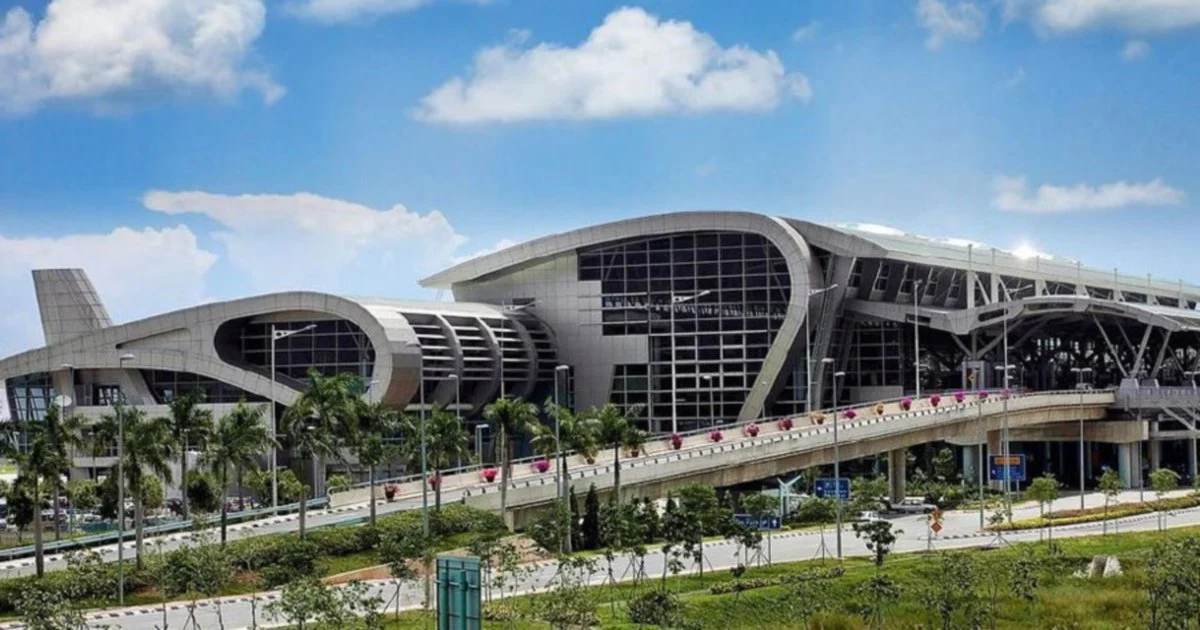
The planned RM500 million expansion of Kota Kinabalu International Airport (KKIA) cannot proceed until outstanding disputes over land allocation and site preparation are settled between federal transport authorities and the Sabah government, Deputy Transport Minister Datuk Hasbi Habibollah has stated. The scale of investment signifies the federal government's commitment to enhancing capacity at one of Malaysia's major regional aviation hubs, yet bureaucratic hurdles at the state level continue to delay what has been positioned as a critical infrastructure modernisation initiative.
Sabah's role as East Malaysia's commercial and tourism gateway makes the airport expansion strategically significant for the region's economic development. The project represents a substantial commitment to addressing congestion at the island airport and improving passenger handling capabilities during peak travel seasons. However, the involvement of both federal and state governments in land administration has created a complex approval landscape that must be navigated before construction contracts can be finalised and ground work initiated.
The nature of the disputes has not been publicly detailed in extensive fashion, but land allocation challenges at major Malaysian airports often involve competing claims between government entities, existing property holders, and commercial interests within designated airport zones. Sabah's particular geographical and administrative circumstances may introduce additional layers of complexity compared to peninsular airport expansion projects, given the state's distinct land laws and property frameworks.
Datuk Hasbi's comments reflect a measured approach from the Transport Ministry, acknowledging that forward momentum depends on inter-governmental cooperation rather than unilateral federal action. This stance underscores the constitutional reality that states retain significant authority over land matters within their boundaries, requiring negotiated solutions rather than top-down implementation. For Malaysian investors and airlines monitoring capital expenditure at regional airports, the timeline remains uncertain pending these diplomatic discussions.
The expansion project carries particular relevance for Malaysia's tourism sector, which has identified East Malaysia as a growth priority following recovery from pandemic-related disruptions. Improved airport infrastructure directly influences visitor capacity and flight frequency, making delays to such projects consequential for tourism operators and related service industries across Sabah. Airlines operating regional routes similarly depend on terminal modernisation to enhance operational efficiency and passenger experience.
Kota Kinabalu's position as a hub serving not only Sabah but also connecting passengers throughout East Malaysia and into Southeast Asia elevates the project beyond local significance. The airport currently handles substantial volumes of both domestic and international traffic, with capacity constraints becoming increasingly apparent during high-demand periods such as school holidays and festival seasons. Infrastructure investment of this magnitude typically requires multi-year implementation, making timely commencement essential for meeting medium-term demand projections.
From a broader policy perspective, the project illustrates recurring challenges in Malaysian infrastructure development where federal-state coordination remains essential but sometimes complicated. Similar dynamics have affected other major projects requiring multi-jurisdictional approval, from transport corridors to utility infrastructure. Identifying mechanisms to streamline such approval processes has become a focus for development economists and policy analysts examining Malaysia's competitive positioning relative to other Southeast Asian nations.
The financial commitment of nearly RM500 million reflects confidence in the airport's continued strategic importance, though the extended timeline for resolution raises questions about project cost management and cash flow implications for implementing agencies. Every delay in infrastructure projects introduces variables affecting construction contracts, material procurement, and ultimately the final cost delivered to taxpayers. Within the context of Malaysia's fiscal position and competing budgetary demands, efficient project delivery has gained heightened importance across government agencies.
Stakeholders including tourism operators, airline representatives, and cargo handlers have expressed interest in the project's progress, understanding that improved facilities enhance their operational capacities and commercial viability. The hospitality and travel sectors particularly await clarity on implementation timelines so that they can align their own expansion plans accordingly. Clear communication from government regarding expected resolution timeframes would benefit downstream industries dependent on the infrastructure upgrade.
Datuk Hasbi's recent statement, while providing acknowledgment of the issue, does not specify anticipated resolution timelines or concrete steps currently underway in negotiations with Sabah authorities. This ambiguity may reflect genuine uncertainty about when consensus can be achieved, or simply the measured public communication typical of ongoing inter-governmental discussions. Either interpretation suggests the project remains in intermediate phases rather than imminent commencement.
The broader context includes Malaysia's infrastructure modernisation agenda, where airport capacity expansion ranks among priority areas for supporting economic growth and international connectivity. Kota Kinabalu's expansion fits within this framework, yet demonstrates that prioritisation at national level does not automatically translate to rapid implementation when state-level factors create complications. Observers will watch for announcements indicating breakthrough negotiations, as such statements would signal concrete progress toward breaking the current impasse.
Moving forward, resolution mechanisms might involve taskforces bringing together relevant federal and state agencies, exploration of innovative funding arrangements, or clarification of respective jurisdictional responsibilities through formal channels. Precedents from other major projects offer potential templates for expediting agreement when institutional interests diverge. The coming months will clarify whether officials can mobilise such mechanisms to unlock this investment that stands to benefit Malaysia's East Malaysian regions substantially.

