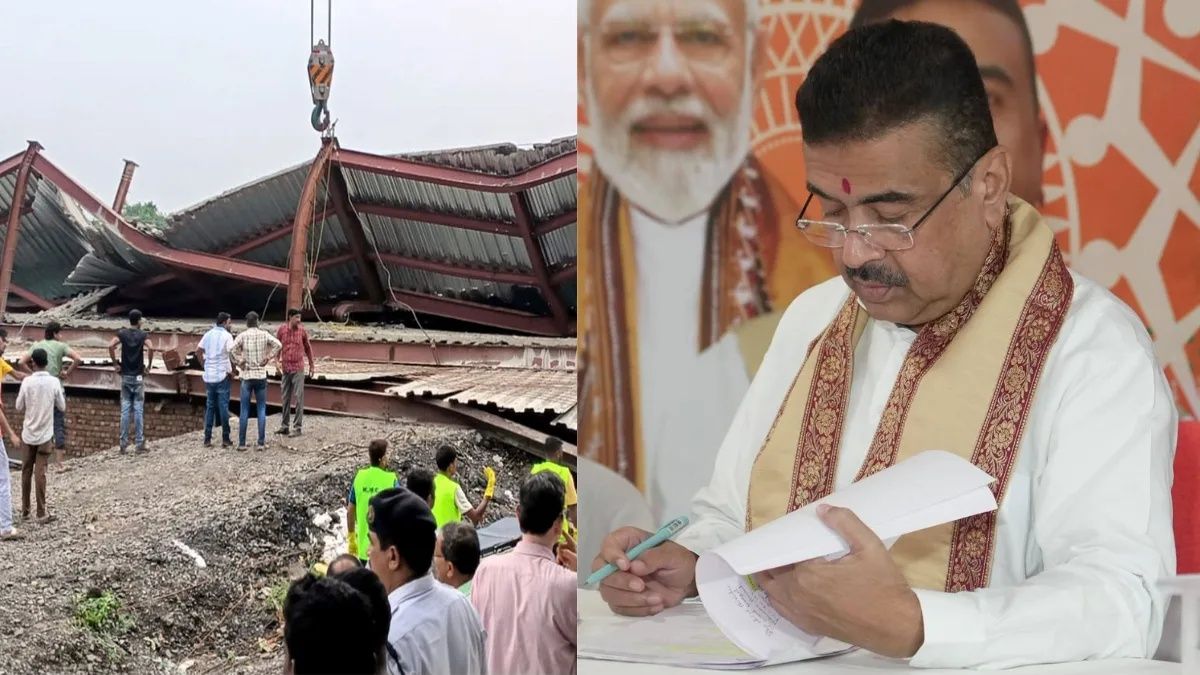
The mounting death toll from the Taratala warehouse collapse in Kolkata has reached 11 as rescue teams pressed on with recovery operations into their second full day of work. Another victim was brought to the Trauma Care Centre at SSKM Hospital on Thursday afternoon, bringing the confirmed fatalities to double figures. Authorities have yet to identify the latest casualty, though rescue personnel remain concerned that additional workers could still be buried beneath the extensive rubble at the site. The collaborative response has drawn personnel from the army, the National Disaster Response Force (NDRF), and multiple state and federal agencies in a coordinated effort that underscores the scale of this disaster.
The collapse has exposed systemic vulnerabilities in Kolkata's building approval processes and triggered fierce recriminations over regulatory lapses. West Bengal Chief Minister Suvendu Adhikari used his address to the state assembly to deliver a damning critique of the previous Kolkata Municipal Corporation (KMC) administration, which operated under Trinamool Congress (TMC) control. Adhikari presented documentary evidence suggesting that the warehouse structure received approval despite containing significant design flaws, an assertion he reinforced by tabling papers that bore the signature of then-Mayor Firhad Hakim. The Chief Minister's intervention signals that political accountability will form part of the government's response to the tragedy, reflecting broader concerns about administrative standards in India's third-largest metropolis.
The formal investigation has already resulted in five arrests, with the Chief Minister naming the construction company supervisor, the iron structure contractor, the land lessee, a labour supplier working as a Trimex contractor, and a broker implicated in the KMC building plan approval as those currently in custody. However, the primary accused, identified as Azgar, remains at large, complicating efforts to establish full criminal responsibility. These arrests represent an initial phase of accountability, though they also highlight the complexity of determining fault across multiple levels of the construction and approval chain. The government's emphasis on swift detention sends a message about the seriousness with which it is treating the disaster, though questions persist about how such structural deficiencies escaped official scrutiny.
Adhikari's remarks in the assembly laid bare his administration's allegations about the previous regime. He accused the erstwhile TMC-led KMC of allowing corruption and the extraction of unauthorised payments—colloquially termed "cut money"—to corrode safety standards. By framing the collapse not merely as an accident but as a symptom of deeper institutional decay, the Chief Minister has reframed the disaster narrative from technical failure to governance failure. His assertion that Kolkata had become a "city of death" due to such practices carries profound implications for how residents and investors perceive municipal administration in the state capital. The rhetoric underscores the political dimensions of the tragedy, even as families of victims grapple with their losses.
The government's response extends well beyond criminal investigations and into sweeping administrative reform. Adhikari announced a four-week moratorium on all construction activity in Kolkata and surrounding municipal areas including Rajarhat-New Town, Maheshtala, Budge Budge, Pujali, Bishnupur, Sonarpur, and Baruipur, with the explicit exception of essential services projects. This blanket suspension, affecting what is likely thousands of ongoing building works, represents an extraordinary intervention that will disrupt the construction sector across the greater Kolkata region. The economic implications are substantial, as project timelines slip and costs accumulate, yet the suspension also reflects genuine determination to prevent further incidents before fundamental systemic issues are resolved.
Central to the remedial effort is a comprehensive audit of all approved building plans across the affected municipalities. The government has established a high-level committee chaired by Additional Chief Secretary Rajesh Pandey to oversee this massive review. The committee's composition reveals the seriousness of the undertaking: it brings together senior government officials with technical expertise from IIT Kharagpur, the Rail India Technical and Economic Service (RITES), Indian Railway Construction Limited (IRCON), the state Fire Services Department, the Public Works Department, and the KMC itself. This multidisciplinary approach acknowledges that building safety requires expertise spanning structural engineering, fire safety, labour compliance, and municipal administration. The sheer number of plans requiring examination will test the committee's capacity, potentially creating bottlenecks that compound construction sector disruptions.
The political dimensions of the collapse have implications reaching beyond West Bengal. Urban development across India increasingly faces scrutiny over regulatory standards, and the Kolkata incident provides a stark demonstration of the consequences when oversight fails. For Malaysia and other Southeast Asian nations grappling with rapid urbanisation, the case study offers cautionary lessons about the necessity of rigorous building approval processes and independent oversight mechanisms. The collapse exemplifies how cost-cutting and regulatory capture can transform construction sites into catastrophes, a concern particularly acute in developing economies where informal labour predominates and enforcement mechanisms remain inconsistent.
Adhikari has declared a zero-tolerance stance, warning that those found culpable will face not only imprisonment but potential confiscation of personal assets to fund victim compensation. This unprecedented punitive stance sends a signal about the government's willingness to pursue full accountability, though it also raises questions about procedural fairness and the appropriateness of asset confiscation without judicial conviction. The assertion that the government will "make no compromise when it comes to people's lives" articulates a principled commitment to safety, yet implementation will determine whether this represents genuine reform or politically motivated theatre.
The rescue operation's initial success in maintaining coordination between federal and state agencies provides a foundation for the broader remedial effort. The Chief Minister's public praise for the army and NDRF acknowledges the institutional cooperation that characterised the emergency response. However, transforming this temporary coordination into permanent structural change remains the greater challenge. The audit, arrests, and construction suspension represent urgent immediate measures, but deeper questions persist about how to institutionalise safety standards, enhance regulatory capacity, and create incentive structures that reward compliance over shortcuts. The Taratala collapse will likely become a watershed moment in Kolkata's municipal governance, though whether it catalyses lasting transformation or remains an isolated episode of accountability depends on sustained political will and technical expertise in the months ahead.

