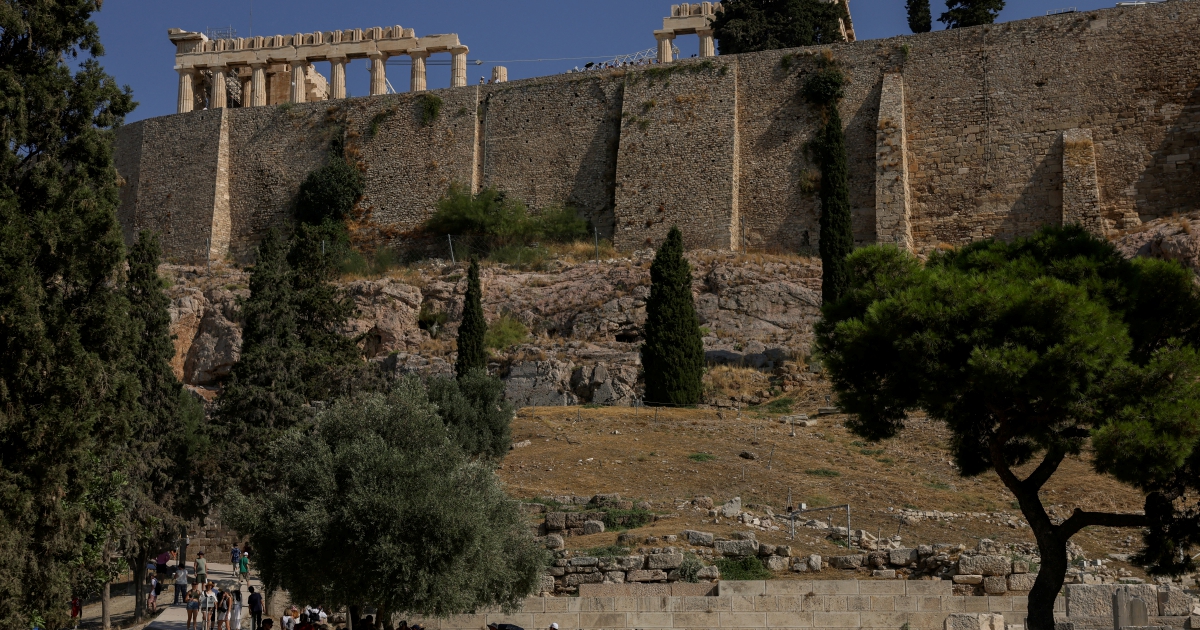
A 60-year-old man launched a knife assault on two Greek-American tourists in the vicinity of Athens' iconic Acropolis on Tuesday, prompting immediate police intervention and the suspect's arrest. The incident occurred in an area densely populated by visitors to one of Europe's most celebrated historical landmarks, drawing attention to personal safety concerns in the Greek capital's tourist precinct.
The attack unfolded in a neighbourhood that witnesses thousands of visitors daily, many of them international travellers journeying to explore the ancient ruins that define classical Greek civilisation. The Acropolis, perched on a hilltop overlooking central Athens, attracts millions of annual visitors and serves as the centrepiece of Greece's cultural heritage tourism industry. The location of this violent episode—mere metres from where tourists congregate—underscores the vulnerability of the millions who pass through this area annually seeking to immerse themselves in antiquity.
Authorities responded swiftly to the incident, with police apprehending the assailant within the immediate timeframe. The victims, identified as Greek-Americans, sustained injuries from the blade attack but survived the encounter. While initial reports did not elaborate extensively on their medical conditions, such incidents invariably raise questions about the adequacy of police presence in high-traffic tourist zones throughout Athens.
For Malaysia and Southeast Asia's tourism community, this incident provides a cautionary reminder of the unpredictable security challenges that can emerge even in destinations with well-established tourism infrastructure. Greece's tourism sector, already buffeted by economic pressures in recent years, now confronts renewed scrutiny regarding visitor safety protocols. Malaysian tourists, who increasingly venture to Mediterranean destinations in pursuit of cultural and historical experiences, must weigh such incidents against the reality that violent crime remains statistically rare in Athens.
The timing of the assault raises broader questions about the adequacy of police resourcing around major archaeological and cultural sites. European tourist destinations have intensified security measures in recent years in response to various threat categories, yet balancing visible security presence with maintaining the aesthetic and experiential integrity of ancient heritage sites remains an ongoing challenge for city administrators. Athens faces the complex task of reassuring visitors without transforming the archaeological precinct into a fortress-like environment.
The identity and background of the 60-year-old assailant remain subjects of investigation, with authorities likely pursuing inquiries into potential motives and whether mental health factors played any role. Greek police have not yet disclosed whether the incident appeared to be random violence or targeted in nature. Such distinctions carry significance for assessing the genuine threat level facing tourists versus the possibility of an isolated incident involving an individual experiencing psychological distress.
Greece's tourism ministry and hospitality sector will likely deploy communications efforts to contextualise this incident and reassure both current and prospective visitors. Tourism represents a cornerstone of the Greek economy, generating substantial foreign currency revenue and employment across the country. Any perception that tourist safety has deteriorated can have cascading effects on booking patterns and travel decisions months in advance.
For the broader Eastern Mediterranean and Levantine tourism ecosystem, the incident serves as a reminder of the complex interplay between headline security events and underlying realities. Individual violent crimes, while deeply concerning to those affected, typically represent statistical outliers in the overall safety profile of established tourist destinations. Nonetheless, each incident receives amplified attention in the digital age, potentially influencing travel plans disproportionate to actual risk.
The Greek authorities' rapid response and detention of the suspect may help contain reputational damage, signalling that violent crime does not go unaddressed. However, the incident inevitably prompts reflection on whether current security models adequately protect the tens of thousands of visitors who pass through the Acropolis precinct weekly. Tourist police, plainclothes officers, and surveillance infrastructure represent ongoing investments that Athens continues to refine.
Malaysian travellers contemplating Greek holidays should recognise that such incidents, while alarming, remain exceptional rather than routine. Greece maintains a general reputation for hospitality and accessibility to international visitors. Nonetheless, prudent travel practices—situational awareness, travelling in groups particularly during evening hours, and familiarity with local emergency procedures—represent sensible precautions applicable to any major city worldwide.
The investigation into this assault will likely yield additional details regarding the perpetrator's background and potential catalysts for the violence. Whether this proves to be an isolated incident or indicative of broader security trends in central Athens will become clearer as authorities progress through their inquiries and data accumulates over subsequent weeks and months. Tourism authorities across Greece will be monitoring developments closely, conscious that international perceptions shape travel decisions among prospective visitors considering Mediterranean destinations.

