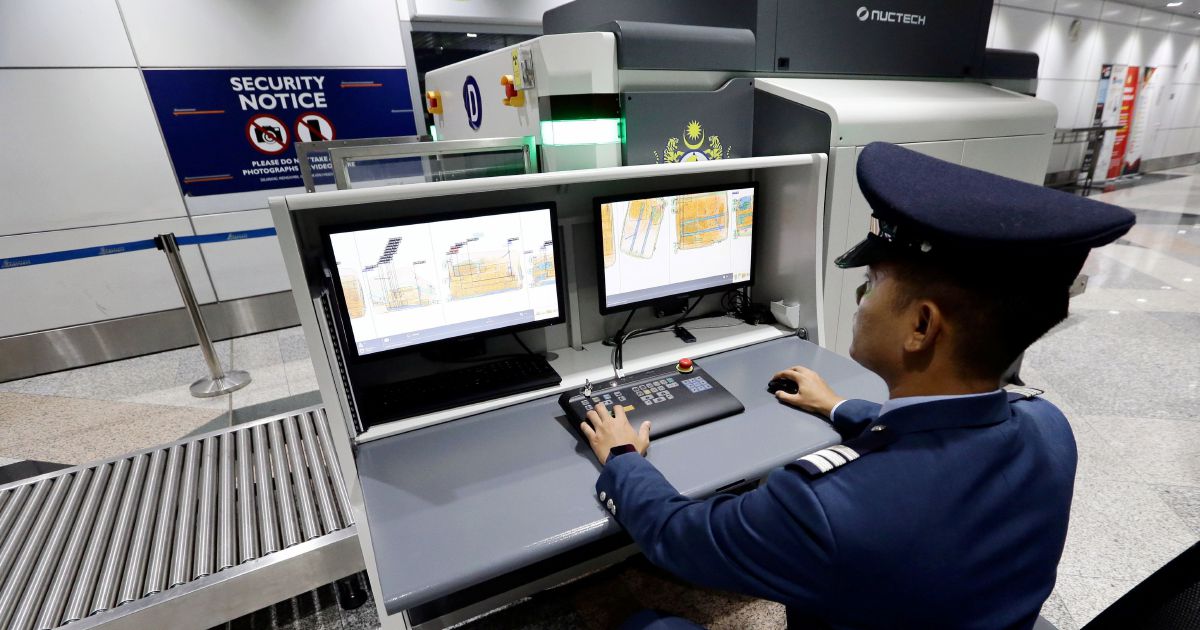
Home Minister Datuk Seri Saifuddin Nasution Ismail has attributed recent concerns over contraband slipping through Kuala Lumpur International Airport to procedural gaps rather than equipment deficiencies, emphasising that the facility's scanning infrastructure possesses adequate technical capacity to identify prohibited drugs and other illicit goods. In comments made at Putrajaya, Saifuddin indicated that the underlying challenge stems from how airport authorities have structured their screening operations, with present protocols tilting operational focus toward detecting weapons and explosives at the expense of other contraband categories.
The clarification arrives against a backdrop of heightened scrutiny regarding drug trafficking through Malaysia's premier aviation hub, where enforcement agencies have increasingly documented successful seizures but also acknowledged that interdiction remains far from comprehensive. By distinguishing between hardware capability and operational deployment, Saifuddin's statement addresses a crucial distinction often overlooked in public discourse around airport security—that technological sophistication alone does not guarantee effective enforcement without complementary procedural frameworks. The sophisticated imaging and detection systems installed at KLIA represent substantial capital investments and have been regularly upgraded to maintain international standards, yet their potential effectiveness depends significantly on how security personnel deploy and interpret the information these devices generate.
The emphasis on standard operating procedures (SOPs) signals an emerging recognition within Malaysia's security apparatus that operational protocol represents a critical leverage point for improving contraband detection rates. Unlike purchasing new scanners or upgrading physical infrastructure, which require substantial budget allocation and procurement timelines, recalibrating SOPs can theoretically be implemented more swiftly through retraining, resource reallocation, and revised screening priorities. This observation carries particular relevance for Southeast Asian airports broadly, where many facilities operate sophisticated equipment yet contend with resource constraints that limit how comprehensively screening protocols can be executed across multiple threat categories simultaneously.
The issue becomes more complex when considering airport operations during peak travel periods, when screening must be balanced against passenger throughput and flight schedules. KLIA, handling over 70 million passengers annually pre-pandemic, faces perpetual tension between security depth and operational efficiency. Current SOPs apparently reflect a calculation that prioritises immediate threat mitigation through weapons and explosives detection, a choice reflecting post-9/11 global security paradigms that emphasised aviation safety through threat interdiction. However, this calculus may inadequately account for emerging challenges posed by drug trafficking networks that have become increasingly sophisticated in evading detection through conventional screening methods.
Saifuddin's acknowledgment that SOPs represent the constraint rather than scanning capability suggests potential movement toward recalibrating airport security priorities. Malaysia has experienced several high-profile drug cases involving quantities smuggled through its airports, incidents that generated domestic and international attention. The Home Ministry's current leadership appears receptive to examining whether existing procedures adequately reflect contemporary trafficking patterns and whether resource deployment remains optimal given evolving threat landscapes. Such recalibration could involve dedicating additional screening time or personnel specifically toward drug and contraband detection, modifying scanning protocols to flag different risk indicators, or implementing additional secondary screening steps for particular passengers or cargo categories identified as higher risk.
The distinction Saifuddin drew also reflects broader tensions within Malaysia's security sector regarding competing priorities. Malaysia's counter-terrorism framework has necessarily been robust, given the nation's experience with extremist networks and its significance as a regional aviation hub potentially vulnerable to malicious actors. Yet the ascendancy of weapons and explosives detection within SOPs, while justified on security grounds, has seemingly created blind spots for narcotics interdiction. This trade-off became particularly acute as regional drug trafficking networks expanded operations and increasingly utilised air cargo and passenger routes through Malaysian facilities as transshipment nodes within broader Asian networks.
Implementing revised SOPs would require calibrated decision-making to avoid compromising anti-terrorism effectiveness while strengthening contraband detection. The challenge lies in simultaneously maintaining vigilance against weapons and explosives while devoting commensurate attention to drug interdiction—essentially expanding screening ambition without proportionately extending processing times that would create operational bottlenecks. Advanced countries have increasingly addressed this through multi-layered approaches combining enhanced technical capability, behavioural analysis, intelligence integration, and targeted secondary screening, rather than attempting to catch all contraband through primary scanning alone.
For Malaysian stakeholders, including law enforcement, customs authorities, and the airport operator, the Home Minister's comments likely signal encouragement to undertake comprehensive SOP reviews. This process would involve analysing current screening effectiveness against documented trafficking patterns, identifying procedural bottlenecks, and exploring whether modest operational adjustments could meaningfully improve drug detection rates. Regional partners including Singapore, Thailand, and Indonesia similarly grapple with balancing multiple screening priorities, and Malaysia's evolution toward more integrated approaches could inform broader Southeast Asian airport security practices.
Saifuddin's statement also carries implicit messaging regarding accountability. Rather than suggesting technical obsolescence requiring new investment, the characterisation of the problem as procedural places responsibility on security management to optimise existing resources. This framing avoids expensive equipment debates while opening pathways for operational accountability and performance improvement. Whether airport authorities will pursue substantive SOP revisions with sufficient rigour to materially improve contraband detection remains to be seen, but the Home Minister's public acknowledgment of procedural deficiency establishes a policy foundation for such changes.

