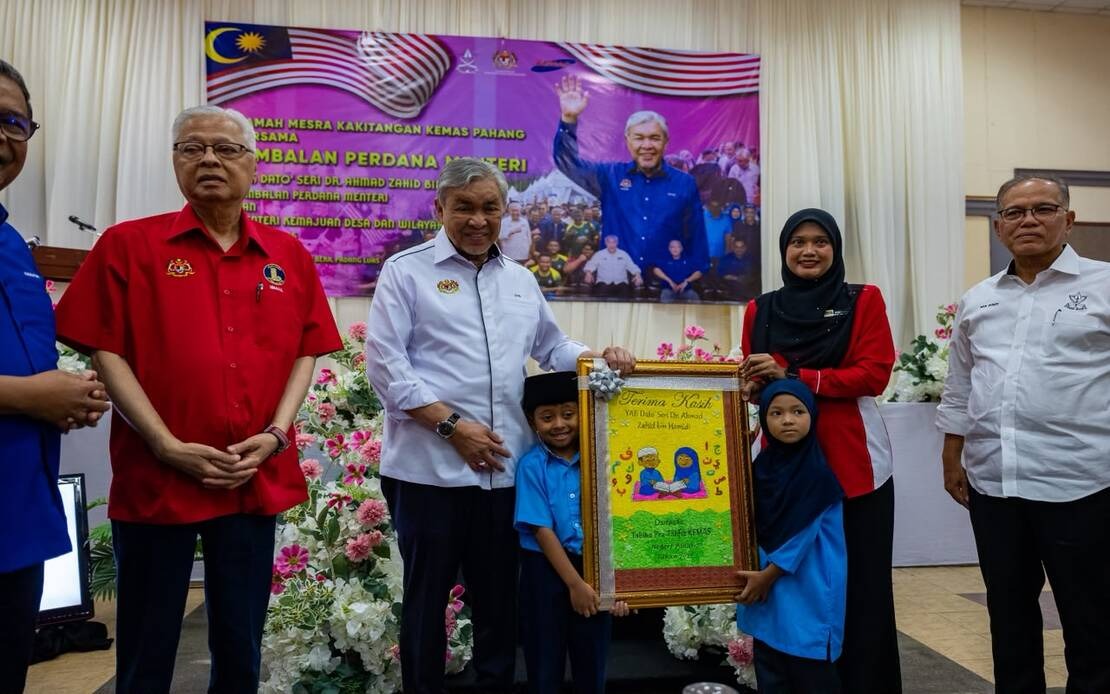
Malaysia's push to modernise early childhood education has entered a critical phase, with the Rural and Regional Development Ministry (KKDW) laying out an ambitious blueprint to reshape KEMAS kindergartens and childcare centres through a dual focus on technological advancement and religious instruction. Deputy Prime Minister Datuk Seri Dr Ahmad Zahid Hamidi articulated this vision at the Pahang KEMAS Community Engagement Programme in Bera, signalling a significant pivot in how the nation approaches foundational learning during a period of substantial policy change affecting schooling entry points.
The timing of this initiative reflects broader shifts within Malaysia's education architecture. With the government having lowered the official school starting age from seven to six, demand for structured early learning has intensified considerably. KEMAS facilities—encompassing both Tabika (kindergartens) and Taska (childcare centres)—now function as the primary institutional gateway for millions of young Malaysians, a responsibility that has grown exponentially since the department's establishment decades earlier. This demographic reality underscores why Ahmad Zahid emphasised that KEMAS must evolve strategically to remain relevant and effective, rather than simply maintain historical practices.
Central to the modernisation strategy is the expansion of technology within KEMAS classrooms. The proposal includes wider rollout of Smart Class infrastructure and smartboards across its network of facilities, initiatives designed to familiarise children with digital tools at a formative stage. Ahmad Zahid stressed that federal, state, and parliamentary leadership must collaborate more effectively to secure the necessary technological infrastructure and funding. This collaborative imperative reflects a broader Southeast Asian trend in which early education institutions seek to build digital literacy from primary years onward, ensuring younger generations develop comfort with technology as a learning medium rather than encountering it abruptly during secondary schooling.
The religious education component of the reform programme reveals equal ambition. Ahmad Zahid announced plans to expand Quranic memorisation programmes beginning next year, moving beyond the current focus on Juzuk 30 (the final section of the Quran) to include memorisation of Surah Yasin, Al-Waqiah, Al-Mulk and As-Sajdah. This expansion represents a deliberate effort to deepen Islamic instruction within KEMAS facilities, acknowledging both parental expectations and the government's vision of education that cultivates spiritual and moral foundations alongside academic skills. However, Ahmad Zahid was explicit that such implementation requires careful preparation: KEMAS teachers themselves must first master these memorisation techniques to ensure delivery is structured and effective rather than superficial.
The proposal carries several implications for educators and administrators within the KEMAS system. Professional development will necessarily intensify, with staff requiring training not only in Quranic instruction methodologies but also in operating and integrating contemporary digital teaching tools. This dual upskilling demand could strain resource allocation, particularly in rural areas where KEMAS facilities often operate with tighter budgets and smaller staff. For Malaysian readers concerned with educational equity, the challenge of ensuring consistent implementation across urban and peripheral zones remains significant, though Ahmad Zahid's emphasis on intergovernmental cooperation suggests awareness of this disparity.
Pahang's contributions to KEMAS expansion were acknowledged during the event, with the state government having supported land title acquisition and provided grants for facility improvements and renovations. This regional partnership model exemplifies how devolved governance can advance national educational objectives when political will aligns across federal and state levels. Datuk Seri Wan Rosdy Wan Ismail's presence as Pahang Menteri Besar indicated state commitment, while the participation of former prime minister and Bera MP Datuk Seri Ismail Sabri Yaakob reflected broader cross-partisan recognition of early education's importance.
Historically, KEMAS has served approximately 8.4 million children since its inception, constituting an enormous institutional footprint across Malaysian communities. This scale both underscores the department's reach and illustrates the complexity of coordinating systemic reform across such a dispersed network. The six-decade legacy also creates institutional inertia; modernisation efforts must navigate balance between preserving effective practices and introducing necessary innovation, a tension Ahmad Zahid acknowledged by stating that KEMAS must "not lose sight of the fundamentals of human development" while entering "a new phase."
The articulation of this vision carries particular resonance in the context of persistent global discussions about early childhood development. Contemporary educational research emphasises that competencies formed during early years—including technological literacy, religious and moral grounding, and foundational academic skills—establish trajectories for later achievement. By positioning KEMAS at the intersection of these domains, Malaysia is signalling that early education transcends childcare logistics, instead functioning as strategic infrastructure for nation-building and workforce preparation.
Ahmad Zahid's framing also highlighted the relationship between political stability and educational progress. He stressed that sustained cooperation across governmental tiers and genuine openness to reform were preconditions for systematic advancement in early childhood education. This assertion acknowledges that educational transformation cannot occur through ministry directives alone; implementation depends on sustained engagement from federal authorities, state governments, and parliamentarians at both national and constituent levels. For Malaysian stakeholders observing KEMAS development, this messaging suggested that future progress would reflect broader patterns of intergovernmental coordination and political commitment.
The practical timeline for these initiatives remains partially undefined, though Ahmad Zahid indicated that expanded Quranic memorisation would commence in the following year. Details regarding technology rollout schedules, budget allocations, and teacher training curricula have not been publicly specified, leaving considerable room for subsequent policy announcements and operational planning. Observers in education and public administration circles will likely scrutinise subsequent ministerial communications for concrete implementation frameworks and resource commitments.
Looking forward, KEMAS reform embodies Malaysia's broader ambition to position early childhood education as foundational infrastructure for economic competitiveness and social cohesion. By weaving together technological skill-building, Islamic instruction, and governmental collaboration, the initiative reflects contemporary assumptions about what young learners require to thrive in rapidly changing environments. Whether execution matches these aspirations will depend significantly on resource allocation, teacher preparation capacity, and sustained political attention beyond the current policy announcement cycle.

