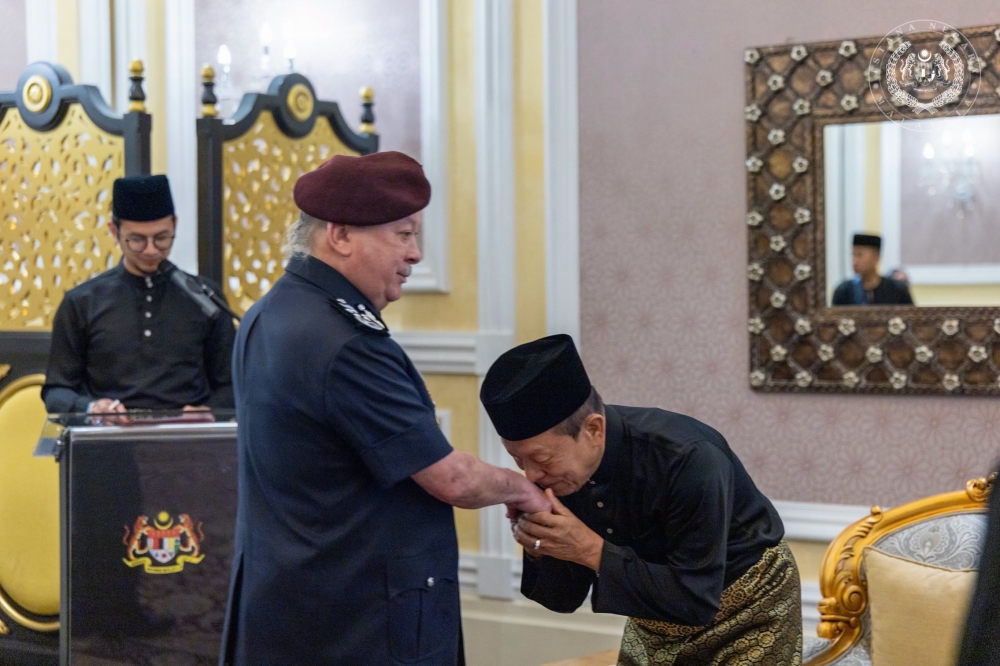
His Majesty Sultan Ibrahim, King of Malaysia, received a comprehensive briefing from Malaysian Anti-Corruption Commission (MACC) chief Abdul Halim on the agency's operational progress and strategic direction during an audience at the royal palace in Kuala Lumpur. The meeting underscored the continued oversight and engagement of the Malaysian monarchy in matters of institutional governance and national integrity.
The MACC plays a pivotal role in Malaysia's anti-corruption framework, serving as the principal enforcement body tasked with investigating allegations of misconduct across both public and private sectors. As head of the commission, Abdul Halim carries responsibility for the agency's performance, resource allocation, and strategic planning—matters routinely discussed with the nation's highest office to ensure alignment with constitutional values and public interest objectives.
Royal audiences of this nature typically involve substantive discussions on the commission's caseload, investigation outcomes, preventative measures, and challenges encountered in the execution of mandate. The briefing likely covered recent high-profile cases, prosecution success rates, and sector-specific vulnerabilities where corruption poses systemic risks to public administration and economic integrity.
The timing of the meeting reflects ongoing concerns about corruption's corrosive effects on institutional trust and economic efficiency in Malaysia. Despite legislative reforms and enforcement operations over recent years, corruption remains a persistent challenge affecting government procurement, licensing processes, and public service delivery. The MACC's capacity to investigate complex financial structures and coordinate with international counterparts has become increasingly critical as business arrangements grow more sophisticated.
For Malaysian readers, such royal engagement signals institutional prioritisation of anti-corruption work at the highest levels of governance. It demonstrates that maintaining public integrity is not solely the province of the executive branch but commands attention from constitutional stewards who represent national values and continuity. This multi-institutional approach—combining royal oversight, independent agency leadership, legislative frameworks, and public accountability—forms the foundation of Malaysia's anti-graft architecture.
Abdul Halim's tenure has coincided with various operational initiatives including enhanced digital forensic capabilities, expanded international cooperation agreements, and public education campaigns designed to build societal intolerance for corrupt practices. The commission has also restructured internal processes to accelerate investigation timelines and improve case preparation for prosecution, addressing longstanding criticism about the speed of accountability mechanisms.
Context matters here for regional observers: Southeast Asia faces significant governance challenges related to illicit financial flows, cross-border corruption networks, and weak institutional capacity in some jurisdictions. Malaysia's investment in independent anti-corruption infrastructure, even with acknowledged limitations, positions it comparatively more robustly than several neighbours. International rankings and peer reviews consistently note the MACC's institutional independence as a structural advantage, though implementation gaps and resource constraints persist.
The audience also reflects constitutional protocols governing the separation and coordination of powers in Malaysia's Westminster-influenced system. While executive ministers answer to parliament and public accountability mechanisms, the monarch maintains consultative and advisory roles across state institutions. These formal engagements provide opportunities for the palace to assess whether agencies function according to constitutional intent and serve the public interest rather than narrow political agendas.
Looking forward, the MACC faces mounting pressure to address corruption in sectors critical to Malaysia's economic transformation—digital commerce, infrastructure development, and renewable energy projects. As the nation pursues high-income status through industry 4.0 initiatives and green technology investments, integrity in public-private partnership arrangements becomes essential to attracting quality foreign investment and maintaining investor confidence.
The briefing also carries symbolic weight beyond operational substance. Public knowledge that the King is actively informed about anti-corruption progress reinforces the message that fighting corruption remains a constitutional priority rather than merely a political campaign slogan. This distinction matters because sustained institutional commitment—rather than episodic enforcement waves driven by electoral cycles—produces the consistency necessary to shift cultural attitudes toward corrupt practices.
For Malaysian civil society organisations and transparency advocates, such visible royal engagement provides both encouragement and a benchmark against which to measure government commitment during subsequent budget cycles, legislative processes, and appointment decisions. When the nation's highest office demonstrates sustained interest in anti-corruption machinery, it becomes harder for subsequent administrations to deprioritise institutional funding or independence in the name of temporary political convenience.
The conversation between Abdul Halim and His Majesty represents one component of Malaysia's continuing effort to build institutional resilience against corruption. While no single audience guarantees transformative outcomes, the pattern of regular engagement between sovereign and anti-corruption leadership reflects a governance model where multiple institutional actors share responsibility for defending public integrity—a model increasingly recognised as essential in democracies facing sophisticated corruption schemes.

