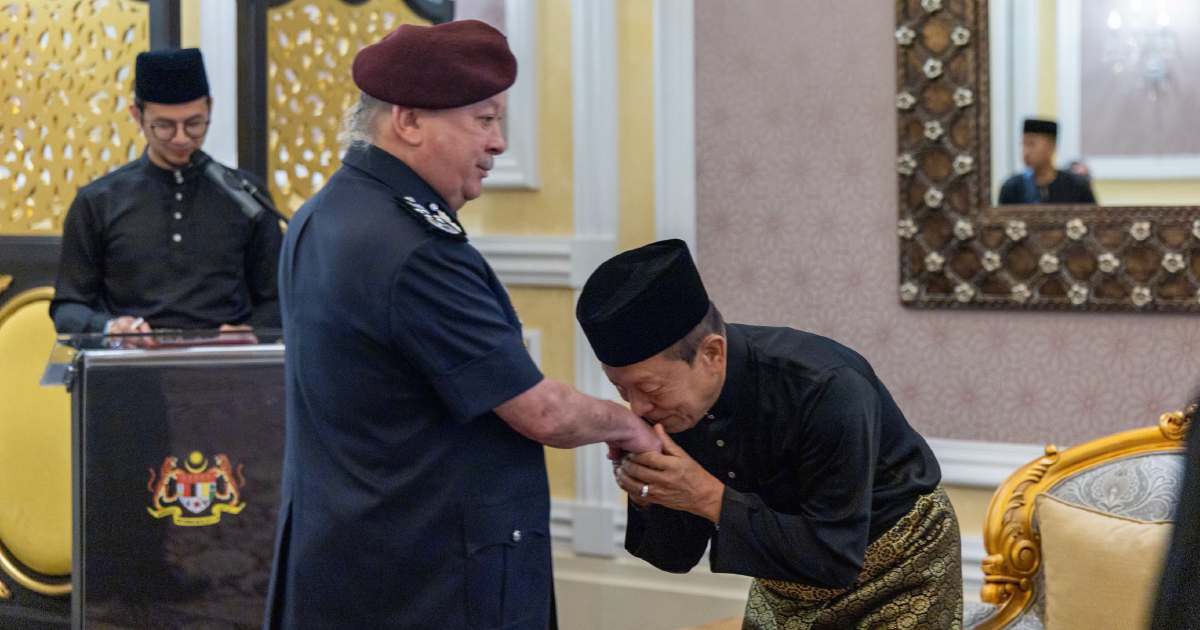
His Majesty Sultan Ibrahim, King of Malaysia, received Malaysian Anti-Corruption Commission chief commissioner Datuk Seri Abdul Halim Aman during a formal audience at Istana Negara today. The meeting represents part of the regular protocol through which Malaysia's constitutional monarchy maintains oversight and engagement with key institutional leaders responsible for national governance.
Audiences between the reigning monarch and heads of critical state bodies form an important component of Malaysia's constitutional framework. These formal meetings serve as channels through which the Crown stays informed about the operations, challenges, and strategic direction of agencies tasked with upholding public trust and institutional integrity. The MACC, as the primary law enforcement body combating corruption across both public and private sectors, occupies a particularly significant position within this structure.
The Malaysian Anti-Corruption Commission has continued to play an elevated role in recent years as the nation grapples with complex integrity issues affecting governance and economic confidence. Under Datuk Seri Abdul Halim Aman's leadership, the commission has pursued investigations spanning various sectors and levels of administration, contributing to public discourse around accountability standards in the country. Such royal audiences underscore the significance placed on anti-corruption efforts at the highest levels of state.
In Malaysia's constitutional monarchy, the ruler functions as guardian of the Federal Constitution and upholder of Islamic values while serving as symbolic embodiment of national unity. Regular engagements with institutional leaders reinforce the Crown's role in monitoring the performance and integrity of organs responsible for implementing the rule of law. These meetings, while often ceremonial in nature, carry substantive implications for demonstrating royal attention to critical governance matters.
The timing and frequency of such audiences can reflect shifting priorities within the government's institutional framework. Meetings between the sovereign and agency heads dealing with corruption or financial oversight often occur during periods when the nation faces heightened scrutiny regarding governance standards or when particular investigations gain public prominence. These interactions affirm the monarchy's continuing relevance in institutional supervision beyond purely ceremonial functions.
For the MACC specifically, receiving audiences with the King reinforces the commission's position as an autonomous, constitutionally-recognised body distinct from executive partisan interests. This separation proves crucial in jurisdictions where anti-corruption agencies must maintain credibility and independence to effectively pursue investigations that may implicate senior political figures or government officials. Royal recognition validates the commission's institutional standing among both the public and international observers monitoring governance standards.
The MACC's mandate encompasses investigating corruption allegations within government, statutory bodies, and increasingly the private sector, making it central to Malaysia's efforts to strengthen institutional transparency. As the country navigates evolving economic pressures and seeks to maintain investor confidence, the visible operational independence and royal acknowledgement of anti-corruption institutions become important signals of commitment to governance reform.
Malaysia's position within the region has been partly shaped by perceptions regarding institutional corruption and the effectiveness of enforcement mechanisms. Neighbouring countries and international observers assess Malaysia's governance trajectory partly through the lens of how robustly institutions like the MACC function and whether high-profile investigations proceed without political interference. Audiences between the Crown and anti-corruption leadership send subtle but important signals about institutional autonomy.
The engagement between His Majesty and Datuk Seri Abdul Halim Aman occurs within a broader context of institutional reorganisation and evolving expectations regarding governmental accountability. Recent years have witnessed significant changes in Malaysia's political landscape, with corresponding implications for how various institutions navigate relationships with shifting executive leadership. The monarchy's direct engagement with heads of bodies like the MACC helps maintain institutional continuity regardless of electoral or administrative transitions.
Such formal meetings also serve practical functions, permitting senior officials to brief the sovereign on operational matters, resource requirements, or strategic challenges facing their respective bodies. For the MACC chief commissioner, access to the highest constitutional authority provides opportunity to raise concerns regarding institutional independence, investigative impediments, or emerging corruption threats requiring policy-level attention. These sessions thus function as both ceremonial affirmation and substantive engagement channels.
Looking forward, the visibility of royal oversight concerning anti-corruption measures remains relevant as Malaysia continues efforts to restore international confidence in governance standards. The country's trajectory regarding corruption control, institutional independence, and rule of law enforcement directly influences foreign investment decisions and international standing. Regular, well-publicised engagement between the Crown and anti-corruption leadership reinforce messages regarding governmental commitment to integrity at the apex of authority.

