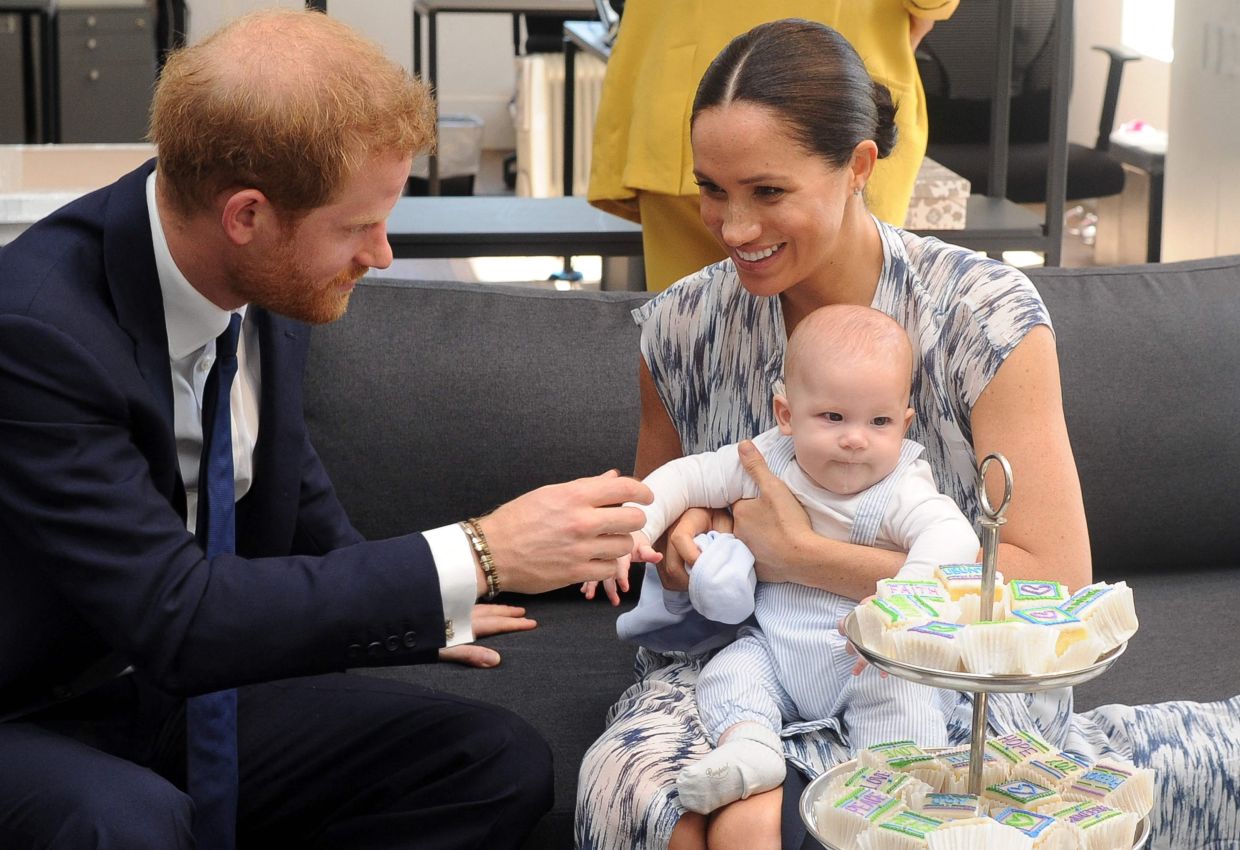
A significant moment unfolded at King Charles III's Highgrove House estate west of London on Friday when the monarch hosted Prince Harry, the Duchess of Sussex Meghan, and their two children in what represents the family's first substantial gathering in several years. The meeting between the king, Queen Camilla, and the younger royals represents a carefully orchestrated attempt to narrow a chasm that has grown steadily since Harry and Meghan abandoned their official duties and relocated to California six years ago, a decision that fundamentally altered the family's dynamics and public standing.
The visit involved Prince Archie and Princess Lilibet, the couple's seven-year-old and five-year-old children respectively, who had limited previous contact with their grandfather. Beyond a brief encounter during Queen Elizabeth II's Platinum Jubilee celebrations in 2022, the royal children had seen little of King Charles. For the youngsters, who have grown up primarily on the American West Coast, the opportunity to spend time with their paternal grandfather at his private country residence carried symbolic weight far beyond the immediate family gathering.
Prince Harry's presence in Britain commenced on July 6, ostensibly centred on a series of charitable commitments that attracted considerable media interest across the United Kingdom. Yet these philanthropic endeavours became somewhat secondary to the question dominating British tabloid coverage and royal commentary: would reconciliation finally occur between the estranged father and son? The uncertainty surrounding whether Meghan would travel alongside Harry, and crucially whether their children would accompany them, had generated weeks of speculation within royal circles and the British press.
The logistics of orchestrating such a meeting reflected the extraordinary complexity inherent in royal scheduling. Palace officials emphasise that the king's calendar operates on timescales stretching years into the future, with commitments locked in well before execution. The opportunity for meaningful family contact proved similarly constrained by practical realities: the children's school calendar in California required them to return before autumn, while their primary residence on the American West Coast presented obvious complications for extended visits. These structural limitations injected considerable urgency into the occasion and transformed what might otherwise be routine into a carefully rationed window of reconciliation.
The week preceding the Highgrove gathering had witnessed considerable friction between Harry and royal officials, punctuated by an awkward public embarrassment when Buckingham Palace extended an invitation for the prince to lodge within the palace itself. This offer was subsequently withdrawn after Harry declined to respond within the timeframe demanded by courtiers, a tense exchange that underscored the delicate negotiating position both sides occupied. Such bureaucratic stumbles revealed the underlying tension characterising the entire relationship, where formal protocols and emotional wounds collided uncomfortably.
Harry's visit coincided with his loss in a significant legal battle against tabloid publishers, a development that symbolised the broader exhaustion characterising his long campaign against British media organisations. The court ruling against his privacy invasion claims represented a punctuation mark in his ongoing struggle with the press, a fight that had consumed considerable emotional and financial resources while simultaneously straining his relationship with the wider royal family, who viewed his legal aggression with concern and occasional sympathy for the institutional pressures media scrutiny placed upon everyone within the House of Windsor.
Underlying this family rupture lies King Charles's ongoing cancer treatment, a health situation that has imparted genuine urgency to familial reconciliation efforts. At 77 years old, the monarch's medical condition has fundamentally altered Harry's perspective on delayed healing. The prince has publicly acknowledged his desire to rebuild bridges with his father before time renders such opportunities impossible, a stark acknowledgement of mortality that transformed theoretical future reconciliation into immediate imperative.
The relationship between father and son had registered some limited improvement during a September meeting in London, when they shared tea during a brief royal visit. That encounter marked their first sustained face-to-face contact in more than a year, though it remained constrained and formal. Friday's gathering at Highgrove represented a substantial escalation, introducing children into the reconciliation calculus and signalling that both parties were prepared to move beyond the symbolic toward genuine family restoration.
Harry's controversial memoir published in recent years had inflicted considerable damage upon these fraught relationships, introducing detailed allegations and unflattering characterisations of various royal family members into the public record. His particularly scathing treatment of Queen Camilla, whom he accused of orchestrating press leaks regarding private family conversations, had generated lasting resentment within palace circles. These literary grievances had poisoned the emotional atmosphere considerably, transforming family discord into published narrative that proved difficult to overcome through quiet conversation.
The fundamental catalyst for this rupture stretched back to Harry and Meghan's 2018 decision to withdraw from public royal duties and establish themselves in California, where they pursued independent media ventures and philanthropic initiatives. This departure represented not merely a personal choice but a rupture with institutional expectations and generational assumptions about duty and obligation that structure royal existence. The couple's subsequent commercial activities, including lucrative media contracts and public advocacy campaigns, suggested they had prioritised freedom and financial independence above the ceremonial obligations that define working royalty.
Harry has articulated a public desire for reconciliation despite the accumulated grievances, articulating to the BBC his awareness that prolonged estrangement served nobody's interests. His statement that "there's no point in continuing to fight anymore" and his acknowledgement of uncertainty regarding "how much longer my father has" captured the emotional stakes underlying this particular visit. The prince appears to have recognised that wounded pride and legal victories prove hollow when measured against finite family time and the possibility of permanent rupture.
The Highgrove meeting, conducted privately and deliberately insulated from media observation or photographic documentation, signals a family determined to process its wounds away from public scrutiny. The conscious decision to exclude press coverage distinguishes this occasion from the performative royal gatherings that typically dominate the family's calendar, suggesting that both parties understand the fragility of this emerging reconciliation and the risk that premature public discussion might derail delicate negotiations. For Malaysian and Southeast Asian observers watching this unfold, the episode illuminates how even the most institutionalised of families must navigate reconciliation with the same vulnerability and uncertainty that characterises ordinary households, regardless of crowns and ceremonial tradition.

