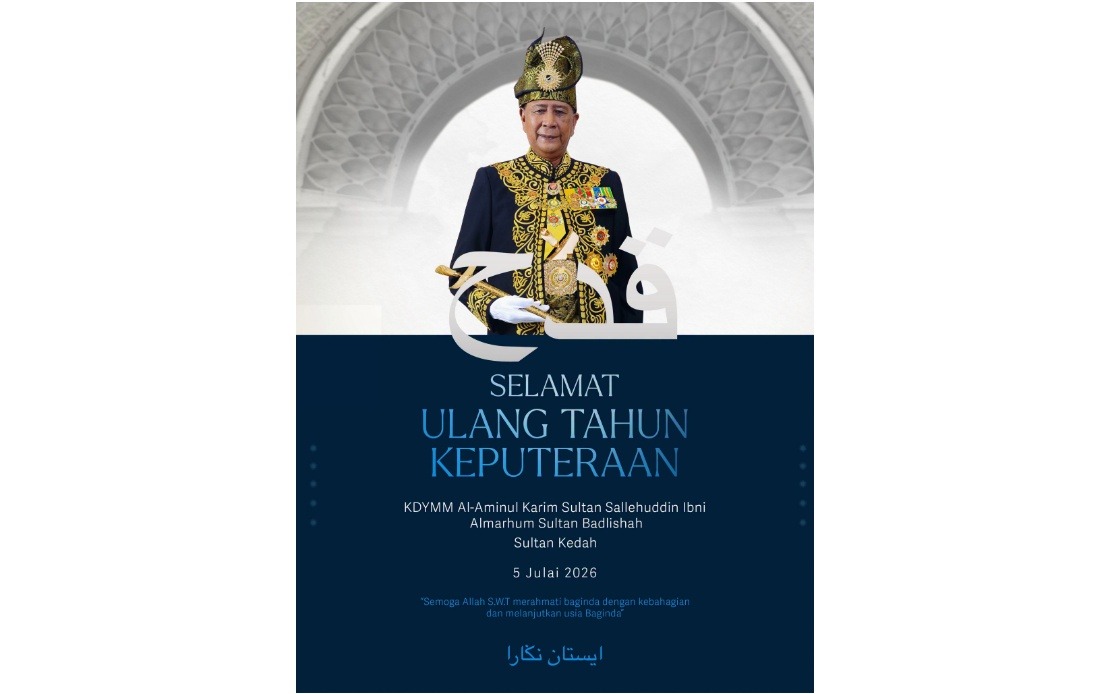
His Majesty Sultan Ibrahim, King of Malaysia, joined Prime Minister Datuk Seri Anwar Ibrahim in extending warm birthday wishes to Al-Aminul Karim Sultan Sallehuddin Sultan Badlishah, Sultan of Kedah, as the royal dignitary marked his 84th birthday on July 5. The gestures of goodwill from Malaysia's highest political and institutional figures underscore the significance of maintaining cordial ties within the Malaysian royal hierarchy, where the sultans of the individual states maintain constitutional standing alongside the federally appointed monarch.
Through an official post on his Facebook page, the King conveyed his prayers that Sultan Sallehuddin would enjoy sustained blessings of happiness, robust health, and a long and fulfilling life. The language employed in royal well-wishes carries ceremonial importance in Malaysia's constitutional monarchy framework, where such acknowledgements serve to reinforce bonds between the various royal houses. His Majesty's invocation of divine blessing reflects Islamic traditions that remain central to Malaysia's identity as an Islamic nation, even as the monarchy functions within a secular constitutional structure.
Prime Minister Anwar Ibrahim similarly took to social media to express his heartfelt birthday sentiments toward Sultan Sallehuddin. The Prime Minister's greeting extended beyond the celebrant to encompass the broader Kedah royal family, including Sultanah Maliha Tengku Ariff, the Sultanah of Kedah, demonstrating the inclusive nature of such diplomatic courtesies within the federation. By extending wishes to the entire royal household, Anwar underscored recognition of the collective role that Kedah's monarchy plays in the state's governance and cultural fabric.
The Prime Minister's invocation of "Daulat Tuanku" and "Dirgahayu Tuanku"—traditional Malay phrases meaning "Long Live the King"—placed the birthday greeting within the context of centuries-old protocol that governs interactions with Malaysia's royal institutions. Such linguistic choices carry weight in Malaysian political culture, where respect for the institution of monarchy commands broad constitutional and social importance. The explicit mention of prayers for Allah's mercy, guidance, and the continuation of sovereign authority reflects the intertwining of Islamic principles with Malaysia's monarchical traditions.
For Malaysian readers, such exchanges between national leadership and state royalty represent routine but meaningful demonstrations of institutional respect and continuity. Malaysia's system of constitutional monarchy depends upon consensus and mutual recognition among the various power centers—the Federal Crown, state sultans, the government, and parliament. Birthday greetings between these figures, while appearing ceremonial, serve as public affirmations of institutional harmony and commitment to Malaysia's federal structure.
Sultan Sallehuddin's long tenure in Kedah's leadership has witnessed significant transitions in Malaysian political and economic life. At 84 years old, he represents a generational link to Malaysia's colonial and early post-independence periods, and his longevity within the sultanate provides continuity amid broader changes across the nation. The health and welfare wishes directed toward him carry implicit recognition of his importance to Kedah's institutional stability and cultural preservation.
The choice to publicize these greetings through Facebook and social media platforms reflects how Malaysian political and royal communication has evolved in the digital age. Where such interactions might once have occurred through formal written correspondence or official gazette announcements, their dissemination via social media allows broader public witnessing and participation in these ceremonial moments. This democratization of royal communication maintains tradition while adapting to contemporary information flows.
From a regional perspective, Malaysia's careful choreography of royal and political interactions offers lessons in maintaining institutional stability within a multi-ethnic, multi-religious federation. Unlike some Southeast Asian monarchies that have faced constitutional crises or tensions between monarchy and executive authority, Malaysia's parallel sultanates and federal crown have generally coexisted through mutual respect and clearly defined jurisdictions. The birthday greetings, though seemingly minor, reinforce these established patterns.
The significance of such gestures extends to Malaysia's international standing as well. Observers of Southeast Asian governance frequently note the contrast between Malaysia's institutional arrangements and those of neighboring countries. The apparent ease with which the King and Prime Minister extend courtesies to state sultans demonstrates a system of checks and balances that, while occasionally subject to tension, has generally functioned to prevent concentration of power in any single institution.
Sultan Sallehuddin's milestone birthday also provides an occasion to reflect on Kedah's role within the Malaysian federation. The northern state, historically important for its agricultural production and more recently for its emerging industrial base, benefits from the leadership continuity that long-serving sultans can provide. The state's economic development and social cohesion remain intertwined with the stability of its royal institution, making Sultan Sallehuddin's continued health and vigor matters of broader state importance.
For Malaysian readers accustomed to parliamentary democracy alongside constitutional monarchy, these birthday greetings affirm the resilience of institutional arrangements established at independence. The fact that the highest levels of government and the crown see fit to publicly celebrate the milestones of state sultans reinforces a social contract in which various centers of authority recognize one another's legitimacy and importance. As Malaysia navigates contemporary challenges including economic pressures, political realignments, and demographic change, these moments of ceremonial affirmation contribute to broader social cohesion and institutional trust.
Looking forward, Sultan Sallehuddin's 84th birthday serves as a reminder that Malaysia's constitutional framework, while facing periodic challenges and calls for reform, has demonstrated capacity to endure and adapt. The birthday wishes from the King and Prime Minister encapsulate this continuity—an acknowledgement that across different institutional roles and political landscapes, respect for Malaysia's diverse centers of authority remains a unifying principle. Whether such arrangements will continue to satisfy Malaysian expectations in an era of changing values and democratic aspirations remains an ongoing question, but for now, the birthday greetings stand as markers of institutional harmony.

