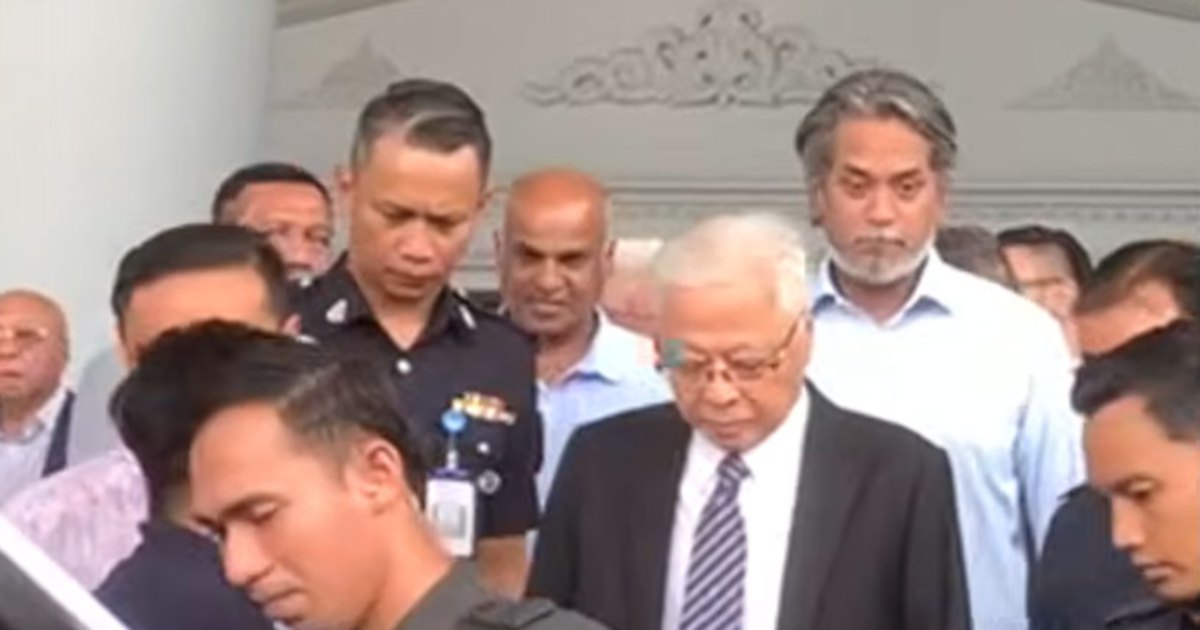
Former Umno Youth chief Khairy Jamaluddin's unexpected appearance at the Kuala Lumpur Court Complex today to witness the charge proceedings against ex-Prime Minister Datuk Seri Ismail Sabri Yaakob has reignited speculation about fault lines within Malaysia's ruling party and the complex web of personal loyalties that continue to shape its political landscape.
The symbolic weight of Khairy's presence at the courthouse cannot be overstated in the context of contemporary Malaysian politics. His decision to publicly support Ismail Sabri during what constitutes a vulnerable moment in the latter's legal journey signals a deliberate positioning that transcends routine parliamentary courtesy. Within Umno's hierarchical structure, such gestures carry outsized significance, functioning as visible declarations of political alignment to the party's broader membership and the attentive media establishment.
Khairy's attendance assumes additional importance given his previous role as Umno Youth chief, a post that traditionally serves as a stepping stone within the party's power structure. His willingness to associate publicly with Ismail Sabri during formal legal proceedings suggests either a consolidation of existing ties or a recalibration of factional alliances within Umno. Such positioning often precedes broader shifts in party dynamics, particularly as leadership contests and policy direction discussions loom on the horizon.
The court appearance underscores the persistent influence of personal networks within Malaysian political parties, where institutional loyalty frequently intertwines with individual relationships forged over decades of shared political struggle. Ismail Sabri's tenure as Prime Minister between 2021 and 2022 fundamentally altered his standing within Umno, and his subsequent legal challenges have tested the resilience of bonds formed during his period leading the nation. Khairy's appearance suggests these connections remain intact despite the passage of time and changing political circumstances.
For observers tracking Umno's internal dynamics, such visible demonstrations of solidarity carry practical implications. They communicate to wavering party members where power brokers stand on contentious matters and influence perceptions about which senior figures retain meaningful political capital. In a party context where factional divisions have periodically threatened cohesion, such signals help crystallise constituencies and shape narratives around leadership contests and policy directions.
The legal proceedings themselves reflect Malaysia's evolving approach to accountability mechanisms involving former senior government figures. The charges against Ismail Sabri place the judiciary and legal system under public scrutiny, particularly regarding consistency in enforcement and perceptions of political impartiality. High-profile attendance by party figures at such proceedings inevitably draws media attention and feeds into broader national conversations about institutional independence and the rule of law.
Khairy's current political positioning within Umno merits examination alongside this court appearance. His trajectory from Youth wing leadership to broader party influence has followed patterns typical of ambitious Malaysian politicians navigating complex factional terrain. His choice of public gestures, including courtroom attendance, typically reflects calculated assessments of political advantage and personal principle. The decision to appear alongside Ismail Sabri demonstrates that maintaining such connections carries sufficient perceived benefit to warrant the public association.
This development arrives amid an extended period of judicial proceedings involving various Malaysian political figures, creating an environment where legal challenges have become intertwined with political standing and party positioning. The willingness of established figures like Khairy to appear at courtroom proceedings involving peers suggests a normative shift within Umno regarding how members should respond to peers facing legal scrutiny. Rather than distancing themselves, senior figures increasingly view public support as strategically appropriate and politically defensible.
The international dimension of Malaysian politics adds another layer of complexity to such observations. Malaysia's democratic institutions continue to attract scrutiny from regional observers and international commentators assessing the health of democratic practice in Southeast Asia. Courtroom scenes involving former prime ministers and public demonstrations of factional solidarity contribute to the broader narrative about Malaysian politics that circulates regionally and globally. Khairy's appearance thus carries implications that extend beyond Umno's internal politics to affect Malaysia's international image regarding judicial independence and political maturity.
Looking forward, such acts of public solidarity often serve as bellwethers for broader political realignments or factional repositioning within major parties. Khairy's appearance today may signal an effort to strengthen ties with Ismail Sabri's constituency or reflect broader efforts within Umno to present a united front despite ongoing legal matters affecting senior members. Whether this represents a sustainable political position or a tactical manoeuvre within evolving party circumstances will become clearer as additional developments emerge in Ismail Sabri's legal proceedings and Malaysian politics more broadly continues to negotiate questions of institutional accountability and leadership succession.

