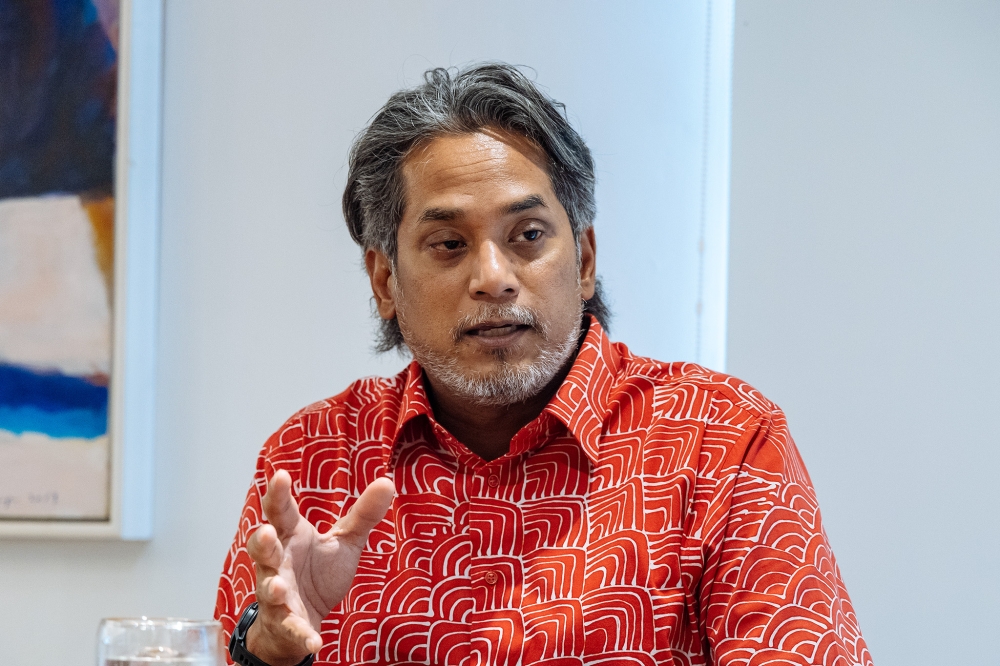
The political landscape in Negeri Sembilan is stirring with activity as Barisan Nasional explores fresh options for its forthcoming electoral strategy, with former Umno Youth chief Khairy Jamaluddin now featuring prominently in discussions about potential candidates for the state legislative assembly. Sources suggest that the veteran politician, who has maintained a high profile within Umno despite no longer holding the youth wing leadership, is being seriously examined as a possible nominee for the Rembau state constituency, a seat of considerable significance within the Negeri Sembilan political framework.
The speculation extends beyond merely securing a state assembly seat, as informed observers have begun contemplating whether Khairy might harbour ambitions for the Menteri Besar position itself. Such elevation would represent a major political development for the politician, who has spent recent years navigating the complexities of intra-party politics and redefining his relevance within Umno's senior echelons. The fact that his name has surfaced in connection with these conversations underscores his continued status as a figure of consequence within the broader Barisan machinery, despite the coalition's turbulent recent history.
Negeri Sembilan has traditionally occupied an important position in Malaysian politics, and control of the state remains strategically valuable for Barisan Nasional. The state's political composition and the demographic character of constituencies such as Rembau make them attractive targets for the coalition's revival efforts. Khairy's potential deployment in this context would reflect a calculated strategy to leverage his organizational capabilities and parliamentary experience for Barisan's territorial ambitions.
Within Umno circles, assessments of Khairy's positioning reveal a politician attempting to recalibrate his influence following the departure from youth leadership. His parliamentary background and previous ministerial appointments provide substantive credentials for higher office, though his trajectory has been marked by periods of considerable controversy and political friction within party structures. Any candidacy announcement would inevitably attract scrutiny regarding his grassroots appeal and capacity to mobilize voter support in Rembau specifically.
The timing of these considerations is noteworthy given the evolving dynamics within Barisan Nasional and the coalition's broader repositioning efforts across multiple states. With federal government implications intertwined with state-level politics, decisions about candidate selection carry weight far beyond individual constituencies. The emergence of Khairy as a serious contender suggests that party strategists are willing to deploy experienced figures in competitive environments where conventional approaches may prove insufficient.
For Malaysian political observers, this development illustrates how senior figures from previous administrations continue to command consideration despite the coalition's setbacks in recent electoral contests. The willingness to advance Khairy's candidacy reflects confidence in his residual political capital and perhaps an acknowledgment that youth-focused leadership credentials remain valuable in state-level contests. Rembau voters would ultimately determine whether his profile resonates with constituency-level concerns and priorities.
The Menteri Besar speculation, while perhaps premature, highlights the hierarchical nature of state politics and how legislative representation frequently serves as a stepping stone toward executive power. Successful performance in the state assembly could theoretically position Khairy for higher office, particularly if Barisan achieves a favourable overall result in Negeri Sembilan. However, such scenarios remain contingent on numerous variables, including party dynamics, voter preferences, and broader coalition performance.
Regionally, developments in Negeri Sembilan command attention as part of Malaysia's ongoing political restructuring. Southeast Asian observers tracking Malaysian politics recognize that state-level contests often foreshadow national trends and serve as testing grounds for political strategies. Khairy's involvement in Rembau would constitute another chapter in the coalition's efforts to stabilize and rebuild its electoral machinery across different territorial bases.
The path forward for these potential arrangements remains unclear, with formal candidate nominations requiring official party endorsement and further deliberation within Barisan circles. Nonetheless, the currency of Khairy's name in serious political discourse demonstrates his enduring relevance within Umno's hierarchy, even as the party grapples with questions about renewal and organizational direction. Whether Rembau ultimately becomes his electoral platform, and whether that platform extends toward the Menteri Besar office, will become evident as the political timetable advances and selection processes reach their conclusion.

