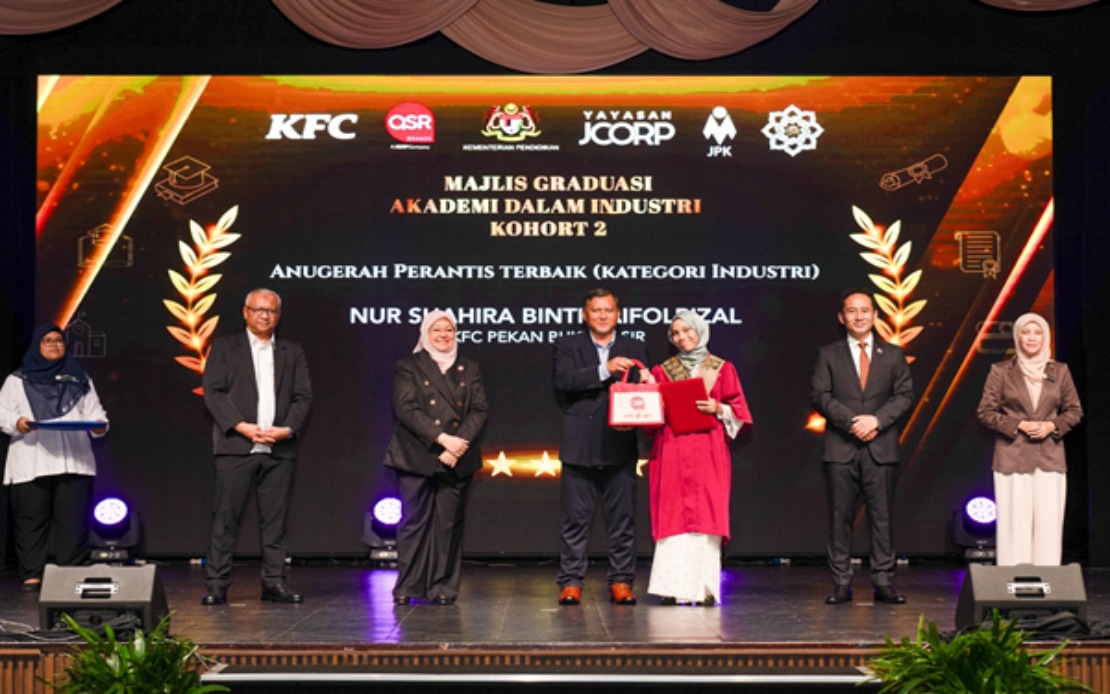
A collaboration between QSR Brands, operating KFC Malaysia, and Yayasan JCorp has successfully produced a second cohort of 37 vocational graduates, marking significant progress in Malaysia's efforts to bridge the gap between classroom instruction and practical employment readiness. The graduates, who completed their training in Johor Bahru, represent growing recognition across the quick-service restaurant sector that young workers need both theoretical knowledge and real-world competency before entering the job market.
The Apprenticeship Development Initiative (ADI) programme, which produced this latest group, builds on the success of an inaugural batch of 23 students who finished their industrial training in March 2025. With the addition of the new cohort, the total number of graduates trained by KFC Malaysia under this framework has now reached 60 since the programme's introduction in June 2023. This trajectory suggests that the model, though nascent, is gaining momentum and demonstrating measurable outcomes in workforce development.
The curriculum followed by these trainees focuses specifically on fast food preparation and service, ensuring that qualifications align precisely with industry demands. Throughout their training at KFC restaurants across Johor Bahru, students were immersed in operational realities, handling customer interactions, preparing food to standard, and maintaining workplace compliance protocols. This experiential component distinguishes the ADI approach from traditional vocational education, which historically maintained clearer separation between classroom theory and workplace practice.
Academic results from Cohort 2 were notably strong, with 100 per cent of participants passing the Vocational Stream Subjects (MPAK) examination, as well as Malaysian Skills Certificate (SKM) assessments at both Level 2 and Level 3. Furthermore, 95 per cent achieved success in the Sijil Pelajaran Malaysia (SPM) national examination, indicating that the programme does not compromise academic rigour in favour of practical training. Each graduate received five distinct qualifications, including the Vocational SPM (SPMV), the two-tier SKM certifications, a programme completion certificate, and recognition from QSR Brands itself.
Zulkernai Fauzi, director of the Ministry of Education's Technical and Vocational Education and Training division, characterised the ADI programme as a benchmark for sectoral integration that warrants expansion across Malaysia's broader TVET landscape. His remarks reflect official enthusiasm for models that grant students recognised credentials whilst simultaneously building workplace experience, a combination that addresses persistent complaints from employers that school-leavers lack practical readiness. The government's position suggests that such industry-education partnerships may inform future policy development in vocational training.
Rozaini Mohd Sani, chairman of Yayasan JCorp, emphasised that participation in the programme democratises opportunity, extending meaningful pathways to young people irrespective of socioeconomic background. This framing is particularly relevant in Malaysia's context, where technical and vocational routes have historically been perceived as second-tier options despite acknowledged labour market demand for skilled trades workers. By positioning the ADI experience as confidence-building and skill-affirming, Yayasan JCorp signals a rebranding of vocational training as equally valuable to traditional academic achievement.
Dr Sharifah Musainah Syed Alwi, chief human resources officer at QSR Brands (M) Holdings Bhd, stressed that the Cohort 2 success reflects the programme's effectiveness in nurturing genuinely competent workers rather than merely issuing certificates. Her emphasis on validated, on-the-job proficiency suggests that QSR Brands views the ADI initiative as a recruitment and development tool, potentially addressing chronic labour turnover in the hospitality sector by building institutional commitment from the outset. The company's continued investment indicates confidence that the model yields employees better suited to operational demands.
The graduation ceremony recognised outstanding individual achievement through awards honouring the best apprentice from an industry perspective, the best apprentice based on SPM performance, and the strongest apprenticeship documentation. Such tiered recognition encourages excellence and creates informal career advancement signals within the cohort, potentially motivating continued professional development after graduation. These distinctions also provide employers with finer-grained information about candidate capabilities beyond simple pass-fail credentials.
The ADI programme's origins in June 2023 reflect deliberate coordination between the Department of Skills Development, housed within the Ministry of Human Resources, and the Ministry of Education, indicating whole-of-government commitment to TVET modernisation. This institutional alignment contrasts with fragmented approaches where education and labour departments operate independently, reducing inefficiencies and ensuring curricula respond to verified market needs. KFC Malaysia's role as anchor employer demonstrates that multinational quick-service restaurant operators view Malaysia as sufficiently stable for long-term workforce investment.
For Malaysian policymakers, the ADI model offers a replicable template for other sectors facing skills shortages, particularly in hospitality, food services, retail, and light manufacturing. The demonstrated success in producing job-ready graduates at scale could justify broader investment in industry-sponsored training, potentially reducing government expenditure on conventional TVET institutions whilst improving employment outcomes. The programme's focus on recognised certifications also enhances worker portability, allowing graduates to transition between employers without credential retraining.
Regionally, Malaysia's ADI initiative positions the country as a thoughtful adopter of competency-based training models increasingly prevalent in developed economies. Southeast Asian competitors such as Thailand and Vietnam have similarly sought to align vocational curricula with industry needs, and Malaysia's documented success with QSR Brands provides a competitive advantage in attracting international employers seeking reliable workforce pathways. The approach also demonstrates that Malaysian employers and educational institutions can successfully coordinate without extensive regulatory overhaul.
Looking forward, the expansion of such programmes across additional sectors could address acknowledged skills mismatches constraining economic productivity. Malaysia's working-age population growth is moderating, intensifying competition for talent, making workforce quality increasingly critical to competitiveness. Programmes like ADI that efficiently transform school-leavers into productive employees offer a strategic response to demographic headwinds and may prove instrumental in sustaining growth across service-dependent sectors.

