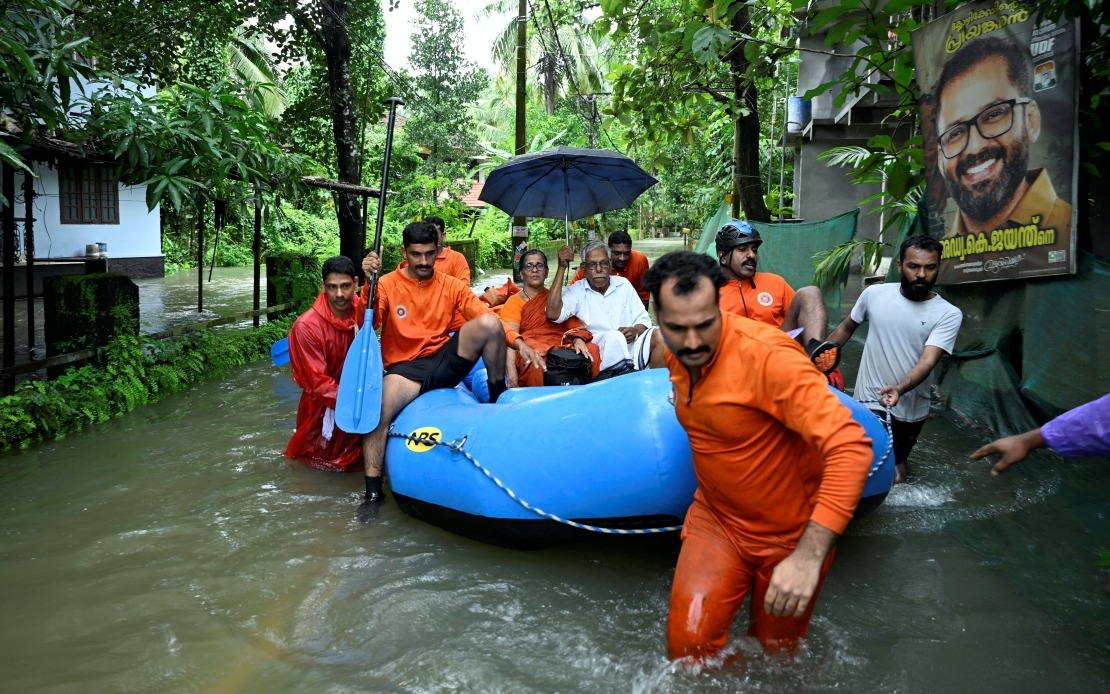
The southwestern Indian state of Kerala is grappling with a mounting humanitarian crisis as rain-triggered disasters have claimed 26 lives, officials confirmed on Wednesday. Kerala Chief Minister V D Satheesan disclosed the casualty figures at a press briefing following high-level discussions on the unfolding emergency, underscoring the severity of the natural disaster affecting the state's densely populated regions. The confirmed deaths represent only part of the broader human toll, with eleven additional people injured and four individuals still missing amid the continuing torrential downpours.
The scale of displacement has emerged as equally concerning, with authorities documenting that 27,048 residents have been forced from their homes by the relentless rainfall. To accommodate these displaced persons, the Kerala state government has established 462 relief and rehabilitation camps functioning across various districts. The distribution and management of these camps reflect the extensive coordination required to support such a large population, placing considerable strain on state resources and logistics during what is typically the peak of the monsoon season.
Chief Minister Satheesan announced a comprehensive package of financial relief designed to assist households affected by the disaster. The relief measures include enhanced compensation for families who have lost loved ones, as well as support for those whose homes and property have been destroyed or severely damaged. This proactive approach aims to provide immediate economic stability for the most vulnerable populations while longer-term reconstruction efforts are being planned and initiated across the affected areas.
The agricultural sector has sustained substantial damage, with crop destruction reported across 1,882 hectares of farmland. This devastation has directly impacted 23,537 farming families, who depend on agriculture for their livelihood. The loss of crops and potential soil degradation from flooding poses risks not only to immediate food security but also to the economic viability of rural communities that have already faced challenging conditions in recent growing seasons.
Meteorological authorities have issued sobering forecasts that suggest the disaster may worsen before conditions improve. The India Meteorological Department released an orange alert on Wednesday indicating that widespread heavy rainfall would likely persist across Kerala, coastal Karnataka, and Telangana through August 11. This extended forecast window means that drainage systems, already overwhelmed, may face continued stress and that the risk of additional flooding and landslides remains acute across vulnerable regions.
The northern sections of Kerala have borne the brunt of the current disaster, particularly areas in the high ranges of Kozhikode and Kannur districts. These mountainous and hilly regions began experiencing intense rainfall from August 1, triggering numerous landslides that have cut off access to some communities and destroyed critical infrastructure. In numerous low-lying and populated areas throughout the state, floodwaters have yet to recede, leaving residential structures inundated and creating conditions that increase disease transmission risks and complicate rescue and recovery operations.
For Malaysian readers and Southeast Asian observers, Kerala's crisis carries particular relevance. The region shares similarities with Malaysia's own monsoon-prone geography and faces comparable challenges in disaster management and population density. The scale of Kerala's displacement—exceeding 27,000 people—demonstrates how rapidly natural disasters in densely populated regions can overwhelm local capacity, a concern that resonates across the Association of Southeast Asian Nations, where urbanization increasingly places larger populations in flood-prone zones.
The response strategies deployed by Kerala authorities also offer instructive examples for regional policymakers. The establishment of hundreds of relief camps, combined with targeted compensation programs, reflects an integrated approach to disaster management that balances immediate humanitarian needs with longer-term recovery. However, the continued dependence on weather forecasting and the vulnerability to forecasting errors highlight why Southeast Asian nations continue investing in improved meteorological infrastructure and early warning systems.
The agricultural impact of Kerala's disaster underscores a challenge particularly acute in developing economies where farming communities often lack crop insurance or diversified income sources. With nearly 24,000 farming families affected, the ripple effects extend beyond immediate crop loss to include potential debt accumulation and economic hardship throughout the rural economy. This pattern mirrors vulnerabilities observed across Southeast Asia, where agricultural communities frequently face disproportionate impacts from extreme weather events.
Looking ahead, the weather forecast through mid-August suggests that Kerala will remain in a critical phase of the disaster response. The orange alert status indicates that heavy rainfall remains probable, meaning that evacuation protocols may need expansion and that damage assessments will be incomplete until weather patterns stabilize. For governments across the region managing their own monsoon seasons, Kerala's current situation serves as a reminder of the importance of pre-positioning resources, maintaining updated evacuation routes, and ensuring that communication systems remain functional even when infrastructure sustains damage.
The intersection of climate patterns, geography, and human settlement in Kerala creates a complex disaster management environment. Unlike one-off disasters, monsoon-related emergencies can persist for extended periods, stretching response capacities and creating secondary health and sanitation challenges in crowded relief camps. The challenge of managing 462 simultaneous relief operations, each serving populations ranging from dozens to hundreds, illustrates why disaster governance requires both centralized coordination and local flexibility—lessons increasingly relevant as climate variability appears to be intensifying extreme weather events across the Indian subcontinent and Southeast Asia.

